
Types of Stem Cells Used in Treatment: Bone Marrow vs Adipose vs Cord Tissue
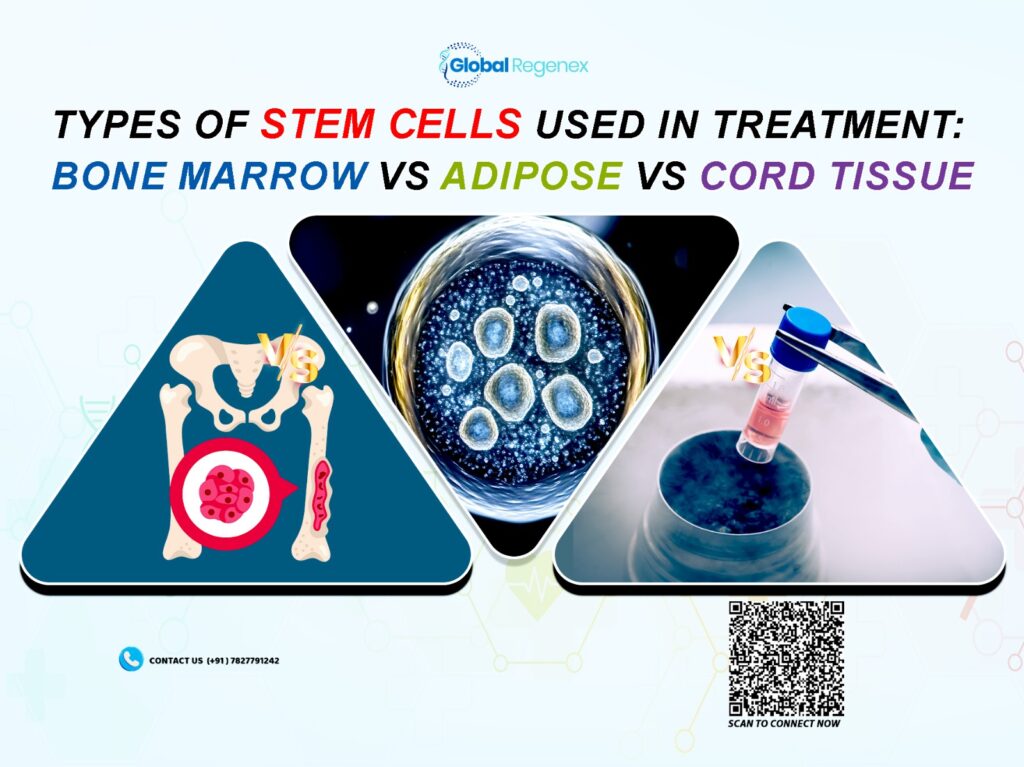
Summary: Stem cell therapy is advancing regenerative medicine through tissue repair, immune modulation, and clinical research. Different stem cell sources, including MSCs and umbilical cord cells, continue supporting evidence-based therapeutic applications in modern healthcare. In today’s world of medicine, regenerative medicine practices are becoming more popular due to their ability to restore and regenerate human tissue that has been harmed. Regenerative medicine is concerned with the treatment and restoration of health conditions by restoring and regenerating human cells, tissues, and organs using biological procedure instead of surgical replacement The application of stem cell therapy is common because of the capability of stem cells to become specific cells and participate in the natural repair process. Recently, stem cell therapy has been shifting from experimentation to evidence-based practice based on controlled trials and regulatory guidance. Understanding Stem Cells: A Clinical Overview Stem cells are described as undifferentiated cells that have the ability to reproduce and become other types of differentiated cells. They are very important in medical practice because they have the potential to help in the process of tissue repair and regeneration, and they can even modulate inflammatory responses. These are some of the reasons why stem cells are highly researched and sought after in regenerative medicine. Examples of common stem cells utilized for treatment purposes are adult stem cells, perinatal stem cells, and mesenchymal stem cells (MSCs). While adult stem cells can be derived from bone marrow or fat tissue, perinatal stem cells are extracted from umbilical cord tissues. On the other hand, mesenchymal stem cells are extensively investigated because of their regenerative anti-inflammatory, and immune-modulating effects. Stem Cells That Has Been Used in Various Treatments Use of stem cells in regenerative medicine has become more common because of research conducted and the types of stem cells available. Differentiating the types of stem cells used in regeneration is done based on regenerative potential, compatibility with tissues, and specific uses. In current medical research, researchers try to figure out how different stem cells could help in regenerating tissues and improving patients’ health through specific conditions. Below are some of the stem cells widely used in therapy: Induced Pluripotent Stem Cells: iPSCs are stem cells obtained from adult cells and reprogrammed to develop into different cell types. They are widely used in disease models. Mesenchymal Stem Cells: MSCs are commonly studied because of their anti-inflammatory, immunomodulating, and repair properties. Adipose Tissue Stem Cells: The former is defined by cells that are derived from adipose tissue and commonly used in research pertaining to orthopedic medicine and regenerative medicine. Umbilical Cords Stem Cells: The latter is defined by cells that are collected from umbilical cords right after birth and have low immunogenic properties and regeneration abilities. Bone Marrow Stem Cells: Bone marrow cells are commonly used in hematology as well as in bone marrow transplants because of their hematopoietic qualities. Differentiate Between Bone Marrow Vs Adipose Tissue Vs Cord Tissue Stem Cells Feature Bone Marrow Stem Cells Adipose Tissue Stem Cells Cord Tissue Stem Cells Source Bone marrow Fat tissue Umbilical cord tissue Collection Method Invasive aspiration procedure Minimally invasive liposuction Collected after birth Cell Yield Moderate High Moderate to high Age Influence Cell quality may decline with age Less affected by aging Young biological profile Clinical Focus Blood disorder and regeneration Orthopedic and regenerative use Immune modulation and tissue repair Immunogenicity Moderate Low Very low Research Interest Long-established Rapidly growing Increasing in regeneration medicine Safety, Ethics, and Regulatory Considerations in Stem Cell Therapy Increased usage of regenerative medicine has made it crucial to maintain high levels of safety, ethics, and regulation in the practice of clinical medicine. The field of stem cell treatment is one of the fields that have seen tremendous developments within the recent past. This means that there is a need to regulate its responsible use in order to ensure the health of patients and maintain scientific integrity. Safety for Patients: The stem cell process needs to be performed in a qualified medical environment where there is an appropriate screening and monitoring process in place. Evidence-Based Practice: The clinical treatment that has scientific evidence and support is essential to increase credibility. Ethical Procurement of Cells: Stem cells need to be extracted using the right process involving the approval from the patient or donors themselves. Regulation Process: There are health regulations involved to ensure quality in laboratory processing, storage, and treatments. Risk Involved: There might be certain risks associated with the procedure including infections immunity reactions, or clinical effects. Final Thoughts Stem cell therapy is still influencing the future of regenerative medicine due to clinical investigations that enhance use of evidence-based approaches in treatments. Various types of stem cells, such as those from bone marrow, fat tissues, and umbilical cord tissue, have different biological characteristics that may be helpful in specific medical application. Stem cell therapy requires that the selection of various types of stem cells be made based on their potential to help patients recover and their suitability within an ethical and regulated environment. Questions That Are Frequently Asked Q1. Why are stem cells relevant to regenerative medicine? Ans: Since they have the potential of assisting with natural body healing mechanisms, tissue regeneration, and even immune system modulation in many clinically based applications. Q2. What is the difference between bone marrow stem cells and fat-derived stem cells? Ans: Bone marrow cells are studied extensively, whereas fat-derived stem cells have greater production rates and less invasive methods of collection. Q3. Are stem cells collected from the umbilical cords obtained in an ethical manner? Ans: Yes, stem cells from umbilical cords are obtained post-birth via legal procedures with informed consent of parents. Q4. Are all treatments involving stem cells scientifically validated? Ans: No, not all treatments have full scientific proof, hence the need for further clinical studies. Q5. Where do we obtain stem cells for treatment purposes? Ans: They may be acquired through bone marrow, adipose tissue, peripheral blood, or umbilical cord tissue. ____________________________________________________________________________ References FDA – Regenerative Medicine Consumer
How to Increase Bone Marrow Stem Cells?
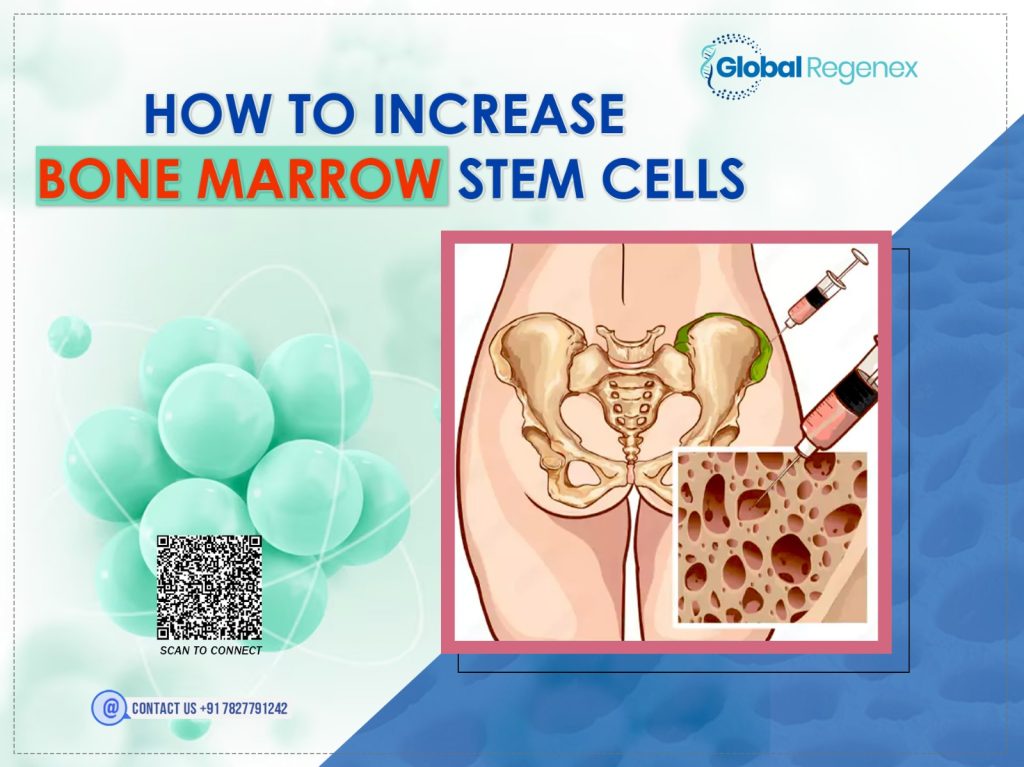
Looking for ways to boost your health? If you are exploring to find the best ways to boost your health from the inside out, learning about stem cells is the first step forward. Especially, bone marrow stem cells, these are the body’s tiny repair soldiers. They are responsible for generating blood, fighting infection, and even helping heal damaged tissues. But as we age, or face severe stress, illness, or poor lifestyle choices, our stem cell levels can decrease. So, what can you do? So much. Whether you are just starting your wellness journey or already exploring stem cell therapy, understanding how to naturally support your stem cell health matters, and small changes can make a real difference. Let’s simplify the approach to help you explore your options with care and expertise. What Are Stem Cells? Stem cells are like the little primitive cells in the body. Stem cells can differentiate into different cells and promote healing by repairing and replacing damaged tissue. The patient’s own cells are usually taken from bone marrow or fat and used to replace damaged cells in injured body parts. Natural Ways to Boost Bone Marrow Stem Cells Choosing to increase your bone marrow stem cell count in the body, through a natural process, is the best way possible, but you should understand that it does not happen overnight. It requires consistently giving your body the right environment to thrive. Here are some evidence-supported ways: Exercise Regularly It is important to perform moderate but consistent exercise, such as walking, swimming, or strength training, which has the function of stimulates the production and activity of stem cells, which you may know is needed for anyone involved with muscle and bone repair. Intermittent Fasting Doing intermittent but controlled fasting mainly around 14-16 hour windows can promote stem cell regeneration and minimize inflammation. It gives enough time to your body to clean out damaged cells and reset the mechanism. Eat a Nutrient-Rich Diet You should avoid any processed food, but add whole foods with antioxidants, vitamins, and minerals. Having iron, vitamin D, and more in your diet is helpful for bone marrow function. You can include: Leafy Greens Nuts Berries Oily Fish Lean Proteins Get Enough Sleep Most important is to get a good night’s sleep, as taking poor sleep often can disrupt your body’s natural regeneration process. Aim for 7-9 hours of quality rest to support hormone balance and cell renewal. Reduce Stress Levels Taking severe stress produces cortisol, which suppresses stem cell function. Start doing meditation, deep breathing, or simply stepping away from the chaos to give your nervous system a break. Avoid Toxins Stay away from smoking, drinking excessive alcohol, or eating processed foods because these things can harm the function of your bone marrow. You want to try to decrease your exposure to environmental toxins and toxins from processed foods because they can keep your stem cells from thriving. Add Some Supplements There are some supplements, such as curcumin and green tea extract, which have been better facilitators of stem cell health. Always have a talk with your healthcare provider about taking any of the supplements. Stay Hydrated Basic yet most forgetful way. Doing proper hydration helps flush toxins and keeps your system clean and stem cell production running smoothly. Water supports every cell in your body. Need Expert Help? If you are interested in going a step further, stem cell therapy can be a powerful yet advanced approach to help your body heal from various severe pain and injuries. To learn more about this revolutionized treatment, consult with experts at Global Regenex guide you with the best knowledge and tailored treatments to your specific needs. They have cutting-edge facilities, qualified experts in regenerative medicine, and a connection with top-tier hospitals to provide you with a safe and effective treatment. Final Verdict You don’t need to feel stuck. As you know, increasing your bone marrow stem cells does not require any big life-altering changes, but small and important ones. Even small and consistent changes can help in building a healthier foundation. Your body is capable of doing more than you might imagine, especially when you support it with the right tools. Do not forget, progress is progress, regardless of how small it may be. And if you are considering stem cell treatment and consulting with Global Regenex would be the first step towards a healthier tomorrow.