
What Should Patients Know About Stem Cell Therapy Safety?
Stem cell therapy continues to be a widely researched field across different areas of regenerative medicine. While some stem cell-based approaches are still being investigated in clinical and research settings, safety considerations may vary depending on several factors such as the types of stem cells used, the medical condition, treatment protocols, and patient condition. Understanding both potential risks and possible benefits can help patients understand and make informed healthcare decisions. Key Takeaways Stem cell therapy remains an active area of scientific and clinical research. Safety considerations may vary depending on the treatment approach and individual patient factors. Researchers continue to study the potential risks and benefits associated with stem cell-based therapies. Patients should carefully evaluate available scientific evidence before making healthcare decisions. Consultation with qualified healthcare professionals is important when exploring regenerative medicine options. Ongoing research continues to improve the understanding of stem cell safety and clinical applications. Medically Reviewed By Written By – Nishat Arfin Scientific Review By Tabish Iqbal Medically Approved By – Global Regenex Medical Team Last Reviewed: June 2026 Is Stem Cell Therapy Safe? Understanding Risks and Benefits Among the most common concerns raised by patients who start researching stem cell therapy is to know if this approach is safe. As interest in regenerative medicine continues to evolve, many patients seek reliable information about potential risks, possible benefits, and the scientific evidence currently available rather than relying on false claims. The safety of stem cell therapy depends on several factors, including the type of stem cells used, the medical condition being addressed, the treatment protocol, and individual patient characteristics. Some stem cell technologies have already been examined in the clinical and scientific fields, while others are still being investigated. Being aware of the possible advantages and disadvantages of stem cell therapy is an essential aspect of the decision-making process in terms of healthcare. This blog discusses existing scientific knowledge, aspects of safety, and things to consider before using stem cell technology. What Is Stem Cell Therapy? Stem cell therapy is one of the widely studied branches of regenerative medicine that involves exploring and using stem cells in healthcare research. Stem cell therapy refers to approaches that involve the study and use of stem cells within regenerative medicine. Researchers investigate these cells because of their unique biological characteristics and their role in understanding tissue biology and cellular function. Further study of methods based on the use of stem cells is ongoing to gain more knowledge of cellular functioning and biological mechanisms related to health and illnesses. Scientific research in the realm of stem cells includes experiments performed in laboratories and clinics, as well as increasing knowledge of this issue. Stem cell therapy is still under scientific consideration in many branches of medicine. What Types of Stem Cells Are Commonly Studied? Stem cell researchers work with various categories of stem cells within regenerative medicine studies. Each category features particular biological attributes and is investigated for its unique scientific significance. Mesenchymal Stem Cells (MSCs): Among the most often researched stem cells in the field of regenerative medicine, there are mesenchymal stem cells. Researchers explore their biological properties and functions in healthcare studies. Hematopoietic Stem Cells: Hematopoietic stem cells are responsible for the formation of blood cells and are widely researched both in the laboratory and clinical settings. Induced Pluripotent Stem Cells (iPSCs): Induced pluripotent stem cells are produced from adult cells by transforming them into stem cells. These are used for studying diseases, cell behavior, and regenerative medicine. Other Stem Cell Types: There are other fields of stem cell study that researchers explore in order to learn more about cellular biology and regenerative processes. Understanding different types of stem cells helps better comprehend safety issues and ongoing research. Why Is Stem Cell Therapy Safety Important? As regenerative medicine continues to move forward, safety remains the most important consideration for patients discussing stem cell therapy. Before considering stem cell therapy, patients often seek information about how stem cell-based approaches are evaluated and what factors may influence their safety. Safety of stem cell treatments does not depend on one particular factor. Scientists focus on possible impacts of different types of stem cells, treatment methods, the medical environment, and individual patient characteristics, which may influence outcomes and safety considerations. Since regenerative medicine consists of various methods, assessing their safety can be challenging for scientists. Scientific investigation of safety is conducted through laboratory study, clinical trials, patient observation, and post-study investigations. This allows scientists to learn more about the possible risks and those aspects that need to be studied further. With the development of stem cell science, safety issues will always remain important when making medical decisions. Patients are advised to consult qualified health care specialists regarding existing information on the risks and possible applications of stem cell therapy. What Potential Benefits Are Researchers Studying? For years, stem cell therapy has continued to attract scientific interest because of its potential applications for a wide range of areas in regenerative medicine. While research is ongoing, some applications require further investigation, and others are currently being explored. Advancing Scientific Understanding Stem cell studies have helped researchers understand how cells function, interact, and respond within different biological environments. Such findings continue to support a variety of fields in regenerative medicine Improving Understanding of Medical Conditions Scientists conduct studies using stem cells in order to investigate the development and progression of certain diseases. Such findings could be helpful in furthering our understanding of medical conditions. Supporting Personalized Medicine Research Stem cell research has been known to encourage attention towards understanding the role of biological variation in relation to healthcare practices. This remains an important area of ongoing scientific investigation. Expanding Knowledge of Human Biology Stem cells are widely utilized in laboratory and clinical studies in order to assess various biological reactions and ensure safety for future healthcare interventions. Expanding Knowledge of Tissue Function and Repair Scientist currently exploring how stem cells interact with tissue and biological systems. These studies have helped in growing the understanding of
What Is the Difference Between Autologous and Allogeneic Stem Cells?
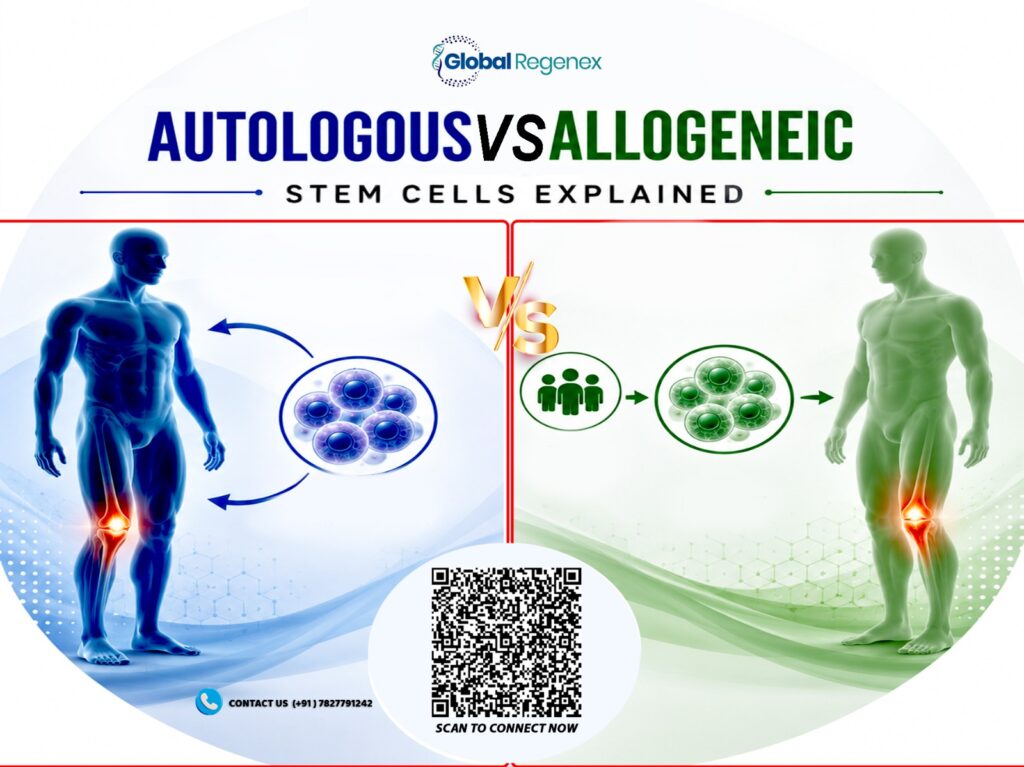
Autologous and allogenic stem cells are different primarily in how they are obtained. Autologous stem cells are collected from the patient’s own body, whereas allogenic stem cells are obtained from a suitable or matched donor. Both approaches are widely studied across regenerative medicine and clinical research. Their suitability depends on factors such as the medical condition, treatment goals, and the available scientific evidence. Understanding these differences can help patients discuss stem cell-based therapies with qualified healthcare professionals Key Takeaways Autologous stem cells are obtained from the patient’s own body. Allogeneic stem cells are collected from a suitable donor. Both approaches are being studied across different areas of regenerative medicine. The source of stem cells may influence treatment planning and research design. Healthcare professionals evaluate multiple clinical factors before considering stem cell-based approaches. Many stem cell applications continue to be investigated through ongoing scientific and clinical research. Medically Reviewed By Written By – Nishat Arfin Scientific Review By Tabish Iqbal Medically Approved By – Global Regenex Medical Team Last Reviewed: June 2026 Autologous vs Allogeneic Stem Cells Explained Stem cell research has introduced different approaches that vary in how stem cells are collected and used in clinical research and regenerative medicine. Among the most frequently used and discussed are autologous and allogenic stem cells. Although both involve stem cells, but they differ in their source, collection process, and the considerations involved in healthcare research. As regenerative medicine continues to evolve, patients are likely to come across these terminologies when researching treatment possibilities or stem cell research. It is important to understand the difference between autologous and allogeneic stem cells because it can help one understand information better and engage with health care providers knowledgeably. This blog discusses the difference between these two types of stem cells and what is known about them in terms of research and factors affecting their use in regenerative medicine research. How Are Autologous Stem Cells Obtained? Autologous stem cells are collected from the same individual who is expected to undertake the stem cell-based treatment or participate in clinical trials. As the cells originate in the patient’s own body. Researchers continue to study autologous stem cells across various areas of regenerative medicine and clinical research. As they are derived from the patient, depending on treatment protocols and the patient’s medical condition, healthcare professionals may collect stem cells from different sources, such as bone marrow, peripheral blood, and adipose tissue within the body. Also, the collection process may vary from patient to patient based on the type of stem cell being studied and used in clinical practices. Some of the common features of autologous stem cells are: Patient Source: These stem cells come from the patient undergoing the therapy. Individualized Collection Process: This process of collecting stem cells is customized based on the health of the patient and the treatment procedure. Research Application: Research is being conducted in many areas regarding the usage of these stem cells. Consideration for Clinical Use: It should be determined whether it is suitable to use these stem cells based on many considerations, such as the health of the patient and the therapeutic goal. By understanding how autologous stem cells are extracted, we can lay the groundwork for comparing them with the donor’s stem cells. How Are Allogeneic Stem Cells Obtained? Unlike autologous stem cells, allogeneic stem cells are obtained from a suitable donor rather than the individual receiving treatment. Before they are used in clinical or research settings, donor cells typically undergo screening and evaluation based on applicable medical protocols and regulatory requirements. Researchers continue to examine allogeneic stem cells across various areas of regenerative medicine, as they offer a different approach to stem cell-based research compared with patient-derived cells. Their suitability depends on the patient’s medical condition, treatment goals, and level of scientific evidence available. Some general features of allogeneic stem cells are: Source from Donor: Stem cells come from an appropriate donor, but not the individual receiving treatment. Screening of Donors: Donors are typically screened through medical procedures in order to ensure that donated stem cells are of good quality. Research Applications: Allogeneic stem cells are being researched in various fields of regenerative medicine. Clinical Considerations: Whether donor-derived stem cells will be used or not depends on factors like the state of health of the individual and other clinical considerations. It is important to understand how allogeneic stem cells are harvested in order to understand why donors are screened differently by researchers and healthcare experts. Autologous Vs Allogeneic Stem Cells: Key Differences Between Autologous and Allogeneic Stem Cells Both autologous and allogeneic stem cells hold a promising avenue in regenerative medicine and are widely studied for different medical conditions. But they differ in their source, collection process, and clinical consideration. The following table will provide a general comparison to help understand these two approaches better. Feature Autologous Stem Cells Allogeneic Stem Cells Cell Source Collect from the same individual receiving the treatment. Collected from a suitable donor. Collection Process Cells are obtained from the patient’s own body following medical evaluation Cells are collected from screened donors according to established medical protocols. Primary Use in Research Studied across various regenerative medicine and clinical research applications. Also investigated across multiple areas of regenerative medicine and healthcare research. Donor Requirement Does not require a separate donor. Requires a medically suitable donor. Clinical Consideration Suitability is dependent upon the patient’s medical condition, therapeutic aims, and clinical evaluation. Suitability is based upon the suitability of the donor, requirements of the patient, therapeutic objectives, and clinical assessment. Scientific Evidence Evidence differs based on the medical condition and method of treatment being investigated. Evidence can also vary based on the medical condition and stem cell source under investigation. Both stem cell types are still being studied in various fields of regenerative medicine. The decision regarding which approach to use, autologous stem cells or allogeneic stem cells, is determined by each case, its goals, and existing scientific facts. Is One Stem Cell Source Better
How Long It Take to Have a Stem Cell Transplant?
Dealing with a degenerative condition and considering a stem cell transplant as treatment for it? This would be a great way to treat these conditions. Stem cell transplant is the process where stem cells are used to promote healing through replacing and restoring the damaged tissues or cells in the body. Now, you must be thinking about how long a stem cell transplant takes to work properly. It is helpful to understand the full process of stem cell transplant in India, whether it is for yourself or someone you love. In this blog, let’s break it down in a simple word so you know what exactly to expect. What is a Stem Cell Transplant? Stem cell transplant uses stem cells, which are interestingly renowned for their ability to differentiate into several types of cells within the body. These cells are a remarkable alternative for treating many diseases as they promote healing through replacement and regenerate damaged cells in the body with healthy ones. By healing the damaged tissues, it minimizes the inflammation in the damaged area. Benefits of Stem Cell Transplant Here are some benefits of stem cell transplant listed below: Secures Highgate: Stem cells possess remarkable potential to significantly quicken the process of healing for the body, particularly in orthopedic trauma to ligaments, tendon rupture, and cartilage injury. Decrease Pain and Inflammation: By modulating the immune system, stem cell therapy can reduce chronic pain and swelling, alleviating conditions such as arthritis and autoimmune disorders. Less Invasive: The majority of stem cell therapies are non-invasive or minimally invasive, creating shorter recovery times and less danger. Supports Natural Reconstitution: Unlike traditional treatment that merely suppresses the symptom, stem cell therapy performs better by activating the body towards restoring damaged tissue naturally. Reduced Medication Use: In body function repair, stem cell therapy decreases reliance on medication for pain and chronic medication. Therapeutic Value: As stem cells are harvested from one’s own body, there is no risk of rejection, hence, more effective and personalized therapies are obtained. Understand the Timeline for Stem Cell Transplant Although the whole process of transplant might take only one day, the full process from preparation to transplant can take a few weeks. Here is the procedure in detail: Evaluation & Preparation (1-2 days) Before undergoing the stem cell transplant, patient is require to carry out some tests to asses their health by doctors to ensure they are a perfect fit for the procedure. These evaluations might include blood tests, imaging, and sometimes biopsy. Once cleared, the patient will now begin a conditioning regimen to prepare their body. Conditioning Treatment (5-10 days) For conditioning, the patient’s body involves chemotherapy, radiation, or a combination of both to remove unhealthy cells and make space for the new stem cells. This phase is important as it helps reduce the risk of transplant rejection and promote the right environment for new cells to grow. Stem Cell Collection and Infusion (1-2 days) If the patient is receiving an autologous transplant, the stem cells are collected from their own body. In allogeneic transplants, they’re collected from a donor. The actual stem cell infusion is very quick and painless and feels a lot like having a blood transfusion and should only take a few hours. Engraftment and Monitoring (2–4 Weeks) This is when the new stem cells in the blood begin to produce healthy blood cells. Patients are closely watched at this time for infection, complication, or graft-versus-host disease. Regular blood checks are also done to watch for progress. Early Recovery and Follow-Up (1–3 Months) After you’re discharged, follow-up is routine. You’ll need to take medications, protect yourself against infections, and adopt a healthy lifestyle to help your body settle in. Your immune system is down for a while, and hence, you must be cautious even after going home. For Consultation Seeking the advice of an expert would be an excellent choice if you are thinking about undergoing treatment with stem cell therapy but would like to ask questions regarding the procedures, possible advantages, or being a candidate for treatment. Asking Global Regenex experts for advice can inform you more about the optimal health and medical considerations for your unique situation. Experienced professionals in their field can guide you through this experience to ensure you receive the best assistance available. The Concluding Thoughts Although the actual infusion of stem cells can be completed in just one day, the entire process for doing stem cell treatment in India might take several weeks or even months. Evaluations and conditioning are followed up by recovery and then monitoring. Each procedure contributes to the success of stem cell therapy in Delhi or other places. Provided with proper care and direction, most patients have life-changing outcomes.
How Stem Cell Transplants Work Against Cancer?
No one wants to take on cancer, and with modern medicine, we can only hope it makes more strides. stem cell transplants and they’re fighting cancer. If you or a loved one is fighting this disease, you’ve likely heard of stem cell therapy as a possible avenue of treatment. But how does that even work, exactly? And what is the reason for the limelight around stem cell therapy in India? Let’s simplify this and break it down. Before we continue, if you want to know what experts say about stem cell therapy or want to undertake the treatment, consult with Global Regenex for further information. What Are Stem Cells? Stem cells are repairmen of your body, they are the raw materials of body cells, which give rise to the other forms of cells. They possess the ability to become any form of damaged tissue or cells in order to heal the injured part. Stem cells can be converted into nerve cells, blood cells, and so on, with such flexibility makes them an asset in regenerative medicine. Types of Stem Cell Transplants Stem cell transplants exist in two common types: Autologous Transplant: In this kind, the patient’s own stem cells are harvested prior to chemotherapy or radiation and then returned to the body afterward. This approach lowers the risk of rejection because the cells originate from the patient. Allogeneic Transplant: In this method stem cells are taken from a donor, usually a sibling or a matched unrelated donor. Although this approach is associated with a greater risk for complications, it also creates the possibility that the donor’s immune cells will attack any leftover cancer cells. How Does Stem Cell Transplant Fight Cancer? Stem cell transplants are commonly used to restore the body’s ability to produce healthy blood cells following high-dose chemotherapy or radiation for cancer. Here’s how it works: Destroying Cancer Cells: Cancer cells are destroyed with high-dose chemotherapy or radiation. But the process also destroys healthy cells, especially in the bone marrow, where blood cells are made. Replacing Damaged Cells: Once the cancer cells have been eradicated, stem cells are then transplanted into the patient’s body. These stem cells may be harvested from the patient (autologous transplant) or from a donor (allogeneic transplant). Rebuilding the Immune System: The transplanted stem cells move to the bone marrow and begin making new, healthy blood cells. That is critical for recovery and helps rebuild the immune system. Killing Remaining Cancer Cells: Especially with allogeneic transplants, the immune cells of the donor then can recognize and attack any remaining cancer cells, adding another layer of defense. The Life-Changing Potential of Stem Cell Therapy Stem cell treatment gave new hope to cancer victims who did not improve with regular treatment. They not only assist in reconstructing the immune system but also can directly target and destroy cancer cells more efficiently. For Consultation If you are overwhelmed with the choices, you can contact Global Regenex for stem cell treatment or consultation. They have expertise in offering patients stem cell therapy as treatment worldwide, with having associations with numerous well-known hospitals. They can guide you through the process, answer your questions, and schedule an appropriate treatment plan for your needs. The Bottom Line Stem cell treatment is a ray of hope for numerous patients for cancer therapies as they can be overwhelming. If you are considering stem cell treatment in Delhi for yourself or your loved one, you need to conduct an inquiry with professionals such as Global Regenex to understand the optimal time & mode of treatment. Interested in learning more? Call us at Global Regenex for a complimentary professional consultation and personalized treatment plan.