
What Is Stem Cell Therapy FDA Approval?
Currently, the U.S. Food and Drug Administration (FDA) has approved some stem cell-based products for specific medical conditions, especially those involving blood and immune system disorders. However, many stem cell-based therapies promoted for orthopedic, neurological, autoimmune, and other conditions remain under investigation and have not yet received FDA approval for clinical use. It is important to understand the difference between approved and investigational stem cell applications before making an informed healthcare decision. Key Takeaways The FDA has approved certain stem cell-based products for specific medical conditions. Many stem cell therapies offered for other conditions remain under clinical investigation. FDA approval depends on scientific evidence demonstrating safety, quality, and effectiveness. Patients should understand whether a treatment is FDA-approved or investigational before making healthcare decisions. Discussing treatment options with qualified healthcare professionals can help patients better understand available evidence. Reliable medical information and regulatory guidance play an important role when exploring regenerative medicine. Medically Reviewed By Written By – Nishat Arfin Scientific Review By Tabish Iqbal Medically Approved By – Global Regenex Medical Team Last Reviewed: June 2026 Is Stem Cell Therapy FDA Approved? In recent years, stem cell therapy has gained significant attention as regenerative medicine continues to move forward. As more and more people start to seek stem cell-based approaches for different medical conditions—one of the most common questions remains whether these treatments have received approval from the U.S. Food and Drug Administration (FDA). The answer depends on the type of stem cell therapy and the medical condition being considered. Although some stem cell-based products have been approved by the FDA for certain medical purposes, other stem cell treatments are still being studied through clinical research. This information is essential to understand that FDA approval is granted after extensive laboratory research, clinical trials, and regulatory review demonstrate that a product meets established standards for safety, quality, and effectiveness. This blog will cover what FDA approval is, which stem cell treatments are approved at present, and what patients need to know about regenerative medicine. What Does FDA Approval Mean for Stem Cell Therapy? More often, when a patient hears about a new treatment coming into clinical practice. The first thought that comes to mind is whether this approach is FDA approved, which generally means that the U.S. Food and Drug Administration has reviewed scientific evidence to determine whether this product meets the specific standard of safety, quality, and effectiveness for particular medical practices. The FDA approval is only granted after extensive laboratory research, clinical studies, and regulatory evaluations. For stem cell therapy, the FDA has approved specific stem cell-based products and medical indications, rather than every type of stem cell treatment or every condition. This is an important factor because a treatment approved for one disease does not necessarily mean approved for another. Key aspects to understand include the following: Scientific Evidence The FDA approves treatments that have proven to be effective as a result of scientific studies conducted in laboratories and during clinical trials. Approval Is Condition-Specific A stem cell product may receive approval for treating one disease but will be considered investigational in relation to another disease or injury. Approval is related to the specific purpose of a stem cell product, not to the stem cell product itself. Quality and Manufacturing Standards The requirements regarding quality, safety, and manufacturing of stem cell-based products must be met before approval. Continuous Monitoring Regulatory agencies continue monitoring the safety of the product after its approval through post-marketing surveillance and more scientific evidence. It is important for patients to know the meaning of FDA approval to differentiate between treatments that have obtained regulatory approval and those that are still in development. Which Stem Cell Therapies Are Currently FDA Approved? The U.S. Food and Drug Administration has the authority to regulate any regenerative medicine, such as stem cell therapy and exosome therapy. However, in recent times, there have been a lot of misconceptions on the internet about stem cell therapy, such as that all applications of stem cell therapy have been approved by the FDA. In reality, the FDA has approved only certain stem cell-based products for specific medical conditions. Most of them are related to disorders affecting the blood and immune system, while many other applications remain under strict clinical investigation. Some examples include: Hematopoietic Stem Cell (HSC) Transplant Hematopoietic stem cell (HSC) transplant is one of the well-established stem cell therapy applications. HSCs can be utilized in the therapy of various kinds of blood cancer, blood disease, and immune system disorders, depending on the patient’s diagnosis. Hematopoietic stem cells can be harvested from bone marrow, peripheral blood, or umbilical cord blood. FDA-Approved Umbilical Cord Blood Products Several umbilical cord blood products approved by the FDA are available for use in patients suffering from disorders that affect their blood and immune system formation. The approval process for those products involves rigorous evaluation according to the established regulations. Condition-Specific Approvals The FDA approval refers only to particular medical conditions that have been tested when evaluating the safety and efficacy of the stem cell-based product. Approval for one disease does not automatically approve the same treatment for another disease or injury. Many Applications Remain Investigational Misconceptions such as stem cell therapies promoted for orthopedic conditions, neurological disorders, autoimmune diseases, and many others are still being investigated through clinical research. Their safety and effectiveness continue to be evaluated, and several applications have not received FDA approval for these specific uses. Knowing which therapies are FDA-approved and which are investigational can help people better understand information about possible treatments and discuss them with medical professionals. How Can Patients Tell if a Stem Cell Therapy Is FDA Approved? As interest in stem cell therapy has grown, sometimes patients may come across clinics that offer unapproved treatments for a wide range of medical conditions. Although not every stem cell-based treatment has received FDA approval. Understanding how to verify the regulatory status of a stem cell therapy can help patients make more informed healthcare decisions. When considering a stem
What Is the Difference Between Autologous and Allogeneic Stem Cells?
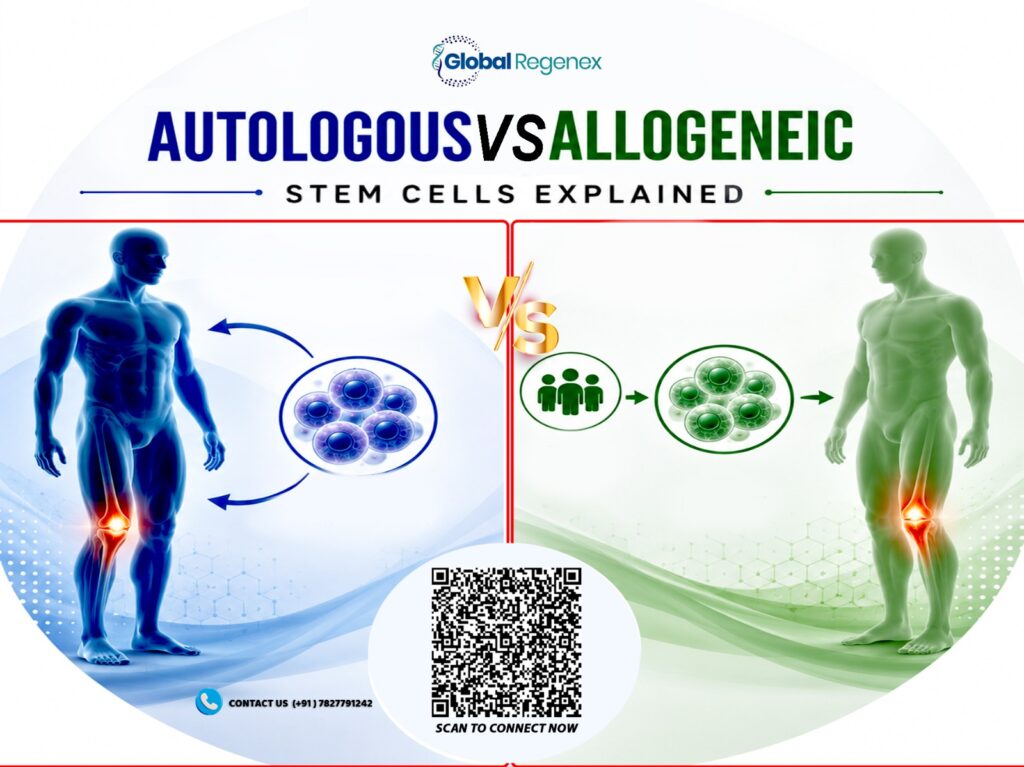
Autologous and allogenic stem cells are different primarily in how they are obtained. Autologous stem cells are collected from the patient’s own body, whereas allogenic stem cells are obtained from a suitable or matched donor. Both approaches are widely studied across regenerative medicine and clinical research. Their suitability depends on factors such as the medical condition, treatment goals, and the available scientific evidence. Understanding these differences can help patients discuss stem cell-based therapies with qualified healthcare professionals Key Takeaways Autologous stem cells are obtained from the patient’s own body. Allogeneic stem cells are collected from a suitable donor. Both approaches are being studied across different areas of regenerative medicine. The source of stem cells may influence treatment planning and research design. Healthcare professionals evaluate multiple clinical factors before considering stem cell-based approaches. Many stem cell applications continue to be investigated through ongoing scientific and clinical research. Medically Reviewed By Written By – Nishat Arfin Scientific Review By Tabish Iqbal Medically Approved By – Global Regenex Medical Team Last Reviewed: June 2026 Autologous vs Allogeneic Stem Cells Explained Stem cell research has introduced different approaches that vary in how stem cells are collected and used in clinical research and regenerative medicine. Among the most frequently used and discussed are autologous and allogenic stem cells. Although both involve stem cells, but they differ in their source, collection process, and the considerations involved in healthcare research. As regenerative medicine continues to evolve, patients are likely to come across these terminologies when researching treatment possibilities or stem cell research. It is important to understand the difference between autologous and allogeneic stem cells because it can help one understand information better and engage with health care providers knowledgeably. This blog discusses the difference between these two types of stem cells and what is known about them in terms of research and factors affecting their use in regenerative medicine research. How Are Autologous Stem Cells Obtained? Autologous stem cells are collected from the same individual who is expected to undertake the stem cell-based treatment or participate in clinical trials. As the cells originate in the patient’s own body. Researchers continue to study autologous stem cells across various areas of regenerative medicine and clinical research. As they are derived from the patient, depending on treatment protocols and the patient’s medical condition, healthcare professionals may collect stem cells from different sources, such as bone marrow, peripheral blood, and adipose tissue within the body. Also, the collection process may vary from patient to patient based on the type of stem cell being studied and used in clinical practices. Some of the common features of autologous stem cells are: Patient Source: These stem cells come from the patient undergoing the therapy. Individualized Collection Process: This process of collecting stem cells is customized based on the health of the patient and the treatment procedure. Research Application: Research is being conducted in many areas regarding the usage of these stem cells. Consideration for Clinical Use: It should be determined whether it is suitable to use these stem cells based on many considerations, such as the health of the patient and the therapeutic goal. By understanding how autologous stem cells are extracted, we can lay the groundwork for comparing them with the donor’s stem cells. How Are Allogeneic Stem Cells Obtained? Unlike autologous stem cells, allogeneic stem cells are obtained from a suitable donor rather than the individual receiving treatment. Before they are used in clinical or research settings, donor cells typically undergo screening and evaluation based on applicable medical protocols and regulatory requirements. Researchers continue to examine allogeneic stem cells across various areas of regenerative medicine, as they offer a different approach to stem cell-based research compared with patient-derived cells. Their suitability depends on the patient’s medical condition, treatment goals, and level of scientific evidence available. Some general features of allogeneic stem cells are: Source from Donor: Stem cells come from an appropriate donor, but not the individual receiving treatment. Screening of Donors: Donors are typically screened through medical procedures in order to ensure that donated stem cells are of good quality. Research Applications: Allogeneic stem cells are being researched in various fields of regenerative medicine. Clinical Considerations: Whether donor-derived stem cells will be used or not depends on factors like the state of health of the individual and other clinical considerations. It is important to understand how allogeneic stem cells are harvested in order to understand why donors are screened differently by researchers and healthcare experts. Autologous Vs Allogeneic Stem Cells: Key Differences Between Autologous and Allogeneic Stem Cells Both autologous and allogeneic stem cells hold a promising avenue in regenerative medicine and are widely studied for different medical conditions. But they differ in their source, collection process, and clinical consideration. The following table will provide a general comparison to help understand these two approaches better. Feature Autologous Stem Cells Allogeneic Stem Cells Cell Source Collect from the same individual receiving the treatment. Collected from a suitable donor. Collection Process Cells are obtained from the patient’s own body following medical evaluation Cells are collected from screened donors according to established medical protocols. Primary Use in Research Studied across various regenerative medicine and clinical research applications. Also investigated across multiple areas of regenerative medicine and healthcare research. Donor Requirement Does not require a separate donor. Requires a medically suitable donor. Clinical Consideration Suitability is dependent upon the patient’s medical condition, therapeutic aims, and clinical evaluation. Suitability is based upon the suitability of the donor, requirements of the patient, therapeutic objectives, and clinical assessment. Scientific Evidence Evidence differs based on the medical condition and method of treatment being investigated. Evidence can also vary based on the medical condition and stem cell source under investigation. Both stem cell types are still being studied in various fields of regenerative medicine. The decision regarding which approach to use, autologous stem cells or allogeneic stem cells, is determined by each case, its goals, and existing scientific facts. Is One Stem Cell Source Better
Is Stem Cell Therapy Safe for Autoimmune Digestive Disorders?
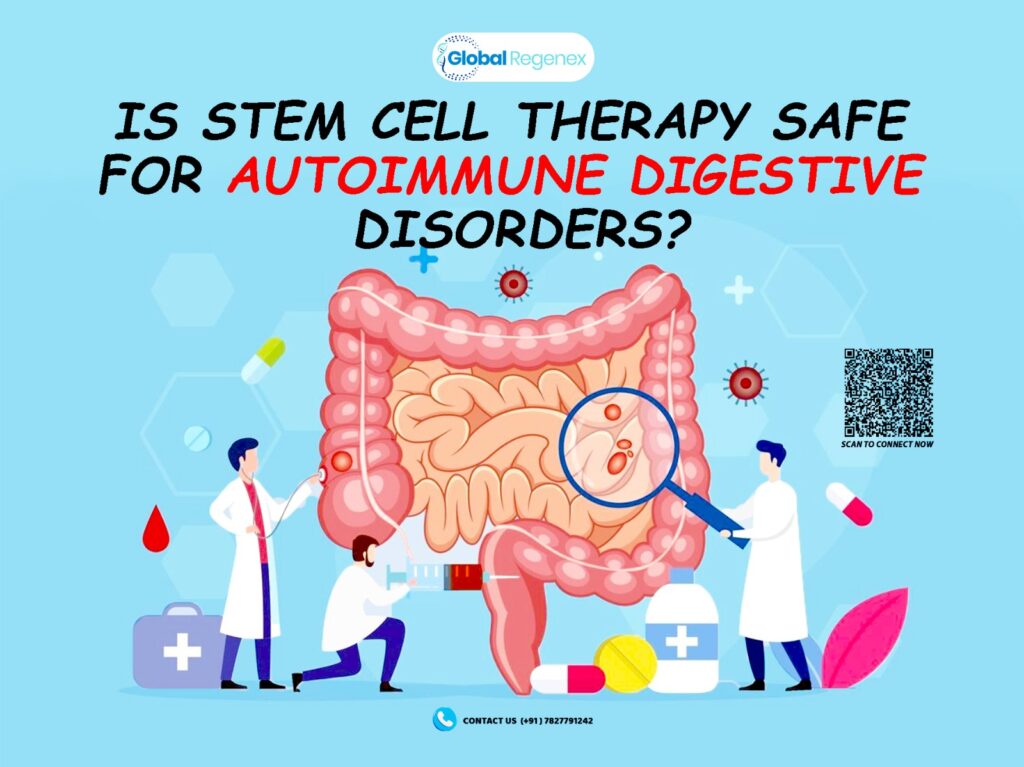
Summary: Exploring whether stem cell therapy is safe for autoimmune digestive disorders. Read this blog to understand how far research has come, what treatment involves, and why it is still being practiced under strict clinical environment. Suffering from an autoimmune digestive disorder is hard. As this condition doesn’t show up in the same way in every patient. This makes detecting this condition challenging. While in some cases, people tend to feel a consistent discomfort and unpredictable inflammations. And for others, it can easily influence nutrition, energy levels and everyday routine in a way you can easily notice. Sometimes, conditions like Crohn’s disease can be treated through medication and long-term treatments. Even then, symptoms start to stay presistent despte of the treatment. It is natural for people and families to look for other treatment areas, like regenerative medicine, that are currently being studied. Due to potential of stem cells, researchers have started to explore and discuss the possibility of future treatment. For patient, it is important to know exactly how process works—and where research stands at present—which will help the patient decide if it is worth pursuing. Overview of Autoimmune Digestive Disorders Autoimmune digestive disorders often arise in patients—when the immune system in the body starts to mistakenly attack various parts of the digestive system. As a result, it triggers inflammation around the affected area in the body. This may cause: chronic abdominal pain alterations in bowel movements tiredness and nutrition problems Such disorders tend to be recurring in nature, where flare-ups alternate with periods during which their symptoms are relatively well-controlled. Given this reality, treatment tends to consist largely of anti-inflammatory care designed for long-term stability. Mechanism of Stem Cell Therapy for Autoimmune Digestive Disorder The reason for fascination with stem cells lies in their ability and are being studied for their potential role in influencing immune response and tissue repair. In simple terms, research involving stem cell therapy revolves around their role in modulating the immune system and tissue healing. To get some information about autoimmune diseases in the digestive system, the question here are if these cells could be used: regulating inflammation markers modulating immune system functions promoting tissue repair It should be kept in mind that we have only scratched the surface of their potential and that we cannot predict their effects yet. Types of Stem Cell Therapies for Digestive Health After preliminary research, it seems regenerative medicine, such as stem cell treatment, is being actively explored in current research. In this case, we can explore various stem cell strategies used in cases of digestive disorders. Mesenchymal Stem Cells (MSCs): This treatment strategy has been extensively studied because of its potential application to regulate the immune response and inflammation. Hematopoietic Stem Cell Treatment (HSCT): For certain diseases, this treatment has already been used clinically for regulated disorders related to blood abnormalities. Other Cell-based Treatments: There is another set of treatments that has become popular, although they are currently undergoing research in many instances. Overall, there are several differences between these treatments based on their application and objectives. Nevertheless, it should be noted that all of these treatments remain experimental and are still under clinical trials. Safety and Efficacy of Stem Cell Treatments When considering any new treatment, one thing that remains every patient’s priority is—how safe is the treatment? Safety and effectiveness are key areas being evaluated in research. In the context of stem cell treatment, so far, research studies show results that remain inconsistent and vary from patient to patient. For some patient in clinical settings have experienced improvement in symptoms, while others have not. Additionally, some factors that may influence safety and efficiency include: differences in patient conditions differences in treatments lack of long-term study Therefore, due to these reasons, the treatment remains under observation for its efficacy and safety. For this reason, the therapy is not commonly used. Regulations and Approval Status of Stem Cell Therapies For every patient considering stem cell treatment as a supportive option for their condition, this is a matter that needs to be clarified well before undertaking the treatment. The stem cell therapy for autoimmune diseases of the gastrointestinal tract in India is presently classified as investigational and not as an approved method of therapy. The treatment can only be conducted through clinical trial processes guided by government regulations. Final Verdict Autoimmune digestive conditions need constant and careful attention. Although stem cell treatment is currently being researched for use in regenerative medicine, it is a developing field of treatment that has yet to gain acceptance into conventional medicine. Knowing the potential and the constraints is essential prior to moving on to anything further. In the event that you are looking into such options, a consultation with Global Regenex would be very beneficial to your considerations. Frequently Asked Questions Q1. Why Do Autoimmune Digestive Disorders Behave Differently In Each Person? These conditions are connected to the immune system, which often varies from patient to patient. Symptoms might be severe in some patients, while others can experience less severe symptoms. Q2. What Makes Managing These Conditions Long-Term So Challenging? Autoimmune digestive disorder becomes difficult to manage due to its recurring nature and constant flare-ups in the area, which need long-term adjustment. Q3. Why Is There Interest In Stem Cell Research For These Disorders? Scientists are studying stem cells’ potential to regulate immune system response and influence immune system response and inflammation. This is because autoimmune disorders arise due to an imbalance in the immune system. Q4. What Should Patients Be Careful About When Reading Online Information? Not every piece of information online about regenerative medicine reflects its true medical evidence. Some information may seem promising to the patient but lacks evidence-based support. It’s a must for patients to verify information with expert consultants to clearly understand available options. Reference Links (1) Wang, S., et al. “Stem Cell Therapy for Inflammatory Bowel Disease: Mechanisms and Clinical Application.” Stem Cell Research & Therapy, 2020. https://www.ncbi.nlm.nih.gov/pmc/articles/PMC7356930/ (2) U.S. National Library of Medicine. “Stem
Stem Cell Quality Control with AI: Reducing Batch Variability & Ensuring Consistency

Summary: AI (Artificial Intelligence) is revolutionizing the process of stem cell therapy development and delivery. Through the optimization of the procedure, the reduction of errors, the maintenance of a standard quality, etc., AI is making regenerative medicine more dependable, available, and user-friendly. Combining high-end technology with medical know-how, India is spearheading this transformation, going beyond the ‘advanced’ treatment to being truly caring and secure. Stem cell therapy is the dream, and a chance to heal one’s from conditions that were previously considered impossible to cure. But in the background of that dream, there is a very important thing: quality. Every single stem cell needs to be thoroughly inspected, supported, and verified before it becomes a part of a patient’s body. Yet, even the most competent scientists have difficulties in creating uniformity in every batch. This is the point where AI (Artificial Intelligence) comes in, to make sure that each cell is up to the same stringent requirements of safety and efficacy. AI is not a substitute for human skills, rather, it is a facilitator, linking data precision with the empathy that keeps medical breakthroughs alive. Understanding the Challenges: Why Quality Control Matters in Stem Cell Therapy The effectiveness of stem cell therapy is tightly linked to the purity, viability, and uniformity of the cells that are used. To put it even a bit smaller, the cells’ growth, division, or maturation variations are what really impact their behavior in the human body. That’s why quality control is so crucial: A change in the environment for cell culture may change the strength of cells. Human mistakes during the watching or separation may give wrong results. Variations in the source or methods of handling cells may lead to less reliable results in treatment. A patient giving his life and recovery to science is then entitled to therapies with the highest precision and safety standards. This is the goal AI is assisting the scientists in accomplishing. The Role of AI in Improving Stem Cell Quality Control Laboratories are implementing Artificial Intelligence that is revolutionizing the way they analyze and manage stem cells, leading to improved results with every batch. Automated Cell Monitoring AI-based imaging devices keep the biological cells under constant observation and produce thousands of images within a matter of seconds. The systems are capable of detecting the variation of size, shape, or health of cells much earlier than the human eye, which means that only the cells that are healthy cells will be used for the next step. Predictive Quality Analysis Machine learning algorithms have the capability to foresee problems that may arise in the batch before their occurrence. Thus, the scientists can make the necessary steps to avoid the failure of the batch, which, in turn, saves them both valuable time and essential resources. Data-Driven Consistency Artificial Intelligence acquires and evaluates the data from the past batch to keep the normalcy in cell production, thus every therapy is able to deliver the proper outcome. Reduction in Human Error AI, through the automation of repetitive tasks that are prone to errors, reduces the risk of contamination and guarantees a clean and standardized process from the very beginning to the end. Making sure the patient gets top-quality stem cells. What Does It Mean to the Patients? AI-powered stem cell treatment signifies to patients the concept of trust foremost of all. The rise of every experiment carried out with more accuracy in the lab leads to a direct positive effect on the patient’s safety and treatment outcomes that are also predictable. Using AI-driven quality assurance for stem cell treatment: Treatments become more viable and efficient. The possibility of contamination or the body rejecting the graft decreases significantly. Physicians are empowered to apply a method that is not only scientifically recent but also profoundly patient-centered. This is the future of regenerative medicine, where innovating technology and caring qualities are equally valuable in producing a client’s tangible recovery. Taking Expert Advice: Global Regenex Firstly, stem cell therapy becomes a baffling maze when AI technology comes into play, which is just another aspect of the whole therapy. This is precisely how Global Regenex gets to the rescue. Global Regenex helps patients connect with the best stem cell facilities in India. These centers implement AI-assisted quality control measures in order to guarantee the safety, ethicality, and effectiveness of every treatment. With Global Regenex, patients are never alone. You receive care that blends scientific excellence with empathy, because healing is not just about treatment, it’s about trust. Final Verdict Artificial Intelligence (AI) is transforming the stem cell therapy market without much. Stem cells in their pure form are AI-powered; thus, they are very effective in healing. Through the reduction of human mistakes and the provision of uniformity, AI performs a crucial role in the safety of patients. This, in turn, translates to the patients’ trust in them that they are receiving the correct treatment. If you are still wondering whether to take stem cell therapy in India, then the suggestion is to first seek the advice of Global Regenex for a better understanding of stem cell treatment. Frequently Asked Questions (FAQs) Q1. How does AI improve the safety of stem cell therapy? Ans. The AI application works sequentially to inspect the biological samples and select the cells virtually free of defects, which then become the basis for the therapy. Q2. Is AI-based stem cell research available in India? Ans. Indeed, the implementation of the AI-based technique in stem cell research has become a common practice in numerous research institutes and clinics located in India. Q3. Why choose India for stem cell therapy? Ans. India is among the top countries that offer regenerative treatments because of its blend of cutting-edge technology, skilled doctors, strict ethical standards, and reasonably priced care. Q4. How can Global Regenex help? Ans. Global Regenex is a combination of resources that helps you select the best clinics in India where AI-supported stem cell therapy is available and take care of all your medical and travel
Five Important Considerations Before Going For Stem Cell Therapy
Are you considering stem cell therapy as a treatment for your medical condition? You are not the only one. Seeing the increasing success stories and promising clinical results, many people are exploring stem cell therapy as an alternative treatment for their chronic conditions. However, before you decide to book a session for yourself, it is important to fully understand the aspects of stem cell therapy. Being informed can help you make the right decisions, which leads to a healthy life. What is Stem Cell Therapy? Stem cell therapy utilizes stem cells. One of the most recognized things about stem cells is that they can differentiate into various kinds of cells within the body. They are an amazing option for the treatment of most infections since they heal by replacing and restoring the body’s damaged cells with new ones. It reduces inflammation in an injury site by restoring the damaged tissue. Benefits of Stem Cell Therapy Below are some benefits of stem cell transplant mentioned: Secure Treatment: Stem cells have significant capability to effectively promote healing in the body, especially for orthopedic trauma to ligaments, ruptures of the tendons, and cartilage injury. Less Pain and Inflammation: With immune system modulatory capability, stem cell treatment decreases chronic swelling and pain and heals conditions such as arthritis and autoimmune diseases. Less Invasive: Most stem cell treatments are non-surgical or minimally surgical, producing shorter recovery periods and less risk. Supports Natural Healing: Stem cell therapy does better than conventional treatment in activating the body towards the natural restoration of damaged tissue. Reduced Medication Use: Stem cell therapy reduces dependency on medication for pain and long-term pain relief. What You Must Know Before Starting Stem Cell Therapy? Know About the Therapy This therapy uses stem cells, which have the ability to develop into many different cell types. Stem cell therapy uses these cells to repair and regenerate damaged tissues. It is important to know the science behind the treatment so you can have realistic expectations about the results and recovery. Evaluate the Condition Being Treated Stem cell treatment is not effective for every condition. Whether the therapy works depends mostly on what condition you’re being treated for—a neurological disorder, an orthopedic issue, or an autoimmune disease. Study how your particular condition responds to stem cell therapy, and make sure to discuss all potential outcomes with your physician. Choose a Certified Clinic or Hospital Stem Cell Therapy in Delhi is picking up speed, and with that many clinics have cropped up, but all clinics do not have the same medical standards. You need to choose an experienced government-approved clinic that utilizes top-quality stem cells of ethical source and trained doctors on the job. Always make sure to look out for certifications and patient reviews. Know the Cost and Number of Sessions Involved Stem cell therapy can be costly and may require more than one sitting to be effective. It is advisable to go for an appropriate consultation before this to know the overall cost breakdown, number of sittings, and follow-up required. This will enable you to budget and prevent unexpected bills. Be Aware of Legal and Ethical Guidelines India does have regulatory agencies that oversee ethical stem cell use. Make sure your treatment adheres to the protocols of the Indian Council of Medical Research (ICMR) and other health groups. Stay away from clinics that promise too much or guarantee rapid results since these usually have red flags. For Expert Advice If you are inquiring about receiving stem cell treatment but would prefer to pose questions regarding the process, possible gains, or qualifying for treatment, seeing a specialist would be a wonderful idea. You can find out more about the best health and medical issues for your specific situation by speaking with Global Regenex experts. To ensure you receive the best assistance available, you can be walked through this process by experienced professionals in their field. As Conclusion Before opting for stem cell treatment, give yourself time to investigate, seek answers to your questions, and take advice. Opting for the right clinic, knowing what is wrong, and being prepared for what lies ahead will serve to make educated decisions. Performed responsibly, stem cell treatment in India has the potential to bring encouraging results and greatly enhance the quality of life.