
Why Do International Patients Choose India for Regenerative Medicine?
India has slowly but steadily become an important destination for international patients seeking regenerative medicine based on some important factors such as experienced medical specialists, patient-centred treatment planning, and comprehensive healthcare infrastructure. Many patient also value the personalised consultation, multidisciplinary care, and coordinated support throughout their medical care journey. Although regenerative medicine is still being researched, recommendations should always depend on the patient’s condition, current medical evidence, and a thorough medical evaluation before travelling. Key Takeaways India continues to attract international patients seeking regenerative medicine because of its experienced specialists, advanced healthcare infrastructure, and patient-centred approach. Personalised medical evaluations help determine whether regenerative medicine may be appropriate before patients travel for treatment. International patient services often include consultation support, travel coordination, interpreter assistance, and follow-up planning. Patients should review current clinical evidence, understand potential benefits and limitations, and discuss realistic expectations before making healthcare decisions. Except for approved hematopoietic stem cell transplantation (HSCT), most stem cell-based regenerative therapies remain investigational and should be considered within applicable regulatory and clinical guidance. Careful planning and informed decision-making can help international patients prepare for a smoother healthcare journey. Medically Reviewed By Written By Nishat Arfin Scientific Review By Tabish Iqbal Medically Approved By Global Regenex Medical Team Last Reviewed: July 2026 Why International Patients Choose India for Regenerative Medicine in 2026 For patient seeking new emerging therapies such as regenerative medicine, deciding where to receive the treatment in their home country or abroad is the biggest decision in their healthcare journey. Looking beyond the procedure itself, some international patients often compare factors like medical expertise, the availability of personalised evaluations, the quality of personalised support, and what happens before, during and after the treatment before they decide the destination. As regenerative medicine continues to advance, there is an increase in awareness from patients regarding the scientific data that backs up various treatments and how treatments are suggested. An understanding of the reasons that drive many foreign patients to visit India for regenerative medicine treatments would be helpful for patients. Why Is India a Preferred Destination for Regenerative Medicine? Many international patients often choose India because they are looking for more than just regenerative treatment alone. They want experienced medical teams, a clear understanding of their treatment options, and a healthcare journey that is planned around their medical needs before travelling to India Access to Experienced Clinical Teams Many regenerative medicine centres in India bring together specialists from different medical disciplines to assess complex health conditions. This collaborative approach allows treatment recommendations to be based on a patient’s diagnosis, medical history, and current clinical findings rather than a standard approach. Comprehensive Evaluation Before Treatment For international patients, pre-planning for therapy is done even before arrival in India. Pre-planning includes reviewing their medical history, investigations, and treatments previously undergone in order to decide whether regenerative medicine treatment would be suitable for them or not. Integrated Healthcare Services For patients who come from overseas, integration of all medical services under one healthcare provider is preferred because the treatment process becomes much simpler and organised for the patients. Value Without Compromising Quality Even though there are differences in terms of costs for each case treated through regenerative medicine treatment, what most patients from other countries look for in India is getting specialised medical service at comparatively lower costs. What Happens Before an International Patient Travels to India? Travelling to another nation for regenerative medicine usually starts long before a patient may board the flight. Before confirming travel plans, healthcare providers usually need to understand the patient’s condition through a detailed medical review. This first consultation helps determine whether regenerative medicine may be the right option and allows the medical team to prepare a personalised care plan before the patient’s arrival. Patients are generally asked to share information such as: Recent medical reports and imaging studies Details of previous treatments or surgeries Current medications and overall medical history A summary of their present symptoms and healthcare goals Following the assessment of these medical documents, the patient may be asked to undergo an online consultation regarding the patient’s condition, available treatments, and queries about these treatments. Sometimes, further investigations may also be required before travelling to make sure that the proposed treatment is based on the maximum amount of clinical data available. Taking these steps before leaving for India helps patients arrive with a clear understanding of what to expect and allows both the patient and the medical team to prepare for the next stage of the healthcare journey. How Are Treatment Decisions Made for International Patients? Deciding to travel for regenerative medicine does not necessarily mean a patient will receive treatment. A reputable treatment decision starts with determining whether regenerative medicine is appropriate for the patient’s condition, current health status, and available clinical evidence. Before advising a treatment approach, healthcare professionals commonly consider several aspects of the patient’s case. Clinical Diagnosis: Based on the established diagnosis, the stage of the condition, as well as symptoms currently present, it will be decided whether regenerative medicine applies to the patient’s overall treatment strategy. Previous Medical History: Understanding previous treatments, surgeries, medications, and rehabilitation history provides important context when evaluating available treatment options Current Clinical Evidence: Treatment recommendations have to be based on existing scientific evidence concerning the specific condition. Due to the continuous development of regenerative medicine, there is a variation in the level of evidence concerning diseases and treatment methods. Patient Healthcare Goals: It is important to note that some patients strive to improve functionality, while other individuals want to preserve their current level of independence or look into more treatment options. This step will ensure that the expectations are reasonable. A comprehensive clinical assessment enables both the patient and the healthcare team to base their decision on evidence-based practices and the healthcare needs of a patient. Why Is Transparency Important When Seeking Treatment Abroad? Patients travelling abroad for healthcare require a high level of trust, not just facilities. Unlike local patients, international patients make their important decisions
Why Is Rehabilitation Important After Regenerative Medicine?
After completing a regenerative medicine procedure, it is halfway through the recovery journey. In many cases, rehabilitation helps patients recover gradually and regain movement, improve function, and return to daily activities under controlled medical guidance. Recovery is an ongoing process beyond the procedure itself, and the rehabilitation process may be adjusted based on the patient’s condition, progress, and healthcare needs. Following the recommended rehabilitation plan and attending regular follow-up appointments may help support safe and informed recovery. Key Takeaways Recovery after regenerative medicine often continues well beyond the day of the procedure. Rehabilitation may help improve movement, function, and confidence as patients progress through recovery. Every rehabilitation plan should be based on the patient’s condition, treatment goals, and medical advice. Regular follow-up appointments help healthcare professionals monitor recovery and make adjustments when appropriate. Except for approved hematopoietic stem cell transplantation (HSCT) applications, most stem cell therapies in India remain investigational and are permitted only within regulated clinical research settings under applicable guidelines. Active participation in rehabilitation and realistic expectations are important parts of patient-centred recovery. Medically Reviewed By Written By Nishat Arfin Scientific Review By Tabish Iqbal Medically Approved By Global Regenex Medical Team Last Reviewed: July 2026 Rehabilitation After Regenerative Medicine: Why Recovery Continues Beyond the Procedure For many patients, the last day of a regenerative medicine procedure is the final step in their recovery journey. However, the recovery process does not end when the procedure is over. In many cases, for full recovery, the weeks and months that follow after the treatment are just as important, as the body gradually responds to treatment and begins its natural healing process. This is why rehabilitation is often considered an essential part of overall patient care. Despite the fact that regenerative medicine still has much room for development, several uses of stem cells are still being studied and need further clinical investigations. The recovery process after regenerative medicine involves not only the healing process but also the process of getting back strength, mobility, and other capabilities of the body, through which the patient needs to go according to the recovery program. What Happens After a Regenerative Medicine Procedure? Recovery often begins immediately after a regenerative medicine procedure, but the healing remains a process that usually takes place slowly over time. During this period, healthcare professionals monitor the patient’s progress while the body responds to the treatment and starts repairing the affected area. The exact recovery timeline and experience vary depending on the condition being treated, the procedure performed, and the patient’s overall health. In the early stages of recovery, patients may experience: A Short Monitoring Period It is common practice for patients to be monitored immediately following the procedure for a certain period of time that is determined by their healthcare providers before heading home or continuing with other treatments. Temporary Activity Restrictions There might be temporary limitations on physical activities for patients in order to provide the treated area an opportunity to heal from all of the stress. Scheduled Follow-up Appointments Follow-up visits will enable healthcare professionals to assess the process of recovery and give advice concerning further treatment. Gradual Return to Daily Activities With successful recovery, patients are expected to gradually return to their everyday lives according to their doctor’s recommendations. The first few days after treatment often influence how smoothly the rehabilitation process begins. Following your healthcare team’s advice during this period can help lay the foundation for recovery. Why Does Rehabilitation Play an Important Role in Recovery? Recovery after the regenerative medicine treatment is a gradual process rather than a quick outcome of the procedure itself. While the body starts its natural healing response after treatment, rehabilitation offers a structured pathway that helps patients return to their daily activities safely and progressively. The rehabilitation plan is designed based on the patient’s condition, recovery stage, and guidance from the treating healthcare team. Rehabilitation plays an important role by: Supporting Safe Recovery: Patients are helped in knowing when and how to start increasing activity without any undue pressure on the treated region. Restoring Everyday Function: Focusing not only on healing but also on helping patients regain confidence in performing daily activities, work responsibilities, and recreational movements where appropriate. Encouraging Consistent Progress: Keeping a consistent rehabilitation plan ensures that patients receive expert monitoring throughout the recovery period and proper suggestions for adjustments are made by the healthcare professionals. Complementing the Overall Treatment Plan: Rehabilitation works alongside medical care, follow-up assessments, and lifestyle recommendations to support a comprehensive recovery approach. Recovery depends not only on the procedure itself but also on how consistently rehabilitation, follow-up care, and medical advice are followed throughout the healing process. What Does a Rehabilitation Programme Usually Include? Each rehabilitation programme is tailored according to the patient’s condition, recovery progress, and the goals agreed upon with the healthcare team. Rather than following the same routine for every patient, rehabilitation usually progresses in stages as healing continues. During rehabilitation, the patient may experience: Stage of Recovery What It May Involve Early Recovery It involves rest, activity changes, and guidance on protecting the treated area while healing begins. Progressive Rehabilitation Gradual application of supervised movements, flexibility exercises, and strengthening activities as recommended by a healthcare professional. Functional Recovery Involving activities that may help the patient safely return to work, sports, and everyday routine based on the progress. Follow-up Review Regular assessments to monitor recovery and determine whether any adjustments to the rehabilitation programme are needed. How Do Healthcare Professionals Monitor Recovery During Rehabilitation? Recovery from regenerative medicine is not determined by a particular benchmark. Instead, healthcare practitioners evaluate progress over time in order to determine how the body is healing and whether the process of rehabilitation is going well as expected. Since every patient heals at a different rate, recovery is evaluated based on how a patient is progressing in their own healing journey. During the rehabilitation process, some factors can be used for assessment of recovery, including: Changes in Movement and Function Rather than assessing
Can Regenerative Medicine Help Sports Injuries Recover Without Surgery?
Regenerative medicine is currently being studied as a non-surgical approach for some sports injuries, including tendons, ligaments, cartilage, and muscles. Current research suggests that therapies such as platelet-rich plasma (PRP) and mesenchymal stem cell (MSC) therapy may support the body’s natural healing process. Although stem cell therapy remains investigational for many musculoskeletal injuries, outcomes may vary depending on the type of injury, severity, and personalised patient factors. A complete medical evaluation is important before determining whether regenerative medicine may be the right approach for the overall treatment plan. Key Takeaways Regenerative medicine is being researched as a non-surgical approach for certain sports injuries, particularly those affecting tendons, ligaments, cartilage, and muscles. Platelet-rich plasma (PRP) and mesenchymal stem cell (MSC) therapy are among the regenerative treatments currently being studied for their potential role in supporting tissue repair and recovery. Current evidence suggests that treatment outcomes vary based on the type of injury, its severity, the patient’s overall health, and the rehabilitation plan followed after treatment. Not all sports injuries are suitable for regenerative therapies, making accurate diagnosis and careful patient selection important before considering these options. Except for approved hematopoietic stem cell transplantation (HSCT) applications, most stem cell therapies in India remain investigational and are permitted only within regulated clinical research settings under applicable guidelines. While research continues to expand, regenerative medicine should be viewed as one part of a comprehensive treatment strategy that may also include physiotherapy, rehabilitation, and lifestyle modifications. Medically Reviewed By Written By – Nishat Arfin Scientific Review By – Tabish Iqbal Medically Approved By – Global Regenex Medical Team Last Reviewed: July 2026 Regenerative Medicine for Sports Injuries: Current Research and Recovery Without Surgery When a patient experiences a pulled hamstring, torn ACL, or an inflamed Achilles, these injuries often mean months on the sidelines, and in some cases, discussions about surgery. While surgery may be necessary for some injuries, other conditions can be managed through rehabilitation, medication, or other newer approaches that may support the body’s natural healing process. This growing interest has brought scientists to research regenerative medicine for sports injuries. Scientists have recently been investigating regenerative treatments like PRP and MSCs for their potential use in aiding the regeneration of damaged tendons, ligaments, cartilage, and muscles. While initial results are promising in some cases, more is yet to be discovered, and treatment options will depend on the nature and severity of the injury. As far as regenerative medicine is concerned, much is still yet to be discovered in the stem cell arena. It is thus important to know how present studies view it, which patients will benefit from it, and how these procedures should be viewed in combination with traditional medical treatment. Why Is Regenerative Medicine Gaining Attention for Sports Injuries? Sports injuries can affect anyone, from professional sportsmen to people who enjoy regular physical activity. While several injuries respond well to rest, physiotherapy, or medication, some still cause pain or limit movement for long after the expected recovery period. These situations sometimes lead patients to seek alternatives that may support healing without surgery. Several factors can make sports injuries slower to heal, including: Low blood supply to the tendon and cartilage tissues Repeated stress due to resumption of exercise before full recovery Extreme tearing of the ligaments and muscles Individuals’ age and healing capabilities Due to these issues, these challenges have encouraged ongoing research into regenerative medicine as a possible way to support healing alongside conventional treatment. This therapy is not intended to substitute the existing ones but rather to find their place within the current practice. What Does Current Research Say About Regenerative Medicine for Sports Injuries? Research in regenerative medicine has grown over the years, while current studies focus on injuries that are slow to heal or do not respond well to conventional treatment. Although findings differ across different conditions, researchers continue to study whether these therapies may be used in clinical practice. Current areas of research include: Pain and Functional Recovery: Studies are being conducted to determine whether regenerative medicine techniques are able to aid in the reduction of pain, while simultaneously increasing joint function, mobility, and performance. Return to Sport: Research is currently taking place to determine whether regenerative techniques can safely be used to enable a quicker return to physical activity and competitive sports. Patient Population: Researchers are trying to find out whether certain patients, types of injuries, and states of healing will benefit from regenerative therapies. Long-Term Follow-Up: Long-term safety, efficacy, and effectiveness of regenerative medicine treatments are still being assessed through further clinical trials. Although there have been some promising results in many studies, large-scale clinical trials will be required before regenerative therapy becomes part of the standard treatment regimen for sports injuries. Which Sports Injuries Are Being Studied with Regenerative Medicine? Regenerative medicine is still being investigated for several areas of sports medicine, current research focuses mainly on injuries that are difficult to treat or manage through traditional treatments only. These conditions often include tissues with limited healing capacity or a higher risk of long-term recovery. Tendon Injuries: Tendinopathies of the Achilles tendon, tennis elbow, golfer’s elbow, and rotator cuff are some of the most researched injuries since the tendon tissue is slow to heal. Ligament Injuries: The use of regenerative treatments in certain ligament injuries such as partial tears of the ACL and MCL is currently being researched. Cartilage Injuries: Injuries of the knee and ankle cartilages are still under research due to the low regenerative capacity of cartilage tissues. Muscle Injuries: Chronic strains of muscles and other soft tissue injuries are under consideration in terms of their possible regeneration. Research continues to evolve across these injuries, but the strength of evidence differs between conditions. This is why treatment recommendations should always be based on the specific injury rather than assuming the same approach is suitable for every patient. Who May Be a Suitable Candidate for Regenerative Medicine? Regenerative medicine is not considered an appropriate approach for every patient with a sports
What Should You Look for When Choosing a Regenerative Medicine Centre?

Selecting an appropriate regenerative medicine clinic goes beyond just considering the types of treatments offered and the cost. One must consider whether the medical team has relevant experience, how carefully your condition is evaluated, whether the potential benefits and limitations have been explained clearly, and whether the centre follows evidence-based clinical practice. Key Takeaways Choosing a regenerative medicine centre requires careful evaluation of medical expertise, patient care, and treatment planning. A reputable centre should conduct a thorough medical assessment before recommending any regenerative therapy. Clear communication about expected outcomes, possible risks, and current clinical evidence is an important part of informed decision-making. Qualified specialists, appropriate laboratory standards, and patient safety measures are key factors to consider. Except for approved hematopoietic stem cell transplantation (HSCT) applications, most stem cell therapies in India remain investigational and are permitted only within regulated clinical research settings under applicable guidelines. Comparing more than one centre and asking detailed questions during your consultation can help you choose the option that best suits your individual needs. Medically Reviewed By Written By Nishat Arfin Scientific Review By Tabish Iqbal Medically Approved By Global Regenex Medical Team Last Reviewed: July 2026 How to Choose the Right Regenerative Medicine Center: A Complete Patient Checklist In India, there are dozens of centres and hospitals offering regenerative medicine, including stem cell therapy. However, finding the right regenerative medicine centre is not as simple as it may seem. Many centres often provide the same services, making it challenging for patients to understand what really matters before making the healthcare decision. Looking beyond the treatments a centre offers, it is equally important to understand how your condition is evaluated, how treatment recommendations are made, and whether the centre follows safe, evidence-based clinical practices. Regenerative medicine is still a developing field, and there are still numerous stem cell applications that have yet to be clinically studied. Being aware of what to look for when considering a regenerative medicine clinic will help you make an informed decision. Why Does Choosing the Right Regenerative Medicine Centre Matter? Deciding which regenerative medicine centres to choose involves more than finding a place that offers a particular treatment. Determining the quality of the medical evaluation, the information you receive during the consultation, and the overall approach to patient care can all influence how your treatment experience may go and help you make informed medical decisions. Before proceeding with any kind of treatment, it is essential to ask yourself whether the centre: Reviews your medical history and current health before recommending treatment. Explains the possible benefits, limitations, and available treatment options clearly. Encourages you to ask questions and participate in treatment decisions. Recommends regenerative medicine only after a thorough clinical evaluation. Sitting back and taking time to evaluate these aspects can help you choose the right regenerative medicine centre that prioritises transparency, patient safety, and responsible medical care. What Should You Look for Before Choosing a Regenerative Medicine Centre? Your first consultation often tells you more about a regenerative medicine centre than any advertisement or website. A responsible centre should focus on understanding your condition before discussing treatment options, helping you make an informed decision rather than encouraging immediate treatment. During your consultation, consider whether the centre: Undertake an extensive medical examination before giving suggestions for treatments. Look into your medical history, scans, and test results to fully know about your illness. List down all treatment methods that are applicable to you, both conventional and otherwise. Describe to you the advantages, limitations, and possible risks of using regenerative medicine objectively. Create a customised treatment program according to your illness diagnosis rather than giving everyone the same treatment. Give ample time to your questions so that you know all about your treatment options. A centre that has a proper consultation program will definitely help its patients make wise healthcare decisions. How Can You Evaluate the Medical Team and Facility? A genuine regenerative medicine centre not only provides a personalised experience in the treatment it provides but also the expertise of its medical team and the quality of patient care. Before deciding where to undertake treatment, consider whether the centre meets the following expectations. Qualified Medical Specialists: Firstly, look for regenerative medicine specialists who have relevant training and experience in the field and the condition being evaluated. Multidisciplinary Approach: Look for centres that may involve specialists from different medical fields to provide more comprehensive treatment planning when required. Accredited Laboratory and Facility Standards: Accredited quality and safety standards can contribute to consistent clinical procedures and care delivery. Proper Infection Control Procedures: Appropriate hygiene and safety procedures are crucial in ensuring the health of patients undergoing any medical procedure. Clear Patient Communication: Patients should receive clear guidance about consultations, treatment planning, follow-up care, and whom to contact if they have further questions. A good facility is necessary, but it is supposed to be combined with skilled healthcare professionals, clear clinical procedures, and a patient safety focus. Considering these aspects in combination gives a more complete overview compared to advertisement and testimonial information alone. What Are the Warning Signs of an Unreliable Regenerative Medicine Centre? While there are many regenerative medicine clinics and centres to choose from, only some of them follow responsible clinical practices, which makes it equally important to recognise the warning signs that may indicate the centre’s unreliability. Finding these warning signs early can help patients avoid making decisions influenced by unrealistic expectations or incomplete information. Some common red flags include: Guarantees successful outcomes or claims to cure every condition. Recommends treatment without reviewing your medical history or diagnostic reports. Avoids discussing possible risks, limitations, or alternative treatment options. Pressures you to begin treatment before you have time to ask questions or consider your options. Provides incomplete information about the treatment process, follow-up care, or recovery It is important that a reliable centre specialising in regenerative medicine is transparent and helps its clients make the right decision. By noticing these red flags, you will find a centre that puts its clients’
What Are Regenerative Medicine Treatment Options in India?
Regenerative medicine commonly includes a range of approaches, which are being studied in healthcare research, such as stem cell-based therapies, cell-based therapies, tissue engineering, and related regenerative technologies. In India, many patients often explore regenerative medicine approaches while exploring emerging healthcare options. While regenerative medicine continues to evolve, many applications remain under investigation and are the subject of ongoing scientific and clinical research. It is advised that patients should consult with a qualified healthcare professional before making a healthcare decision. Key Takeaways Regenerative medicine focuses on studying biological processes involved in tissue repair, cellular function, and regeneration. Stem cell-based approaches remain among the most widely researched areas of regenerative medicine. Researchers continue to investigate regenerative medicine across multiple healthcare fields. India has become a destination for patients exploring regenerative medicine-related healthcare services. Many regenerative medicine applications remain investigational and require further scientific study. Patients should carefully review available information and consult qualified healthcare professionals before making treatment decisions. Medically Reviewed By Written By – Nishat Arfin Scientific Review By – Tabish Iqbal Medically Approved By – Global Regenex Medical Team Last Reviewed: June 2026 Regenerative Medicine Treatment Options in India In recent years, regenerative medicine has become an important area of healthcare focused on understanding how cells, tissues, and biological processes function within the human body. This multidisciplinary field includes stem cell-based therapies, tissue engineering, and other emerging approaches that continue to be explored through laboratory and clinical investigations. With increased focus on regenerative medicine treatments, a lot of patient have been exploring different healthcare choices and trying to understand new healthcare options through their research. India is among the countries that are receiving increased attention in relation to regenerative medicine due to healthcare facilities and specialists, as well as ongoing research in this field of healthcare. This blog will be examining different types of regenerative medicine treatment methods, currently being researched in India, along with patient considerations in the process. What Is Regenerative Medicine? Regenerative medicine is an area of healthcare research where researchers focus on understanding how cells behave, tissues, and biological processes function within the human body. Scientists are studying regenerative medicine to examine how the body responds to injury, disease, and age-related challenges while investigating potential new approaches that may support future healthcare. The field of study combines the knowledge of different scientific disciplines, such as stem cell biology, tissue engineering, materials science, and cellular science. Through the integration of knowledge from these sciences, the scientists aim to gain insight into the biological mechanisms that affect human beings. With changing scientific knowledge, regenerative medicine will continue to evolve through ongoing scientific and clinical studies. Many of its applications are still under investigation, and further research is enhancing our understanding of this emerging discipline. How Does Regenerative Medicine Work? Regenerative medicine focuses on understanding the body’s natural biological processes involved in maintaining, repairing, and supporting tissues. Rather than relying on a single treatment approach, it combines different areas of science to explore how cells communicate, how tissues respond to injury, and how the body’s repair mechanisms function under different biological conditions. This field brings together disciplines such as stem cell biology, cell-based therapies, tissue engineering, biomaterials, and molecular biology to better understand complex biological systems. By studying these processes, researchers continue to expand scientific knowledge about tissue function, cellular communication, and regenerative mechanisms. Most regenerative medicine approaches continue to be evaluated through laboratory research and clinical studies. As scientific evidence grows, researchers are working to better understand their potential applications, safety, and long-term outcomes across different areas of healthcare. What Conditions Are Commonly Researched in Regenerative Medicine? Researchers are currently focusing on regenerative medicine for a wide range of healthcare conditions. With growing interest in several areas where cells, tissues, and biological processes are being explored. While research activity varies across healthcare fields, many regenerative medicine applications continue to be studied through ongoing scientific and clinical investigations. Some commonly researched areas include: Orthopedics and Musculoskeletal Disorders: Research into the connection between regenerative medicine and joint tissues, joint mobility, cartilage, and musculoskeletal tissues. Neurological Research: Researchers continue to explore the use of regenerative methods to study nervous system biology and neurological disorders. Cardiovascular Research: Regenerative medicine is also being researched to explore the connection to heart tissues, blood vessels, and cardiovascular biology. Immune Disorders and Inflammation: Researchers continue to look into the connection between biological and cellular processes and the immune system. Metabolic and Chronic Disorders: For chronic conditions, scientific investigation are continue to evolve across various healthcare problems to understand how tissue responds, cellular communication, and biological mechanisms. With further development of research in this field, it is important to understand that regenerative medicine continues to be an area of research. How Are Stem Cells Used in Regenerative Medicine Research? Stem cells are widely studied in the field of regenerative medicine research. Scientists are focusing on stem cells because of their special biological properties and potential to help researchers better understand cellular behaviour, tissue biology, and regenerative processes. Researchers are currently studying different types of stem cells to explore how cells function, communicate, and respond within various biological environments. These investigations help researchers understand biological mechanisms that may influence health, disease, and tissue responses. Among the various kinds of stem cells, mesenchymal stem cells are often analyzed during stem cell research in the field of regenerative medicine. The studies are still being done in relation to their biological characteristics and tissue interaction, as well as their involvement in cellular communication. Some of the current stem cell research areas are: Understanding Cellular Behaviour: Research is done in order to better understand cell growth and cell interaction under certain biological conditions. Tissue Biology Investigation: Scientific studies often pay attention to the interaction of stem cells with tissue and their involvement in biological processes. Cellular Communication Studies: The research examines cellular interaction by using signaling molecules and biological processes. Regenerative Medicine Research Applications: Stem cells are still being researched in different healthcare areas for the expansion of scientific knowledge
Latest Advances in Regenerative Medicine for Chronic Back Pain
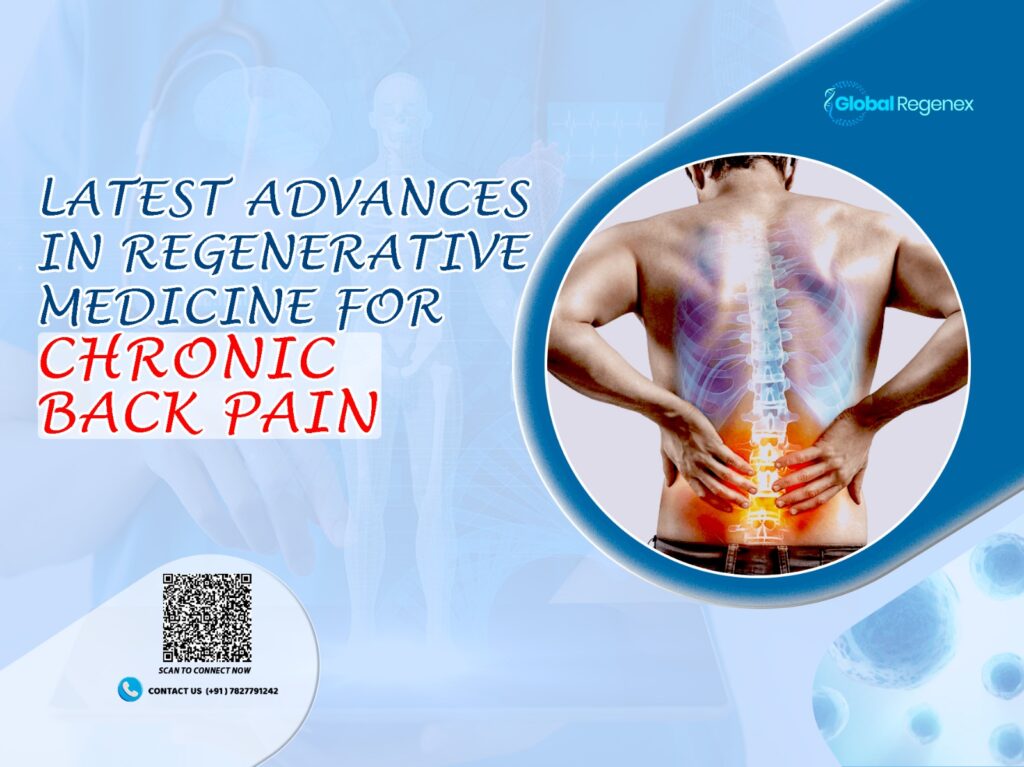
Summary: Learn why regenerative medicine is being explored in research for chronic back pain, how far research has come, what the latest advancements are, and how one can be eligible for the treatment. Chronic back pain doesn’t have one clear reason. Many people can suffer from chronic back pain for different reasons—whether it is due to injury, posture-related strain, degenerative changes, or more. Over time, it can start to influence your daily movement and work life and even makes hard to sleep. For many years, the standard treatment method has revolved around pain management and functional improvement by means of physiotherapy, medicines, and even surgeries when necessary. Although all these methods prove effective for many patients, some still investigate new directions such as the regenerative medicine treatment. As a result, an increasing number of people became interested in exploring how the body’s natural repair mechanisms are studied in research. However, it is also necessary to differentiate between already investigated options and the remaining under research. Understanding Regenerative Medicine and Its Applications For patients considering regenerative medicine for back pain, it becomes important to understand how the treatment works before undergoing the procedure. As the idea of regenerative medicine is strongly based on—whether the body can be helped to repair itself rather than just managing the symptoms. Regarding chronic back pain, this involves investigating the ways that biology affects the reaction to tissue in the back. Rather than addressing the symptom of pain management, the focus is placed on exploring the way the underlying structures, like discs, ligaments, and surrounding tissues, respond over time. This is one of several techniques under investigation, each at different levels of development, none of which has been established as accepted practice. The Role of Stem Cells in Back Pain Treatment The reason why researchers are increasingly studying stem cells for back pain comes from how they may interact with inflammation and tissue response. Instead of concentrating on repairing the damaged parts of the spine, present-day stem cell therapy is more concerned with figuring out whether stem cells have an impact on the environment surrounding injured tissue. These aspects include their involvement in: sending biological signals that may influence healing processes participating in inflammation influencing the reaction of tissues in the long term Currently, results have been inconsistent. Some studies have shown promise for certain applications, whereas others have found little efficacy. Inconsistency is one of the factors contributing to the continued research in this field. PRP Therapy in Chronic Back Pain: What Research Is Exploring Another part of regenerative medicine is platelet-rich plasma (PRP) therapy, being explored by researchers and practiced in strict clinical settings. PRP therapy includes the use of substances extracted from the patient’s blood that contain growth factors. They are currently being investigated to establish their ability to help heal various musculoskeletal disorders, such as back pain. Some areas where PRP is currently under investigation include: injuries to soft tissues problems related to ligaments beginning degeneration Although some patients claim to have seen some positive results, the effects are not the same for everyone. Tissue Engineering and Its Impact on Spinal Treatment As research continues to grow. The focus has shifted beyond just cells to also include their surrounding environment Tissue engineering deals with how supporting structures, known as scaffolds, can be combined with biological strategies. These supporting structures serve to aid the functioning of the cells and hold them in place. In the context of spinal studies, the following may be investigated: aiding injured disc structures promoting tissue stability increasing biological interactions in the spine As noted above, it is an emerging concept that focuses on biological engineering. The Future of Gene Therapy in Regenerative Medicine Another area in regenerative medicine that is actively being researched is gene therapy. This therapy involves examining whether a patient’s specific gene can help influence how tissue responds to damage or degeneration. To shine a light on back pain research, the focus is on understanding if these changes can affect inflammation or tissue repair at a deeper level. Although it remains in its infancy, this marks a departure towards a more focused approach. Most developments in this area are still in the research stage. Need Expert Advice: Global Regenex When considering regenerative medicine treatments for chronic back pain, it is very common to receive misleading information because such treatment techniques have been developed recently and require further investigation. In order to understand all the types of their application to your individual case, it is necessary to consider this issue carefully. Consulting with the team at Global Regenex can help you understand what is relevant based on your condition and current research. This will allow you to be confident in your decision-making process. The Concluding Thoughts Chronic back pain often needs a steady, long-term approach to manage rather than one quick solution. While traditional treatment helped manage the symptoms for years—regenerative medicine is now being explored as a developing area of research, but still remains an evolving area rather than evidence-based care. Being aware of the possibilities as well as the limitations will help in making wise decisions. With proper guidance, individuals can proceed to evaluate promising innovations alongside effective treatments. Frequently Asked Questions Q1. Why Does Chronic Back Pain Not Improve Easily In Some Cases? It is because chronic back pain is often caused by various issues, like disc degeneration, muscle problems, and inflammation. Due to this, the recovery becomes slow and may require a combination of therapies. Q2. Why Is Regenerative Medicine Different from Conventional Therapies? Regenerative medicine concentrates on the way the body reacts to the process from a biological perspective, but it is still being investigated and not applied regularly. Q3. Is PRP Therapy Commonly Used For Chronic Back Pain? PRP injections are currently being researched for several musculoskeletal conditions, among which is back pain. However, the effectiveness of this method varies significantly. Q4. Can These Approaches Help Avoid Surgery Completely? Not yet. Standard treatments, including medication, physiotherapy, and in some
How Technology Is Making Regenerative Medicine More Accurate
Summary: Technology is indeed transforming regenerative medicine driving a more accurate diagnosis, personalising treatments, and tracking real-time progress. Utilizing data analytic tools, imaging tools, and AI for better well being of the patient. Most people often wondered how doctors know whether treatment is actually working inside the patient’s body? To shine a light on regenerative medicine, this question becomes important. Patients choosing treatment like stem cell therapy often look to repair damaged tissue, but for them to be more effective doctors need accurate information about the patient’s condition and recovery cycle. This is where modern technology changes the regenerative medicine field, facilitating doctors with advanced diagnostic tools to artificial intelligences. Technology is helping both doctors and researchers understand how the human body works in far more detail and tailoring personalized treatment for patients with different conditions. Let’s look at how different technologies are making regenerative medicine more accurate and personalized. Precision Diagnostics in Regenerative Medicine Traditionally, every treatment session begins with a proper diagnosis. With accurate diagnostics tests and reports help regenerative medicine experts find the root cause of the condition and how damage it has caused. Modern medicine follows the same sophisticated diagnostic equipment to gain a good understanding of a patient’s health. Biomarker Testing: These tests can measure blood markers that signify the presence of inflammation, cell damage, or disease progression. Genetic Screening: Some diseases are caused by genetics. This information enables the doctor to provide a better treatment plan. Advanced Laboratory Analysis: These tests measure the state of the cells before any regenerative therapy is administered. Doctors can provide regenerative therapy with more assurance when they have a more accurate understanding of the human body. Data Analytics and Its Role in Treatment Outcomes Top healthcare often has a huge amount of information such as patient records, imaging reports, labs results, and treatment outcomes. With data analytic tools regenerative experts utilize this information for better treatment. Rather than rely on experience, experts can now study patterns across many other cases. Data analytics helps in several ways: Understanding the percentage of patients who are successfully treated Determining based on data which therapies are most effective for the different conditions Adjusting treatment accordingly by referring to actual patient results and records This means regenerative medicine can gradually become more evidence-driven and accurate. Wearable Technology for Monitoring Regeneration Progress People, nowadays, use smart watches and other devices to monitor everyday health progress. For patients undergoing regenerative therapies, these devices provide useful insights into recovery. Doctors can track things like: Physical activity levels Sleep quality Heart rate patterns Mobility improvements Doctors can monitor patients in real time, rather than waiting for the next hospital visit. This ensures that treatment plans can be adjusted if necessary. Machine Learning Algorithms in Patient-Specific Therapy Machine learning is a type of artificial intelligence that assists computers in analyzing large amounts of information and recognizing patterns. In regenerative medicine, machine learning is also being researched to assist doctors in creating more personalized therapies. Machine learning systems may help doctors: Predict how patients may respond to stem cell therapy Analyze complex medical information more efficiently Assist in research studies by recognizing patterns in patient treatments By learning more about patients, machine learning systems may help doctors select therapies that are more appropriate for their individual needs. The Use of Imaging Technologies in Tissue Repair With imaging tools doctors can exactly pinpoint what is occurring in the body. This is particularly significant in the field of regenerative medicine, where the aim is to repair damaged tissue or cells in the patient’s body. Several imaging techniques assist doctors in monitoring the healing process: Magnetic Resonance Imaging (MRI): This technique is effective for checking patient’s soft tissues, nerves, and cartilage. Ultrasound Imaging: This method helps the doctor to view the tissues in real time. Advanced Cellular Imaging:This technique is employed in the research field to analyze the behavior of the cells in the regeneration process. These techniques assist the doctor in checking whether the healing process is proceeding as expected. To Bring It All Together With modern technologies, regenerative medicine has become more precise and personalized. From diagnostic to monitoring devices, helping both patient and doctors understand how the body is responding to the treatment and how well the body is healing. If you are looking for regenerative medicine, then Global Regenex can provide you with the guidance and consultancy you need. Frequently Asked Questions Q1. What is regenerative medicine? Ans. Regenerative medicine is a medical approach that heals damaged tissues using advanced supportive treatment such as stem cell therapy. Q2. How does technology help in the improvement of regenerative medicine treatments? Ans. Modern technologies assist medical expert diagnosis patients properly and provide a tailored treatment based on their condition. Additionally, evaluating after care progress of the patient. Q3. How does artificial intelligence help in the practice of regenerative medicine? Ans. Artificial intelligence uses large medical data sets and identifies patterns that can help medical practitioners develop customized regenerative medicine treatments. Q4. Can wearable devices help track recovery after treatment? Ans. Yes, wearable technology can help medical practitioners in evaluating the progress of patients using various health indicators such as the rate of activity and the rate of heartbeat. Q5. Why are imaging technologies important in regenerative treatments? Ans. Imaging technologies help medical practitioners in evaluating the progress of patients and determining if the regenerative medicine treatment is effective in the healing process. Reference Links Precision medicine and regenerative medicine integration https://pmc.ncbi.nlm.nih.gov/articles/PMC7288190/ Artificial intelligence in regenerative medicine https://pmc.ncbi.nlm.nih.gov/articles/PMC7864893/ Wearable technologies in healthcare monitoring https://pmc.ncbi.nlm.nih.gov/articles/PMC7506577/ Imaging technologies in regenerative medicine https://pmc.ncbi.nlm.nih.gov/articles/PMC6121288/
What Is Regenerative Medicine? A Complete Beginner’s Guide
Summary: Regenerative medicine is a medical approach to healing or repairing damaged tissues through the application of sophisticated medical technologies, such as stem cell therapy, tissue engineering, and cellular therapies, to enhance the healing process. Have you ever thought about if your body could heal the damaged tissues themselves after every injury? Seems fictional. Traditionally, most of the treatments are focused on providing patients with symptom-based relief or slowing the progression of the condition. But regenerative medicine, on the other hand, takes a different approach. Advanced treatment like regenerative medicines aims to restore and repair damaged tissues, helping the body recover functions properly rather than managing illness. Researchers are currently exploring its potential for treating many other conditions and disorders ranging from neurological to autoimmune. Due to this potential, over the few decades, regenerative medicine has also gained immense popularity worldwide as supportive treatment. For patients considering this advanced treatment, understanding its basics is an important first step. Introduction to Regenerative Medicine Regenerative medicine is a medical treatment that focuses on providing healing through repair and regenerating the damaged tissues or cells in the body. Instead of only treating symptoms, regenerative therapies aim to restore function in the affected area. Some of the important aims of regenerative medicine are as follows: Healing the tissues that are damaged due to injury or disease. Initiating the natural healing process of the body. Replacing the damaged tissues with healthy ones. Increasing the rate of the healing process for the patient. Stem cells play an important role in the practice of regenerative medicine, as these cells can develop into different specialized cells. History and Evolution of Regenerative Medicine With many decades of long research and clinical trials, regenerative medicine has achieved some of the major milestones. Here are the following: 1950s Bone Marrow Transplant The use of bone marrow transplantation was one of the earliest regenerative medicine treatments for blood disorders and certain cancers. 1990s Stem Cells Research Expansion Researchers started investigating stem cells for their potential to regenerate damaged body tissues and organs. Early 2000s Tissue Engineering Developments Researchers began to use stem cells along with biomaterials in order to make regenerative medicine therapies easier. Recent Years Clinical Trials for Regenerative Therapies The latest regeneration medicine research is geared towards neurological, orthopedic and metabolic conditions. Regenerative medicine is still making progress by small steps through new technology for understanding the regeneration ability of the human body. Key Principles of Regenerative Medicine Scientists examining regenerative medicine follow several scientific principles that guide the modern era of how therapies are being developed. Cell Regeneration: Our body continuously produces new cells to replace those damaged or lost, provided the biological environment is appropriate. Cellular Communication: Cells are capable of sending and receiving signals to orchestrate the repair process. Tissue Repair and Remodeling: Tissues have the potential to be restored to health with the right biological factors. Restoring Function Rather Than Managing Symptoms: One of the main aims of regenerative medicine is to bring back the health of the body rather than focusing on symptom relief alone. Common Techniques Used in Regenerative Medicine Different medical techniques are used by those who practice regenerative medicine. Stem Cell Therapy: Stem cells are special cells that have the ability to turn into other body tissues. Researchers are particularly interested in stem cells because they might be able to boost the body’s natural ability to repair and regenerate tissues. Tissue Engineering: This technique develops tissue repair structures using a combination of cells and biomaterials. Platelet Rich Plasma (PRP) Therapy: This therapy uses the components of the patient’s own blood to promote tissue regeneration by providing growth factors to the tissues. Cell Therapies: This therapy delivers healthy cells to the body for the purpose of tissue repair and regeneration as well as cellular function improvement. Research is being done on these techniques to find out how effective and safe they are for various conditions and disorders. Benefits and Challenges of Regenerative Medicine Just as any new treatment, regenerative medicine emerges with its own benefits and challenges. However, researchers are currently exploring how these therapies can safely support healing for patients while ensuring long-term effectiveness. Potential Benefits May help repair tissues and organs that have been damaged May improve the recovery of injured tissues and organs May reduce the necessity of surgical interventions May support the concept of personalized treatment approaches Current Challenges Some therapies are still undergoing clinical research Treatment responses vary among individuals Long-term safety and effectiveness are still being researched Medical regulations must be stringently enforced to guarantee safe treatments As a result of the aforementioned factors, regenerative medicine treatments must always be considered with the advice of a medical expert. Final Verdict Regenerative medicine is a breath of fresh air in the world of modern medicine. It is not only about healing but also about regenerating the damaged tissues instead of just treating the symptoms. The continuous research in the field of regenerative medicine gives a lot of hope of learning new ways to cure various diseases. Should you want to learn more about these revolutionary treatments, reach out to Global Regenex who can provide you with expert advice on regenerative medicine and stem cell therapy. Frequently Asked Questions Q1. What is regenerative medicine used for? Ans. Regenerative medicine is being researched for a wide range of diseases and disorders including joint damage, brain disorders, heart problems, and other conditions related to aging. Q2. How does regenerative medicine work? Ans. It repairs damaged cells and helps the body’s natural healing mechanisms by using methods like stem cell therapy and tissue engineering. Q3. Is regenerative medicine widely available today? Ans. While some procedures have become a part of regular healthcare, many regenerative medicine methods are still under clinical research and trials. Q4. What role do stem cells play in regenerative medicine? Ans. Since stem cells are capable of differentiating into various types of cells and they can replace damaged tissues, they are a main focus of regenerative medicine research.
Finding the Right Regenerative Medicine Clinic: 7 Things to Consider
Summary: Finding the right regenerative medicine clinic for your condition needs careful research. Learning therapies, expertise and clinical credibility helps patients make the rightful decision for better well being. When people dealing with different types of disorders or degenerative conditions hear about advanced treatment like regenerative medicine, the first thought in their mind is often hope. The idea of repairing and regenerating damaged tissues for healing using advanced medical techniques seems promising. Treatments like stem cell therapy and other regenerative medicine are being researched for conditions involving joints to neurological disorders. However, with growing interest comes high demand which leads patients to ask questions : how do you choose the right regenerative medicine clinic? Not each and every clinic follows the right procedure and safety standards, and patients often come across with a lot of confusing information. Understanding how regenerative medicine really works and what to look for in a regenerative medicine clinic can change your healing journey significantly. What Is Regenerative Medicine? As its heart of medical science, regenerative medicine often focuses on the body’s ability to heal itself. Unlike traditional treatments, regenerative medicine goes beyond just providing symptom-based relief. It promotes healing through repair and regenerate the damaged tissues in the body. Some of the main concepts of regenerative medicine include: Healing of damaged tissues, as opposed to controlling the symptoms Promoting natural healing processes within the body Using biological treatments that promote regeneration of tissues Regenerative medicine as a field of research includes conditions such as joint degeneration, neurological disorders, autoimmune disorders, and chronic conditions. Common Types of Regenerative Therapies As you begin your research on the topic of regenerative medicine, you will find that there are a number of different therapies that are talked about. Each of these therapies works to aid the body in its own natural healing processes. Some of the more popular regenerative medicine therapies that are often discussed are as follows: Stem Cell Therapy: This type of therapy works to use specialized cells to aid the healing process and combat inflammation in the affected areas. Platelet-Rich Plasma Therapy: This type of therapy works to use platelets derived from the patient’s own blood to aid the healing and repair of the body. Cell-Based Regenerative Therapies: This type of therapy works to stimulate the natural repair processes within the body. Biologic Therapies: This type of therapy works to use biological materials to aid the regeneration and repair of the body. Key Factors in Selecting a Regenerative Medicine Clinic Regenerative medicines do give a ray of hope for patients with chronic diseases. However, deciding the treatment is only the first step of your healing journey. Choosing the right clinic is one of the most important steps when considering regenerative therapy. Here are some following factors to consider: Medical Qualifications and Licensing: The hallmark of a genuine clinic is one that is properly regulated medically and overseen by medical professionals. Experience in Regenerative Medicine: Facilities with a background of working with regenerative medicine are most likely well, versed with the knowledge and treatment protocols. Clear Communication Regarding the Treatment: A real clinic is one that informs comprehensively the treatment, the expected results, and the potential risks. Evidence-Based Approach: One should search for clinics that operate upon scientific research and findings. Proper Patient Evaluation: Typically, reputable clinics carry out medical evaluations prior to the recommendation of regenerative treatments to their patients. Safety and Sterility Standards: Regenerative therapies should always be done in medical environments and must comply with safety standards. Follow Up and Patient Monitoring: Therapy does not simply finish at the operation. Legitimate clinics must provide treatment follow ups for monitoring as one of the post care options. By reflecting on these points, patients can better equip themselves with knowledge and safety when making healthcare decisions. Credentials and Experience of Practitioners Another important point that might help you in selecting a regenerative medicine clinic is the qualification of the medical team. For example, a regenerative medicine clinic really ought to have technically skilled personnel who understand cell biology and tissue regeneration. When selecting a doctor for your regenerative medicine, here are the questions you should raise to yourself: Do they have recognised medical qualifications? Do they have experience in regenerative medicine treatments? Are they involved in clinical research or ongoing training? Experienced regenerative medicine experts are probably going to adhere to safety protocols in medicine more strictly and they are likely to be quite reasonable when it comes to expectations of the treatment results Putting It All Together The process of looking for the right clinic for regenerative medicine involves a process of research and decision-making. It is always important to look for the right professionals who have the right knowledge, treatment, and advice. If you are looking for advice on the right option for regenerative medicine, consulting Global Regenex would be the right approach. Frequently Asked Questions Q1. What is the use of regenerative medicine? Ans. Regenerative medicine is the process of promoting healing in the body through the process of repair and regenerating damaged tissues and cells through various methods such as stem cell therapy. Q2. Is stem cell therapy a type of regenerative medicine? Ans. Yes, stem cell therapy is a type of regenerative medicine that is widely studied for the purpose of tissue repair and healing. Q3. How can I find the best clinic for regenerative medicine? Ans. You can find the best clinic for regenerative medicine based on the qualification of the practitioners and the experience of the clinic. Q4. Are regenerative medicine therapies widely accepted as treatment options? Ans. Some are widely accepted, while others are still in the research and clinical trials phase. Q5. Why is regenerative medicine considered a vital part of modern medicine? Ans. Regenerative medicine is considered a vital part of modern medicine as it provides the best treatment options for the repair of damaged tissue. Reference Links Stem cell therapy in regenerative medicine https://pmc.ncbi.nlm.nih.gov/articles/PMC7288190/ Advances in regenerative medicine https://pmc.ncbi.nlm.nih.gov/articles/PMC7367472/ Stem cell therapy:
Best Countries for Regenerative Medicine Treatment in 2026
Summary: Stem cell therapy as a supportive treatment has drawn increasing scientific interest. India has emerged as a structured and research-aligned destination for regenerative medicine. It emphasizes regulated stem cell research, ethical clinical use, and a consultation-based process. India offers a balanced approach to safety, accessibility, and evidence-based regenerative treatment. As the world becomes increasingly aware of regenerative medicine, patients not only ask about the treatment option but also seek the right destination where treatment can be conducted responsibly and ethically. Though several countries around the world are focusing on biological therapies in healthcare, India has quietly established itself as a location where regenerative medical treatments happen in a defined scientific environment. Rather than being driven by promotional and unrealistic claims, the developing regenerative medicine ecosystem in India is now more focused on assessing patients, setting practical expectations, and adopting biologically sustainable approaches. It is for this reason that, at the start of 2026, India is increasingly considered an option for patients seeking regulated regenerative care. Let’s understand a little more in detail why India is a preferred destination for regenerative medicine like stem cell therapy. Understanding Regenerative Medicine In simple words, regenerative medicine is a transformative area that focuses on repairing, restoring, or regenerating the damaged cells, tissues, and organs in the body for healing and restoring functions. In contrast, traditional treatments often focus on symptom management through drugs or surgery, whereas regenerative medicine seeks to support biological repair mechanisms rather than focusing only on symptom management. Types of Regenerative Medicine Stem Cell Therapy: Leveraging the unique property of “undifferentiated” cells that possess the capacity to grow into differentiated cells like cardiac cells, nerve cells, and muscle cells. These cells can be implanted directly into the affected area. Tissue Engineering: Mixing cells with a biodegradable material and growth factors to “grow” a tissue or even an organ in a lab before transplanting it into a patient. Gene Therapy: In this therapy, patients’ faulty genes are modified to treat genetic disorders or enable the body to produce its own regenerative proteins. Biomolecules and Platelet Rich Plasma (PRP): Leveraging the growth factors present in a patient’s blood to promote faster healing of tendons, ligaments, and joints. Benefits of Regenerative Medicine Low Risk: Frequently employs the patient’s cells, ensuring a low risk of rejection due to immune system differences. Minimal Recovery: Most treatments are minimally invasive injections, thus do not have the long recovery times of surgical procedures. Therapeutic Potential: Aims to support tissue repair and functional improvement rather than lifelong symptom management. Personalized: Treatments can now be tailored to a patient’s respective gene or cell type. Why India Is Emerging As a Regenerative Medicine Destination The progress made by India in regenerative medicine has its basis in the country’s robust medical infrastructure and research tradition. Research institutions and facilities operate within the frameworks set by the nation and emphasize the safety and validation aspects. Key factors include incorporating the use of regenerative medicine in mainstream healthcare settings increased collaboration between international research organizations clear distinction between experimental research and clinical practice This balance ensures the patient is able to receive regenerative care without being subjected to unproven techniques. Regenerative Medicine in India: Regulatory Framework & Safety Standards India has nationally formulated regulatory guidelines governing stem cell research and clinical application. They ensure that the research is of an ethical standard. Prominent research, therapeutic institutions for regenerative medicine include: GMP-certified labs for cell processing NABH and NABL-approved hospitals for treatment Detailed processes regarding informed consent, traceability, and documentation Oversight to differentiate clinical research from commercial use These guidelines assist in distinguishing between licensed regenerative medicine and unauthorized kinds. Cost Accessibility Without Compromising Regenerative Medicine Quality One of the Indian strengths is cost accessibility and the preservation of scientific standards simultaneously. With low operational costs, effective infrastructure in the healthcare sector, and professionals, the cost-effectiveness of regenerative medicine remains in favor while maintaining recognized laboratory and clinical standards. This is why India emerges as a viable alternative for patients looking for long-term regeneration rather than a temporary palliative solution. Need for Consultation India is well-suited for patients with chronic, degenerative, or inflammatory conditions who look for evidence-based care and are ready for some biological improvements. However, the success of regenerative therapy often depends more on the guidance than on the therapy itself. This makes consultation with a regenerative medicine expert essential. This is where Global Regenex helps patients navigate scientific evidence, ethical standards, and personalized treatment coordination for making their healing journey seamless and guided. Final Verdict The future of regenerative medicine in India is shaped not by sensationalism but by structure and accountability in science and medicine. Through consultative care models and governed stem cell research initiatives in India, the country is increasingly recognized for its structured and responsible approach to regenerative medicine. Frequently Asked Questions Q1. Why is India considered the leading country for regenerative medicine? Ans. India brings together regulated research, accredited hospitals, GMP-certified labs, and consultation-based care. Q2. Is the stem cell treatment in India safe? Ans. Safety standards are very well followed when done within national guidelines and certified facilities. Q3. How affordable are the regenerative treatments in India? Ans. India offers greater cost accessibility while maintaining recognized scientific and clinical standards. Q4. Is there any guarantee with the use of stem cell therapy? Ans. No. Results depend on the condition, stage of disease, and the individual’s biology. Q5. Why is consultation important before the treatment? Ans. Consultation ensures the assessment of suitability, ethics, and planning of realistic outcomes. Reference Links Squillaro T., Peluso G., Galderisi U. – Clinical Trials with Mesenchymal Stem Cells: An Update https://pmc.ncbi.nlm.nih.gov/articles/PMC3636724/ Trounson A., McDonald C. – Stem Cell Therapies in Clinical Trials: Progress and Challenges https://www.nature.com/articles/nrm.2015.10 Galipeau J., Sensébé L. – Mesenchymal Stromal Cells: Clinical Challenges and Therapeutic Opportunities https://www.sciencedirect.com/science/article/pii/S1525001625000930