
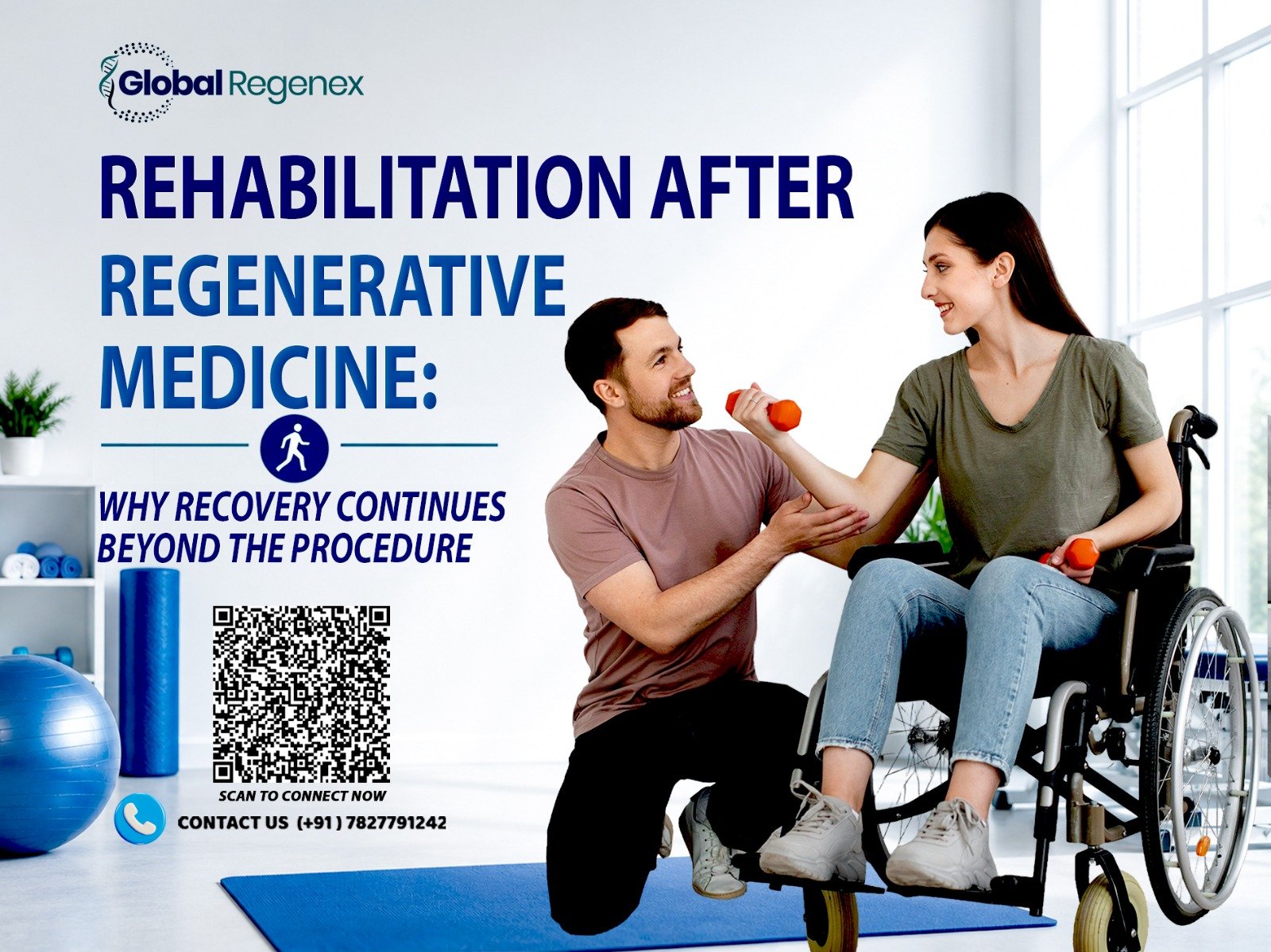
After completing a regenerative medicine procedure, it is halfway through the recovery journey. In many cases, rehabilitation helps patients recover gradually and regain movement, improve function, and return to daily activities under controlled medical guidance. Recovery is an ongoing process beyond the procedure itself, and the rehabilitation process may be adjusted based on the patient’s condition, progress, and healthcare needs. Following the recommended rehabilitation plan and attending regular follow-up appointments may help support safe and informed recovery.
Key Takeaways
- Recovery after regenerative medicine often continues well beyond the day of the procedure.
- Rehabilitation may help improve movement, function, and confidence as patients progress through recovery.
- Every rehabilitation plan should be based on the patient’s condition, treatment goals, and medical advice.
- Regular follow-up appointments help healthcare professionals monitor recovery and make adjustments when appropriate.
- Except for approved hematopoietic stem cell transplantation (HSCT) applications, most stem cell therapies in India remain investigational and are permitted only within regulated clinical research settings under applicable guidelines.
- Active participation in rehabilitation and realistic expectations are important parts of patient-centred recovery.
Medically Reviewed By
Written By
Nishat Arfin
Scientific Review By
Tabish Iqbal
Medically Approved By
Global Regenex Medical Team
Last Reviewed: July 2026
Rehabilitation After Regenerative Medicine: Why Recovery Continues Beyond the Procedure
For many patients, the last day of a regenerative medicine procedure is the final step in their recovery journey. However, the recovery process does not end when the procedure is over. In many cases, for full recovery, the weeks and months that follow after the treatment are just as important, as the body gradually responds to treatment and begins its natural healing process. This is why rehabilitation is often considered an essential part of overall patient care.
Despite the fact that regenerative medicine still has much room for development, several uses of stem cells are still being studied and need further clinical investigations. The recovery process after regenerative medicine involves not only the healing process but also the process of getting back strength, mobility, and other capabilities of the body, through which the patient needs to go according to the recovery program.
What Happens After a Regenerative Medicine Procedure?
Recovery often begins immediately after a regenerative medicine procedure, but the healing remains a process that usually takes place slowly over time. During this period, healthcare professionals monitor the patient’s progress while the body responds to the treatment and starts repairing the affected area. The exact recovery timeline and experience vary depending on the condition being treated, the procedure performed, and the patient’s overall health.
In the early stages of recovery, patients may experience:
A Short Monitoring Period
It is common practice for patients to be monitored immediately following the procedure for a certain period of time that is determined by their healthcare providers before heading home or continuing with other treatments.
Temporary Activity Restrictions
There might be temporary limitations on physical activities for patients in order to provide the treated area an opportunity to heal from all of the stress.
Scheduled Follow-up Appointments
Follow-up visits will enable healthcare professionals to assess the process of recovery and give advice concerning further treatment.
Gradual Return to Daily Activities
With successful recovery, patients are expected to gradually return to their everyday lives according to their doctor’s recommendations.
The first few days after treatment often influence how smoothly the rehabilitation process begins. Following your healthcare team’s advice during this period can help lay the foundation for recovery.
Why Does Rehabilitation Play an Important Role in Recovery?
Recovery after the regenerative medicine treatment is a gradual process rather than a quick outcome of the procedure itself. While the body starts its natural healing response after treatment, rehabilitation offers a structured pathway that helps patients return to their daily activities safely and progressively.
The rehabilitation plan is designed based on the patient’s condition, recovery stage, and guidance from the treating healthcare team.
Rehabilitation plays an important role by:
Supporting Safe Recovery: Patients are helped in knowing when and how to start increasing activity without any undue pressure on the treated region.
Restoring Everyday Function: Focusing not only on healing but also on helping patients regain confidence in performing daily activities, work responsibilities, and recreational movements where appropriate.
Encouraging Consistent Progress: Keeping a consistent rehabilitation plan ensures that patients receive expert monitoring throughout the recovery period and proper suggestions for adjustments are made by the healthcare professionals.
Complementing the Overall Treatment Plan: Rehabilitation works alongside medical care, follow-up assessments, and lifestyle recommendations to support a comprehensive recovery approach.
Recovery depends not only on the procedure itself but also on how consistently rehabilitation, follow-up care, and medical advice are followed throughout the healing process.
What Does a Rehabilitation Programme Usually Include?
Each rehabilitation programme is tailored according to the patient’s condition, recovery progress, and the goals agreed upon with the healthcare team. Rather than following the same routine for every patient, rehabilitation usually progresses in stages as healing continues.
During rehabilitation, the patient may experience:
| Stage of Recovery | What It May Involve |
| Early Recovery | It involves rest, activity changes, and guidance on protecting the treated area while healing begins. |
| Progressive Rehabilitation | Gradual application of supervised movements, flexibility exercises, and strengthening activities as recommended by a healthcare professional. |
| Functional Recovery | Involving activities that may help the patient safely return to work, sports, and everyday routine based on the progress. |
| Follow-up Review | Regular assessments to monitor recovery and determine whether any adjustments to the rehabilitation programme are needed. |
How Do Healthcare Professionals Monitor Recovery During Rehabilitation?
Recovery from regenerative medicine is not determined by a particular benchmark. Instead, healthcare practitioners evaluate progress over time in order to determine how the body is healing and whether the process of rehabilitation is going well as expected. Since every patient heals at a different rate, recovery is evaluated based on how a patient is progressing in their own healing journey.
During the rehabilitation process, some factors can be used for assessment of recovery, including:
Changes in Movement and Function
Rather than assessing patients using pain as the sole yardstick, medical professionals usually consider improvements in how comfortable a patient is able to move around and resume their regular activities.
Progress Towards Rehabilitation Goals
Rehabilitation is usually assessed in terms of meeting the objectives that have been set out for it. The objectives might include increasing mobility, strengthening muscles, or safely resuming work, sport activities or regular activities.
Response to Rehabilitation
The rehabilitation program is modified depending on how quickly or slowly the recovery process is moving as compared to what was anticipated.
Regular Clinical Reviews
Regular reviews are done to assess the patient’s progress, address new questions from the patient and make any required modifications to the recovery process.
Recovery process takes time and is not assessed through achievement of one particular goal. Regular review helps in assessing how far the patient has progressed in the recovery process.
Looking Ahead
Recovery is a gradual process that continues long after the procedure is completed. Staying engaged with rehabilitation, attending follow-up appointments, and discussing any concerns with your healthcare team can help you better understand your progress and recovery goals. Global Regenex encourages patients to view rehabilitation as an important part of their overall treatment journey rather than the final stage of care.
Frequently Asked Questions
Q1. Can I continue rehabilitation after returning home?
Yes. Many patients continue their rehabilitation even after returning to home under the guidance of their local healthcare provider. Following the rehabilitation plan advised by a healthcare professional helps maintain overall well-being.
Q2. Is it normal for recovery timelines to differ between patients?
Yes. different patient experiences different recoveries, based on factors such as medical condition, overall health, type of procedure, and patient response to rehabilitation.
Your healthcare team will assess your progress based on your specific recovery journey.
Q3. What should I do if I notice new symptoms during rehabilitation?
If you experience new or worsening symptoms during recovery, inform your healthcare provider promptly. Early communication allows your medical team to assess the situation and recommend appropriate next steps.
Q4. Can rehabilitation plans be adjusted during recovery?
Yes. Rehabilitation plans may be adjusted as your recovery progresses, based on follow-up assessments, clinical findings, and your healthcare needs.
Q5. Why are regular follow-up appointments important after regenerative medicine?
Regular follow-up appointments allow healthcare professionals to monitor your recovery, answer your questions, and adjust your rehabilitation plan when needed to support safe and gradual progress.
Reference Links
Zhang Z, Yao P, Fan S.
Advances in Regenerative Rehabilitation in the Rehabilitation of Musculoskeletal Injuries. Regenerative Medicine. 2024.
https://pmc.ncbi.nlm.nih.gov/articles/PMC11346529/
Liu W, Hu C, Zhang Y, et al.
Regenerative Rehabilitation: A Novel Multidisciplinary Field to Maximize Patient Outcomes. 2024.
https://pmc.ncbi.nlm.nih.gov/articles/PMC11495474/
Gottardi R, Stoddart MJ.
Regenerative Rehabilitation of the Musculoskeletal System. Journal of the American Academy of Orthopaedic Surgeons. 2018.
https://pmc.ncbi.nlm.nih.gov/articles/PMC6529175/
Ambrosio F, Russell AJ, et al.
The Convergence of Regenerative Medicine and Rehabilitation: Federal Perspectives. NPJ Regenerative Medicine. 2018.
https://pmc.ncbi.nlm.nih.gov/articles/PMC6180133/
Indian Council of Medical Research (ICMR) & Department of Biotechnology (DBT).
National Guidelines for Stem Cell Research. 2017.
Available at: https://main.icmr.nic.in/sites/default/files/guidelines/Guidelines_for_Stem_Cell_Research_2017.pdf
Medical Disclaimer: This blog is intended for educational purposes only and should not be considered medical advice or treatment recommendations. Recovery after regenerative medicine varies depending on an individual’s condition, clinical assessment, and rehabilitation needs. Except for approved hematopoietic stem cell transplantation (HSCT), most stem cell-based regenerative therapies remain investigational. Always consult a qualified healthcare professional before making decisions about your treatment, rehabilitation, or recovery plan.
Categories
- Alpastic Anemia
- Amyotrophic Lateral Sclerosis
- Articles
- Autoimmune Disease
- Autoimmune Disorders
- Autologous
- Autologous Stem Cell Transplant
- Blog
- blogs
- Bone Marrow
- Bone Marrow Transplants
- Brain Injury
- Cancer Immunotherapy
- Diabetes
- Diabetic
- Exosome Therapy
- Exosomes
- Eye Damage
- Glaucoma
- Hearing Loss
- Immunotherapy
- Joint Replacement
- Kidney
- Knee Injuries
- Lung Cancer
- Lymphoma
- Orthopedic
- Osteoarthritis
- Pancreatic
- Parkinson’s Disease
- PRP
- PRP Treatment
- Regenerate
- Regenerative Medicine
- Spinal Cord
- Stem Cell Therapy
- Stem Cell Therapy for Eye
- Stem Cell Transplants
- Stem cell treatment
- Stem Cell Treatment Patient Stories
- Stroke
- Supplements
- Tourism