
What Is the Difference Between Stem Cell Therapy and Conventional Treatment?
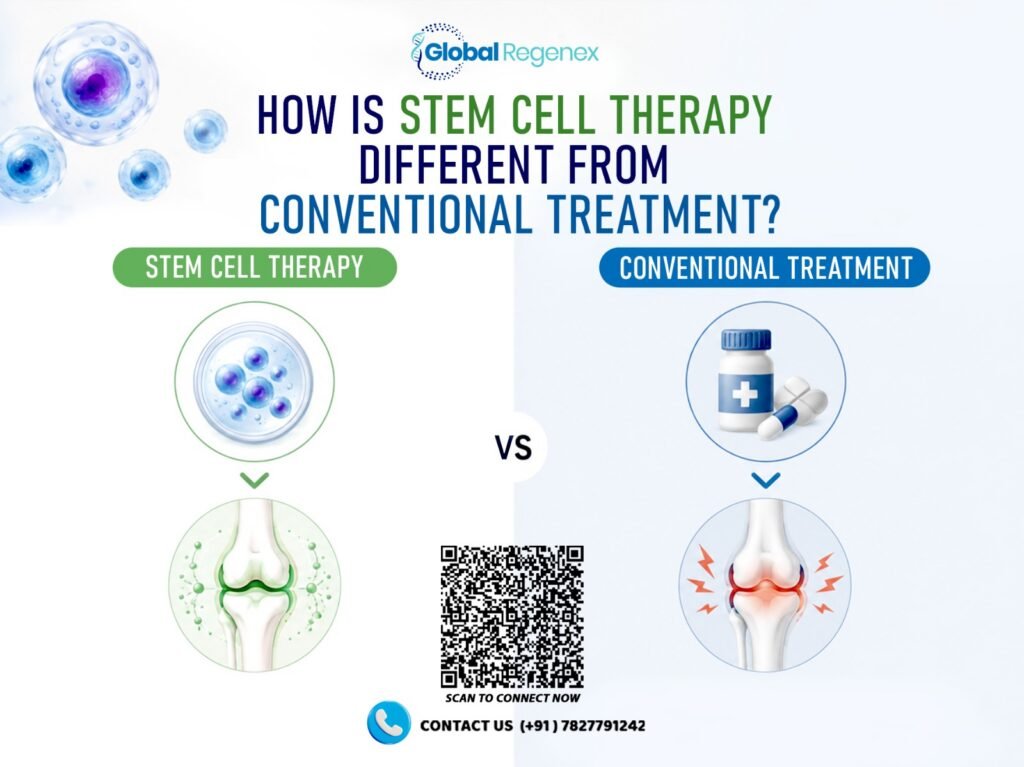
Stem cell therapy uses unique cellular approaches, while conventional treatment may involve medicines, surgery, procedures, rehabilitation, or other established forms of medical care. The main differences are based on how treatment is delivered, the level of evidence available, and its clinical role for a particular condition. Some stem cell applications are established, while others remain investigational. Key Takeaways Stem cell therapy and conventional treatment use different approaches to manage specific medical conditions. Conventional treatments may include medicines, surgery, procedures, rehabilitation, and supportive care. Stem cell therapy includes different cellular approaches, so its evidence varies by treatment and condition. Some stem cell applications have established clinical uses, while others remain investigational. The risks, expected outcomes, and clinical evidence should be assessed for the specific treatment being considered. Stem cell therapy is not automatically a replacement for conventional treatment. How Is Stem Cell Therapy Different from Conventional Treatment? Patients comparing stem cell therapy with conventional treatment may find that the two approaches differ in how they are developed, evaluated, delivered, and used in clinical care. Conventional treatment can include medicines, surgery, rehabilitation, procedures, or supportive care, while stem cell therapy refers to a broad group of cellular interventions. The term “stem cell therapy” does not describe one standard treatment. Different cell types, sources, preparation methods, protocols, and medical indications can have very different levels of evidence and clinical status. This can make comparisons difficult, particularly when information about newer cellular approaches is presented without explaining their evidence, risks, or current place in clinical care. What Is Stem Cell Therapy? Stem cell therapy refers to medical approaches that use stem cells as part of the approach. Some stem cell-based applications have established clinical uses, while many other applications remain investigational. Different approaches may involve different cell types, cell sources, preparation methods, administration routes, and treatment protocols depending on the condition and clinical purpose. In recent years, some stem cell applications have established clinical uses, while others remain the subject of ongoing clinical research. This difference matters when comparing stem cell therapy with conventional treatment, as the available evidence, treatment process, and clinical role may vary considerably between different cellular interventions. How Is Stem Cell Therapy Different From Conventional Treatment? The main difference is the type of intervention, how it is developed and evaluated, and its established clinical role. Conventional treatment, although, covers a wide range of established medical approaches, while stem cell therapy includes different cellular interventions with varying levels of clinical evidence. Features Conventional Treatment Stem Cell Therapy Treatment Approach It may involve medicine, surgery, rehabilitation, or supportive care. It uses specific cells or cellular interventions, depending on the condition and treatment. Clinical Evidence Many conventional treatments have established evidence for specific medical indications, although the strength of evidence varies by treatment and condition. Evidence varies considerably between cell types, conditions, and treatment protocols. Treatment Protocol Established treatments often have defined doses, procedures, schedules, and monitoring requirements. Protocols may differ in cell source, preparation, dose, administration route, and timing. Clinical Status Generally used as standard care for conditions where its use is established. It can range from established applications, such as certain hematopoietic stem cell transplants, to investigational approaches. Treatment Goals May focus on controlling disease, managing symptoms, removing affected tissue, restoring function, or preventing complications. The intended goal depends on the specific cellular intervention and condition and may include modifying disease activity, supporting tissue function, or addressing a specific clinical problem. Follow-up Monitoring depends on the condition and treatment, including response, side effects, and disease progression. Follow-up may assess treatment response, durability, and potential complications associated with the specific cellular approach. What Is the Clinical Evidence for Stem Cell Therapy? The level of evidence for stem cell therapy depends heavily on the condition, cell type, and treatment being studied. Some applications have established clinical uses, while other regenerative medicine applications are still being evaluated in clinical research for further evidence. Patients should assess the evidence for the specific cell type, condition, treatment protocol, and clinical indication rather than treating “stem cell therapy” as one standard intervention. Some factors that help put the evidence into context include: Specific Disease: Findings must bear relevance to the specific disease or medical condition under consideration. Type of Cell: Evidence for one stem cell type or cellular product cannot automatically be applied to another. Research Studies: Randomised controlled trials, observational studies, systematic reviews, and other research designs provide different levels of evidence. Safety Information: Evidence should consider both potential benefits and treatment-related risks. Durability: Longer-term follow-up can help determine whether observed clinical outcomes are sustained over time. Therefore, the scientific evidence must be considered alongside the individual treatment protocol and patient situation. A positive scientific study does not in and of itself mean that the treatment is appropriate for everyone. How Is Stem Cell Therapy Delivered? The way stem cell therapy is delivered to patients usually depends on the cell type, medical condition, and treatment protocol. Unlike many conventional medicines that may have established dosing and administration schedules, cellular interventions can involve additional steps related to cell collection, processing, administration, and monitoring. Some factors may include: Cell Sources: Cells can be obtained from sources like bone marrow, peripheral blood, or other tissues. Cell Preparation: Depending on the intervention, cells may need to be collected, processed, characterised, tested, and prepared according to the treatment protocol. Delivery Method: The administration route depends on the specific cell product, condition, treatment objective, and clinical protocol. Monitoring: Patients may require monitoring during and after administration to assess treatment response and potential complications. Follow-up: More tests may be required in order to assess the clinical outcome. The procedure is different for each intervention, so the therapy protocol should always be taken into account while assessing a certain stem cell therapy. What Are the Risks and Limitations of Stem Cell Therapy? Stem cell therapy should be considered alongside its potential risks and the limitations of the available evidence. These considerations vary according to the cell type, treatment protocol, administration method, and
Can Stem Cell Therapy Help With Autoimmune Diseases?

Some stem cell-based approaches may improve certain outcomes in selected autoimmune diseases, but the evidence varies by condition, treatment type, and patient. HSCT has established clinical use for selected severe autoimmune diseases, while many MSC-based applications remain investigational. Key Takeaways Researchers are studying whether certain stem cell-based approaches can modify immune activity and improve specific clinical outcomes in autoimmune diseases. HSCT and mesenchymal stem cell (MSC) therapies work differently and should not be considered interchangeable. Clinical studies have reported improvements in selected outcomes for some autoimmune diseases, but findings vary by condition and treatment approach. Research findings cannot be applied equally to every autoimmune disease or every patient. Many stem cell-based applications remain investigational and require further evidence on safety, effectiveness, and long-term outcomes. Can Stem Cells Improve Autoimmune Disease Outcomes? Dealing with autoimmune conditions can be unpredictable. A patient may have times when their condition seems relatively stable and then suddenly experience flare-ups that interfere with everyday activities, work, and quality of life. Although existing standard treatment may help control disease progression and symptoms, some patients still experience significant complications. This has led researchers around the world to investigate whether certain stem cell-based approaches may help influence abnormal immune activity in ways that may improve specific clinical outcomes. However, researchers are studying different cell types and treatment protocols across autoimmune diseases, including systemic lupus erythematosus, systemic sclerosis, multiple sclerosis, and rheumatoid arthritis. Because the evidence differs between conditions and approaches, findings from one disease should not automatically be applied to another. Which Stem Cell Approaches Are Being Studied for Autoimmune Diseases? Two major areas of research are hematopoietic stem cell transplantation (HSCT) and mesenchymal stem cell (MSC) therapies. Although both involve stem cells, they differ substantially in their purpose, procedures, evidence base, and safety considerations. Hematopoietic Stem Cell Transplantation (HSCT) HSCT is under investigation for severe autoimmune disorders where conventional therapies have not been effective. HSCT is being studied for severe autoimmune diseases, particularly in patients whose disease remains difficult to control with conventional treatment. The approach uses conditioning therapy followed by hematopoietic stem cell transplantation to rebuild the immune system. Mesenchymal Stem Cells (MSCs) The role of MSCs is under investigation based on their immune-modulating properties. They are being studied to see if they can affect inflammatory and immune responses associated with autoimmune disorders, but most of the applications using MSCs are investigational. A systematic review and meta-analysis in 2022 of 18 randomised controlled trials for five autoimmune diseases reported potential benefits in some autoimmune diseases; however, the authors suggested that more trials are required to verify their results. Which Autoimmune Diseases Are Being Studied With Stem Cells? Current research is not limited to one autoimmune condition. Scientists are investigating different stem cell approaches across different conditions where abnormal immune activity can cause persistent inflammation, tissue damage, or disability. Research has included conditions such as: Systemic Lupus Erythematosus (SLE): Studies are looking at HSCT as well as MSCs in terms of disease activity and immune modulation. Systemic Sclerosis (SSc): Studies have looked into HSCT in patients who have severe disease, especially the role of HSCT in terms of disease progression. Multiple Sclerosis (MS): Studies are looking at HSCT and other cell therapies in terms of disease activity and neurological effects. Rheumatoid Arthritis (RA): The therapeutic potential of MSCs and other cell-based treatments in immunomodulation is under study. However, the quantity and quality of the evidence base vary greatly between these diseases. Results obtained in the context of one autoimmune disease cannot be generalised to another. What Outcomes Are Researchers Measuring? Researchers are focusing on the various aspects of the autoimmune condition rather than the symptoms alone. Depending on the autoimmune disease and study design, researchers may examine: Clinical Outcomes: disease activity, disability, relapse rates, or organ function Safety Outcomes: adverse events, infections, and treatment-related complications Durability: whether any improvement continues during longer-term follow-up The study published in 2022 consisted of a systematic review and meta-analysis comprising 18 randomised controlled trials in relation to five autoimmune diseases. There was an observed benefit of MSC treatment on the SLEDAI scores and some lab parameters in the case of systemic lupus erythematosus, but the findings in MS were contradictory. Improvement in the activity of the disease in one clinical trial cannot automatically mean that the stem cell treatment is effective in all patients suffering from that disease. They are also considering long-term effects since any improvement seen immediately after the treatment may not indicate that the patient will continue to have good control of the disease. Why Can Stem Cell Outcomes Differ Between Patients? Stem cell research often does not produce the same results for every patient, even with the same condition. Outcomes can vary because the autoimmune disease, its severity, previous treatments, and the specific cellular approach that are being studied may differ. The nature and progression of the autoimmune disorder The degree of organ involvement Prior response to conventional therapy The general health of the patient Cell source and manufacturing process Duration and completeness of follow-up These variations indicate why the outcomes from a clinical trial can never be automatically generalised to all patients or autoimmune disorders. What Are the Risks and Limitations of Stem Cell Therapy for Autoimmune Diseases? The potential outcomes of stem cell therapy need to be considered alongside its risks and the limitations of current evidence. HSCT Risks: HSCT involves conditioning therapy and can carry significant risks, including infections and other treatment-related complications. Because of these risks, it requires careful patient selection and specialist monitoring. MSC-related Uncertainties: MSC therapies are being studied across different autoimmune diseases, but studies vary in cell source, manufacturing methods, dosing, treatment protocols, study size, and follow-up duration. Limited Evidence: Early-stage or small studies may not provide enough evidence to establish the long-term safety or effectiveness of a treatment. Different Results: Findings of one study or one treatment protocol of one autoimmune disease cannot be automatically extrapolated to other conditions or protocols. Individual Response: Positive results found during research cannot
Are Stem Cell Therapy Results Permanent?
Stem cell therapy results are not necessarily permanent. How long an observed outcome may last depends on the specific condition, cellular approach, treatment protocol, patient factors, and the quality and duration of available follow-up evidence. Although some established applications have long-term clinical data, many newer approaches still need further investigation to understand durability. Key Takeaways A lasting treatment response does not necessarily mean a permanent result. The durability of stem cell therapy can vary between conditions, treatments, and patients. Researchers assess long-term outcomes through continued clinical follow-up. Established stem cell applications may have more long-term evidence than newer investigational approaches. A sustained improvement does not necessarily mean that the underlying condition has been permanently resolved. Are Stem Cell Therapy Results Permanent? For many patients considering stem cell therapy, an important question is whether any improvement will last over time. Although an early positive response may feel encouraging, what matters over time is whether that change remains stable during continued follow-up. The meaning of a “lasting” result also differs between medical conditions and cellular approaches. Some treatments have years of clinical follow-up, while newer approaches may have only limited long-term data. Researchers look at how outcomes change over months or years instead of assuming an immediate response will continue indefinitely. For patients, this distinction matters because a treatment can show a sustained benefit without there being enough evidence to call the result permanent. What Does “Permanent” Mean in Stem Cell Therapy? In medical research, researchers are more likely to describe an outcome as sustained or durable when an observed benefit remains stable during long-term follow-up. Researchers usually describe results using some measurable term such as sustained improvements, remission, disease control, or long-term follow-up rather than claiming that a result will last forever. For example, a study may evaluate whether: Symptoms: Improvements remain during follow-up. Disease Activity: Disease activity remains controlled or changes over time. Function: Improvements in mobility or physical function are maintained. Need for Additional Treatment: Further treatment becomes necessary or remains unnecessary. Durability: The observed outcome remains stable over an extended follow-up period. A sustained treatment response does not necessarily mean that the underlying condition has been permanently resolved. What constitutes a sustainable response will depend on the disease that is being managed, the outcome being considered, and the period for which patients have been followed. How Do Stem Cell Therapy Results Develop Over Time? Scientists observe stem cell therapy outcomes over time rather than judging immediately after treatment. Researchers may monitor patients at different stages to determine whether an early response is maintained, changes, or requires further evaluation. A typical follow-up may consider: Early Response: Changes that are noted immediately after the intervention. Intermediate Follow-Up: Whether the early response is maintained during subsequent months. Long-term Follow-Up: Whether the noted benefits continue to stay stable for a longer period of time and also whether there is any concern about safety in the future. The follow-up period depends on the condition, cellular intervention, treatment protocol, and outcome being measured. An early response therefore does not necessarily predict the longer-term outcome. What Factors Influence the Longevity of Stem Cell Therapy Results? After undergoing the treatment, outcomes may vary from patient to patient because of several factors that influence how patients respond and how long that response can be observed. Underlying Condition: Different conditions may have different patterns of progression and response. Disease Severity: Patient disease stage and extent of severity may affect the long-term outcomes after the treatment. Cellular Intervention: The cell type, source, preparation, administration route, and treatment protocol may influence how outcomes are evaluated and how long an observed response can be followed. Patient Factors: Overall health, disease characteristics, previous treatments, and other individual clinical factors may influence treatment response and follow-up outcomes. Follow-Up Duration: Longer monitoring provides more information about whether an observed benefit is sustained. Additional Treatment: Other therapies received during follow-up can also influence later outcomes. Because these factors vary, results from one stem cell intervention should not automatically be considered representative of another. How Are Stem Cell Therapy Outcomes Measured Over Time? Scientists usually don’t rely on a single measure to determine whether a stem cell therapy has produced a lasting outcome. The measurement options used depend on the condition, treatment and specific objectives of the research. Researchers may assess: Symptoms: Scientists observe whether the reported symptoms improve, remain stable or return. Function: Any changes in movement, physical ability, or daily activities where relevant Disease Activity: Changes in disease activity, clinical findings, or validated measures relevant to the condition. Imaging or Laboratory Findings: When appropriate, imaging, laboratory tests, or other objective measures may be used to assess changes over time. Quality of Life: Changes reported by the patient may help determine whether there have been improvements in quality of life. Additional Treatment: Researchers may record whether patients require additional treatment during follow-up. Observing these outcomes at different stages helps researchers understand whether an early response is temporary, sustained, or changes over time. What Does Current Research Tell Us About Long-Term Results? Current research does not support a universal timeframe for how long stem cell therapy outcomes may last. As the level of available evidence varies depending on the condition, cellular intervention, study design, and duration of follow-up, that may require further evaluation. Existing therapies: Some stem cell-based applications, including hematopoietic stem cell transplantation (HSCT) for specific indications, have decades of clinical experience and follow-up data. Newer interventions: Some newer cell-based approaches have shorter follow-up periods, making it difficult to determine whether early observed benefits remain stable over many years. Study Quality: Randomised controlled trials, cohort studies, and other research designs provide different levels of evidence about treatment efficacy, safety, and durability. Long-term Monitoring: Follow-up studies are necessary for establishing not only whether there are any lasting effects, but also whether any safety issues arise subsequently. Patients should look for evidence specific to the condition and cellular intervention being considered rather than assuming that findings from one study or treatment can be applied to all
What Are the Best Accommodation & Travel Tips for International Patients?

International patients should choose accommodation and travel arrangements around their healthcare schedule, expected stay, mobility needs, and access to the healthcare facility. Patients should stay near the healthcare facility, arrange reliable local transport, and choose flexible bookings to make their medical journey abroad easier to manage. Key Takeaways Choose accommodation based on your treatment schedule, recovery needs, and mobility — not just price or map distance. Travel time to your healthcare facility matters more than how close it looks on a map. Flexible bookings can be useful because consultation, treatment, observation, or recovery timelines may change based on medical advice. Plan local transportation in advance, with a backup option ready. If travelling with a companion, plan their practical needs alongside your own. Always confirm your fitness to travel with your healthcare provider before booking flights. Accommodation & Travel Tips for International Patients Travelling abroad for medical care involves more than reaching the healthcare facility. Patients also need to consider where they will stay, how they will attend appointments, how much support they may need, and what happens if their medical schedule changes. Accommodation that works for a short holiday may not be suitable when a patient needs repeated healthcare visits, additional rest, mobility support, or a longer stay. For international patients travelling to India for medical care, these arrangements should be planned around the location of the healthcare facility, appointment schedule, expected stay, and medical advice. How Should International Patients Choose Accommodation? When you are receiving medical care abroad, where you stay is an important part of your treatment environment. Patients may spend considerable time resting between appointments, managing treatment-related fatigue, or recovering, so accommodation should be selected according to those practical needs. Rather than choosing the most affordable or most centrally located option, focus on what your day-to-day medical routine will actually look like. Before booking, consider: Distance and Access: Ensure the travel time and transportation options to the healthcare facility are reasonable. Room Comfort: Assess if the room is spacious enough for the required period of stay and has all the necessary amenities. Convenience Services: Consider access to transportation, space for rest, companion needs, nearby essential services, and flexibility if the medical schedule changes. Accessibility: Patients with difficulties in movement will require elevators and easy access. Companion Requirements: If a family member or companion is travelling with the patient, confirm occupancy rules, sleeping arrangements, and whether additional support can be accommodated. Cancellations and Extensions: A revision of the treatment plan may result in extension of the stay and, thus, is an important factor. If you’re travelling with a family member or companion, also confirm whether the accommodation comfortably accommodates two people, and whether there’s a suitable space for them to rest while you attend appointments. The most suitable accommodation is one that makes attending medical appointments, resting, and managing daily needs practical throughout the stay. How Far Should Accommodation Be From the Healthcare Facility? Distance on a map can be misleading sometimes. A clinic that appears to be ten minutes away may involve traffic, limited transport options, or a walk that becomes genuinely tiring after the treatment. Depending on the treatment and the patient’s condition, fatigue or other temporary effects may affect how comfortably they can travel between appointments. Patients should follow the treating team’s advice about mobility and travel after treatment. Regardless of how good you may be feeling on other days, travelling can become cumbersome. Selecting an accommodation that can make travelling to your clinic hassle-free is definitely worth your while. When comparing locations, patients should consider: Travel Duration: Look into how much travel time will be involved when travelling to the clinic at the typical appointment hour. Transport: Make sure that there will always be means to get to the clinic. Number of Visits: Being close by might be easier when there are multiple visits planned. Accessibility: Take into account whether the travel and accommodation are within reach for the patient. Local Surroundings: Nearby pharmacies, food outlets, grocery stores, and other essentials can reduce unnecessary travel. However, the objective may not always be to find the nearest accommodation, but rather a place where travelling to the health care institution becomes reasonably feasible. How Can Transportation Support an International Patient’s Medical Journey? Transportation plays an important part when patients need repeated healthcare visits or have difficulty moving around independently. The main goal is not simply to find the fastest way to travel, but to choose an option that is more practical for the patient’s medical situation and appointment schedule. Patients may need to consider: Ensure that you will be able to attend the planned appointments. Check if there is any need for further transportation assistance due to physical conditions or limitations. Factor in the possibility of repeat trips if there are appointments planned out. Check if there is a need for assistance after undergoing treatment or other appointments. Have an alternate plan for transportation if the initial plan fails to work. At Global Regenex, our international patient coordinators can advise on local transport options based on your treatment location and individual needs — so you’re not figuring this out alone from abroad. What Should Patients Consider Before Travelling for Medical Care? Before departing for medical care, patients should understand how travel fits into their planned healthcare schedule. The timing of travel may need to be carefully considered for consultation, treatment, observation, recovery, and follow-up requirements rather than being based on flight availability. Patients should discuss the following with their healthcare provider: Fitness to Travel: Whether their current health condition allows them to undertake the planned journey. Treatment Timing: Whether travel needs to be arranged around a consultation, procedure, or other scheduled care. Post-Treatment Travel: Whether they may need time for observation or recovery before travelling again. Follow-up Requirements: Whether an assessment or appointment is expected before returning home. Travel Support: Whether mobility assistance, a companion, or other practical support may be appropriate. The appropriate travel timing depends on the patient’s healthcare needs and advice from
What Factors Influence Stem Cell Therapy Outcomes?

Stem cell therapy outcomes can vary according to the patient’s condition, cell type, treatment protocol, clinical setting, and follow-up. Research also indicates that factors such as cell source, dose, administration route, treatment timing, and patient characteristics can contribute to differences between studies. Key Takeaways Stem cell therapy outcomes can vary depending on the patient’s condition and overall health. The type, source, and quality of stem cells can influence how a treatment is studied. Treatment protocols, including dosage, administration method, and timing, may affect outcomes. Clinical expertise, treatment standards, and appropriate patient monitoring are important considerations. Results from one study or condition cannot automatically be applied to every patient. Long-term follow-up is needed to understand whether observed outcomes are sustained. Stem Cell Therapy Success Factors Explained The same stem cell-based approach does not necessarily produce the same outcome in every patient. Clinical results can differ because patients, diseases, cell products, treatment protocols, and clinical circumstances are rarely identical. That is why understanding the factors behind the treatment’s positive results. It is important to know that approval for one regenerative medicine application does not automatically mean it will be treated as an expected result for everyone receiving the stem cell treatment. How Does Patient Selection Affect Stem Cell Therapy Outcomes? Determining whether a patient is suitable for a stem cell-based approach involves more than the diagnosis alone. Disease severity, previous treatment, overall health, and the specific intervention being considered can all influence whether a patient is suitable for a particular treatment or clinical study. Clinical research protocols typically use defined eligibility criteria rather than assuming that the same approach will produce similar outcomes in every patient. Some of the key factors include: Underlying Disease: The evidence for a stem cell-based approach must be considered in relation to the specific disease because research findings from one condition cannot automatically be applied to another. Disease Severity: The extent and progression of a disease can play an important role in determining the appropriateness of a treatment option. Previous Treatment: The response of a patient to conventional interventions may be significant in deciding the eligibility of stem cell-based approaches in some cases. Overall Health: Other medical conditions can affect treatment suitability, safety considerations, and the ability to undergo a particular procedure. Patient Characteristics: Age, history of a disease, organ involvement, and other individual features might play an important role in the decision-making process. Patient selection helps researchers and clinicians determine whether a particular approach has been studied adequately in patients with similar clinical characteristics. Why Do Stem Cell Type and Quality Matter? Not every stem cell used or studied in regenerative medicine is the same. Different cell types have different biological properties and clinical purposes, while some factors such as source, preparation, processing, and quality can influence how cell-based approaches are evaluated. This is why outcomes from one research study cannot simply be applied to another. Some important factors include: Cell Type: Hematopoietic stem cells, mesenchymal stem cells (MSCs), and other cell types vary and are used or investigated for different reasons. Cell Source: Depending on the intervention, cells may be obtained from sources such as bone marrow, peripheral blood, or umbilical cord tissue. Cell Processing: The way cells are isolated, prepared, expanded, or stored can differ between protocols and may affect the final cell product. Cell Quality: Quality assessment may include characteristics such as cell identity, purity, viability, and other relevant safety and manufacturing controls, depending on the cell product and clinical application. Standardisation: Consistent cell preparation and quality-control processes can improve the comparability and reproducibility of research findings. However, simply reading that the treatment uses stem cells does not provide enough information regarding its clinical evidence or expected outcomes. The specific cells being used and how they are prepared need to be considered as part of the complete treatment approach. How Does the Treatment Protocol Affect Stem Cell Therapy Outcomes? A personalised treatment can use a well-processed cell product and still be studied under very different protocols. Differences in dosage, administration process, timing, and treatment schedule can significantly affect how a stem cell-based intervention is evaluated. This is one of the main reasons why results from studies using similar cell types may not always be directly comparable. Some of the key factors include: Cell Dose: Studies may use different cell doses, and there is no single dose that applies to every stem cell-based intervention. Administration Route: The method of cell administration can vary depending on the health condition, purpose of treatment, and type of intervention. Treatment Timing: The timing of administration may depend on the condition, stage of disease, treatment objective, and study protocol. Treatment Schedule: Some interventions are administered once, while others involve repeated doses or treatment sessions. Protocol Consistency: Standardised treatment protocols provide a basis for reliable evaluation of safety and treatment results and facilitate the comparison of research findings. Therefore, the treatment protocol is an important element of the intervention. Knowing the cell type alone is therefore not enough to understand how a stem cell-based intervention was studied. The dose, route, timing, and overall treatment protocol also need to be considered. How Does Clinical Expertise Affect Stem Cell Therapy Outcomes? The environment and clinical setting in which a stem cell-based intervention is provided can also affect how safely and consistently the treatment is delivered. Appropriate patient assessment, qualified medical oversight, appropriate cell-handling procedures, safety monitoring, and access to follow-up care are important when evaluating a cellular intervention. Some of the key factors include: Qualified Medical Team: The medical team should assess the patient’s condition and determine whether the proposed approach is appropriate for the individual. Patient Evaluation: A clinical assessment can help identify relevant medical factors, potential risks, and whether the proposed approach is suitable for the patient. Cell Processing: Appropriate facilities and procedures for cell procurement, preparation, storage, and administration are important for maintaining the quality and safety of the cell product. Patient Safety Monitoring: Patients need to be monitored for any complications arising from the procedure and those
Why Do International Patients Choose India for Regenerative Medicine?
India has slowly but steadily become an important destination for international patients seeking regenerative medicine based on some important factors such as experienced medical specialists, patient-centred treatment planning, and comprehensive healthcare infrastructure. Many patient also value the personalised consultation, multidisciplinary care, and coordinated support throughout their medical care journey. Although regenerative medicine is still being researched, recommendations should always depend on the patient’s condition, current medical evidence, and a thorough medical evaluation before travelling. Key Takeaways India continues to attract international patients seeking regenerative medicine because of its experienced specialists, advanced healthcare infrastructure, and patient-centred approach. Personalised medical evaluations help determine whether regenerative medicine may be appropriate before patients travel for treatment. International patient services often include consultation support, travel coordination, interpreter assistance, and follow-up planning. Patients should review current clinical evidence, understand potential benefits and limitations, and discuss realistic expectations before making healthcare decisions. Except for approved hematopoietic stem cell transplantation (HSCT), most stem cell-based regenerative therapies remain investigational and should be considered within applicable regulatory and clinical guidance. Careful planning and informed decision-making can help international patients prepare for a smoother healthcare journey. Medically Reviewed By Written By Nishat Arfin Scientific Review By Tabish Iqbal Medically Approved By Global Regenex Medical Team Last Reviewed: July 2026 Why International Patients Choose India for Regenerative Medicine in 2026 For patient seeking new emerging therapies such as regenerative medicine, deciding where to receive the treatment in their home country or abroad is the biggest decision in their healthcare journey. Looking beyond the procedure itself, some international patients often compare factors like medical expertise, the availability of personalised evaluations, the quality of personalised support, and what happens before, during and after the treatment before they decide the destination. As regenerative medicine continues to advance, there is an increase in awareness from patients regarding the scientific data that backs up various treatments and how treatments are suggested. An understanding of the reasons that drive many foreign patients to visit India for regenerative medicine treatments would be helpful for patients. Why Is India a Preferred Destination for Regenerative Medicine? Many international patients often choose India because they are looking for more than just regenerative treatment alone. They want experienced medical teams, a clear understanding of their treatment options, and a healthcare journey that is planned around their medical needs before travelling to India Access to Experienced Clinical Teams Many regenerative medicine centres in India bring together specialists from different medical disciplines to assess complex health conditions. This collaborative approach allows treatment recommendations to be based on a patient’s diagnosis, medical history, and current clinical findings rather than a standard approach. Comprehensive Evaluation Before Treatment For international patients, pre-planning for therapy is done even before arrival in India. Pre-planning includes reviewing their medical history, investigations, and treatments previously undergone in order to decide whether regenerative medicine treatment would be suitable for them or not. Integrated Healthcare Services For patients who come from overseas, integration of all medical services under one healthcare provider is preferred because the treatment process becomes much simpler and organised for the patients. Value Without Compromising Quality Even though there are differences in terms of costs for each case treated through regenerative medicine treatment, what most patients from other countries look for in India is getting specialised medical service at comparatively lower costs. What Happens Before an International Patient Travels to India? Travelling to another nation for regenerative medicine usually starts long before a patient may board the flight. Before confirming travel plans, healthcare providers usually need to understand the patient’s condition through a detailed medical review. This first consultation helps determine whether regenerative medicine may be the right option and allows the medical team to prepare a personalised care plan before the patient’s arrival. Patients are generally asked to share information such as: Recent medical reports and imaging studies Details of previous treatments or surgeries Current medications and overall medical history A summary of their present symptoms and healthcare goals Following the assessment of these medical documents, the patient may be asked to undergo an online consultation regarding the patient’s condition, available treatments, and queries about these treatments. Sometimes, further investigations may also be required before travelling to make sure that the proposed treatment is based on the maximum amount of clinical data available. Taking these steps before leaving for India helps patients arrive with a clear understanding of what to expect and allows both the patient and the medical team to prepare for the next stage of the healthcare journey. How Are Treatment Decisions Made for International Patients? Deciding to travel for regenerative medicine does not necessarily mean a patient will receive treatment. A reputable treatment decision starts with determining whether regenerative medicine is appropriate for the patient’s condition, current health status, and available clinical evidence. Before advising a treatment approach, healthcare professionals commonly consider several aspects of the patient’s case. Clinical Diagnosis: Based on the established diagnosis, the stage of the condition, as well as symptoms currently present, it will be decided whether regenerative medicine applies to the patient’s overall treatment strategy. Previous Medical History: Understanding previous treatments, surgeries, medications, and rehabilitation history provides important context when evaluating available treatment options Current Clinical Evidence: Treatment recommendations have to be based on existing scientific evidence concerning the specific condition. Due to the continuous development of regenerative medicine, there is a variation in the level of evidence concerning diseases and treatment methods. Patient Healthcare Goals: It is important to note that some patients strive to improve functionality, while other individuals want to preserve their current level of independence or look into more treatment options. This step will ensure that the expectations are reasonable. A comprehensive clinical assessment enables both the patient and the healthcare team to base their decision on evidence-based practices and the healthcare needs of a patient. Why Is Transparency Important When Seeking Treatment Abroad? Patients travelling abroad for healthcare require a high level of trust, not just facilities. Unlike local patients, international patients make their important decisions
Can Regenerative Medicine Help Sports Injuries Recover Without Surgery?

Regenerative medicine is currently being studied as a non-surgical approach for some sports injuries, including tendons, ligaments, cartilage, and muscles. Current research suggests that therapies such as platelet-rich plasma (PRP) and mesenchymal stem cell (MSC) therapy may support the body’s natural healing process. Although stem cell therapy remains investigational for many musculoskeletal injuries, outcomes may vary depending on the type of injury, severity, and personalised patient factors. A complete medical evaluation is important before determining whether regenerative medicine may be the right approach for the overall treatment plan. Key Takeaways Regenerative medicine is being researched as a non-surgical approach for certain sports injuries, particularly those affecting tendons, ligaments, cartilage, and muscles. Platelet-rich plasma (PRP) and mesenchymal stem cell (MSC) therapy are among the regenerative treatments currently being studied for their potential role in supporting tissue repair and recovery. Current evidence suggests that treatment outcomes vary based on the type of injury, its severity, the patient’s overall health, and the rehabilitation plan followed after treatment. Not all sports injuries are suitable for regenerative therapies, making accurate diagnosis and careful patient selection important before considering these options. Except for approved hematopoietic stem cell transplantation (HSCT) applications, most stem cell therapies in India remain investigational and are permitted only within regulated clinical research settings under applicable guidelines. While research continues to expand, regenerative medicine should be viewed as one part of a comprehensive treatment strategy that may also include physiotherapy, rehabilitation, and lifestyle modifications. Medically Reviewed By Written By – Nishat Arfin Scientific Review By – Tabish Iqbal Medically Approved By – Global Regenex Medical Team Last Reviewed: July 2026 Regenerative Medicine for Sports Injuries: Current Research and Recovery Without Surgery When a patient experiences a pulled hamstring, torn ACL, or an inflamed Achilles, these injuries often mean months on the sidelines, and in some cases, discussions about surgery. While surgery may be necessary for some injuries, other conditions can be managed through rehabilitation, medication, or other newer approaches that may support the body’s natural healing process. This growing interest has brought scientists to research regenerative medicine for sports injuries. Scientists have recently been investigating regenerative treatments like PRP and MSCs for their potential use in aiding the regeneration of damaged tendons, ligaments, cartilage, and muscles. While initial results are promising in some cases, more is yet to be discovered, and treatment options will depend on the nature and severity of the injury. As far as regenerative medicine is concerned, much is still yet to be discovered in the stem cell arena. It is thus important to know how present studies view it, which patients will benefit from it, and how these procedures should be viewed in combination with traditional medical treatment. Why Is Regenerative Medicine Gaining Attention for Sports Injuries? Sports injuries can affect anyone, from professional sportsmen to people who enjoy regular physical activity. While several injuries respond well to rest, physiotherapy, or medication, some still cause pain or limit movement for long after the expected recovery period. These situations sometimes lead patients to seek alternatives that may support healing without surgery. Several factors can make sports injuries slower to heal, including: Low blood supply to the tendon and cartilage tissues Repeated stress due to resumption of exercise before full recovery Extreme tearing of the ligaments and muscles Individuals’ age and healing capabilities Due to these issues, these challenges have encouraged ongoing research into regenerative medicine as a possible way to support healing alongside conventional treatment. This therapy is not intended to substitute the existing ones but rather to find their place within the current practice. What Does Current Research Say About Regenerative Medicine for Sports Injuries? Research in regenerative medicine has grown over the years, while current studies focus on injuries that are slow to heal or do not respond well to conventional treatment. Although findings differ across different conditions, researchers continue to study whether these therapies may be used in clinical practice. Current areas of research include: Pain and Functional Recovery: Studies are being conducted to determine whether regenerative medicine techniques are able to aid in the reduction of pain, while simultaneously increasing joint function, mobility, and performance. Return to Sport: Research is currently taking place to determine whether regenerative techniques can safely be used to enable a quicker return to physical activity and competitive sports. Patient Population: Researchers are trying to find out whether certain patients, types of injuries, and states of healing will benefit from regenerative therapies. Long-Term Follow-Up: Long-term safety, efficacy, and effectiveness of regenerative medicine treatments are still being assessed through further clinical trials. Although there have been some promising results in many studies, large-scale clinical trials will be required before regenerative therapy becomes part of the standard treatment regimen for sports injuries. Which Sports Injuries Are Being Studied with Regenerative Medicine? Regenerative medicine is still being investigated for several areas of sports medicine, current research focuses mainly on injuries that are difficult to treat or manage through traditional treatments only. These conditions often include tissues with limited healing capacity or a higher risk of long-term recovery. Tendon Injuries: Tendinopathies of the Achilles tendon, tennis elbow, golfer’s elbow, and rotator cuff are some of the most researched injuries since the tendon tissue is slow to heal. Ligament Injuries: The use of regenerative treatments in certain ligament injuries such as partial tears of the ACL and MCL is currently being researched. Cartilage Injuries: Injuries of the knee and ankle cartilages are still under research due to the low regenerative capacity of cartilage tissues. Muscle Injuries: Chronic strains of muscles and other soft tissue injuries are under consideration in terms of their possible regeneration. Research continues to evolve across these injuries, but the strength of evidence differs between conditions. This is why treatment recommendations should always be based on the specific injury rather than assuming the same approach is suitable for every patient. Who May Be a Suitable Candidate for Regenerative Medicine? Regenerative medicine is not considered an appropriate approach for every patient with a sports
Why Is a Personalised Treatment Plan Important in Regenerative Medicine?
Each patient has different healthcare needs, which means the same treatment approaches may not be suitable for everyone. Personalised regenerative medicine focuses on tailoring treatment plans based on the patient’s full diagnosis, medical history, overall health, and treatment goals instead of following the standard approach. This personalised process helps healthcare professionals recommend care that aligns with each patient’s healthcare needs while supporting informed decision-making throughout the medical journey. Key Takeaways Personalised regenerative medicine focuses on developing treatment plans based on an individual’s medical condition, health history, and recovery goals. A comprehensive medical evaluation helps healthcare professionals determine whether regenerative medicine may be appropriate for a patient’s specific needs. Individualised treatment planning may include reviewing diagnostic reports, imaging, lifestyle factors, and previous treatments before recommendations are made. Personalised care also involves ongoing monitoring and adjustments when appropriate to support the patient’s progress. Except for approved hematopoietic stem cell transplantation (HSCT) applications, most stem cell therapies in India remain investigational and are permitted only within regulated clinical research settings under applicable guidelines. An evidence-based, patient-centred approach helps individuals make informed healthcare decisions while maintaining realistic treatment expectations. Medically Reviewed By Written By Nishat Arfin Scientific Review By Tabish Iqbal Medically Approved By Global Regenex Medical Team Last Reviewed: July 2026 Personalised Regenerative Medicine: How Individualised Treatment Plans Improve Patient Care When patients discuss treatment options, they expect the treatment to be more based on their condition, rather than a standard approach. In some cases, traditional approaches remain a reliable healthcare option. However, even for two patients sharing the same diagnosis, doctors often advise different treatment plans for patients based on factors such as medical history, condition, treatment goals, and overall healthcare needs. In regenerative medicine, doctors look beyond the diagnosis alone. Medical history, current health, diagnostic findings, previous treatments, and recovery goals all help determine whether regenerative medicine may be appropriate and, if so, how treatment should be planned. With regenerative medicine still being an investigational area of medicine, there are still many uses of stem cells that are experimental and need further clinical studies. Instead of taking a routine approach, healthcare providers examine every single case and tailor a treatment protocol in accordance with modern clinical data and the particular needs of an individual. Knowing the reasons why treatment protocols are personalised can be helpful for patients when posing questions and setting realistic expectations. What Does Personalised Regenerative Medicine Mean? Personalised regenerative medicine is an approach that considers the unique health condition of each patient before advising a treatment plan. Rather than relying on the standard approaches for everyone with the same diagnosis, healthcare professionals assess multiple clinical factors to understand whether regenerative medicine may be appropriate for a patient’s specific needs. To understand how personalised regenerative medicine works, doctors generally focus on four key areas: Assessment of Individual Health: Each patient is assessed according to his/her past medical history, current health status, diagnostics and previous treatments and not just the diagnosis. Evidence-Based Clinical Decision–Making: Treatment recommendations should be based on evidence currently available and clinical guidelines as well as a clinical assessment of the case. Patient-Centered Care: The patients are asked to share about their symptoms, concerns, treatment goals and expectations so that a decision can be made together. Personalised regenerative medicine does not mean creating a completely different treatment for every patient. It means using clinical evidence and individual health information to recommend the most appropriate approach for that person. What Factors Influence an Individualised Treatment Plan? Healthcare specialists tailor a personalised treatment plan based on careful review of several aspects of a patient’s health rather than focusing only on the diagnosis. This comprehensive evaluation considers each patient’s unique needs before considering whether regenerative medicine may be an appropriate option. Doctors generally review several aspects before developing an individualised treatment plan: Medical Condition and Diagnosis The nature of the disease, its seriousness, and the period of time for which the symptoms have been there have an impact in helping the clinician determine the appropriate treatment method. Medical History The surgical history, any other health problems the person is suffering from, medications, any previous treatment, allergies, among others, help create a full health picture of the person. Diagnosis Results Clinical information can be obtained through imaging results and laboratory reports, among others. Lifestyle and Recovery Goals Daily activity levels, occupation, physical demands, and personal recovery expectations may also be considered when discussing suitable treatment options. Overall Health Status Factors such as age, general fitness, and existing health conditions can influence treatment decisions and help ensure that recommendations are appropriate for the individual’s clinical needs. Taking into account these considerations, the healthcare professional will come up with a treatment plan based on the health of the patient as opposed to only focusing on the specific diagnosis. How Is the Most Appropriate Treatment Approach Determined? Once all medical information is gathered, healthcare specialists start reviewing the complete clinical picture before suggesting the treatment approach. The objective is not only to determine whether regenerative medicine should be considered, but to identify the option that is suitable for the patient’s condition, current health status, and long-term care objectives. In some cases, conventional treatment, rehabilitation, or a combination of therapies often remain the most suitable choice. Before making a recommendation, doctors generally consider: Current Clinical Evidence: The currently available information concerning a particular illness is studied to determine the appropriateness of applying regenerative medicine in a case and compare it with other therapies. Potential Benefits and Limitations: Each therapy has its pros and cons. Discussing them with a patient will allow forming reasonable expectations about a treatment before making a decision. Overall Risk Assessment: The physician considers whether the potential benefits outweigh the possible risks according to the general well-being and clinical condition of the patient. Patient Preferences and Shared Decision-Making: The decision regarding the therapy is made in discussions with the patient. The patient is advised to have knowledge of his treatment options and actively participate in making decisions concerning his health. Considering
What Should You Look for When Choosing a Regenerative Medicine Centre?

Selecting an appropriate regenerative medicine clinic goes beyond just considering the types of treatments offered and the cost. One must consider whether the medical team has relevant experience, how carefully your condition is evaluated, whether the potential benefits and limitations have been explained clearly, and whether the centre follows evidence-based clinical practice. Key Takeaways Choosing a regenerative medicine centre requires careful evaluation of medical expertise, patient care, and treatment planning. A reputable centre should conduct a thorough medical assessment before recommending any regenerative therapy. Clear communication about expected outcomes, possible risks, and current clinical evidence is an important part of informed decision-making. Qualified specialists, appropriate laboratory standards, and patient safety measures are key factors to consider. Except for approved hematopoietic stem cell transplantation (HSCT) applications, most stem cell therapies in India remain investigational and are permitted only within regulated clinical research settings under applicable guidelines. Comparing more than one centre and asking detailed questions during your consultation can help you choose the option that best suits your individual needs. Medically Reviewed By Written By Nishat Arfin Scientific Review By Tabish Iqbal Medically Approved By Global Regenex Medical Team Last Reviewed: July 2026 How to Choose the Right Regenerative Medicine Center: A Complete Patient Checklist In India, there are dozens of centres and hospitals offering regenerative medicine, including stem cell therapy. However, finding the right regenerative medicine centre is not as simple as it may seem. Many centres often provide the same services, making it challenging for patients to understand what really matters before making the healthcare decision. Looking beyond the treatments a centre offers, it is equally important to understand how your condition is evaluated, how treatment recommendations are made, and whether the centre follows safe, evidence-based clinical practices. Regenerative medicine is still a developing field, and there are still numerous stem cell applications that have yet to be clinically studied. Being aware of what to look for when considering a regenerative medicine clinic will help you make an informed decision. Why Does Choosing the Right Regenerative Medicine Centre Matter? Deciding which regenerative medicine centres to choose involves more than finding a place that offers a particular treatment. Determining the quality of the medical evaluation, the information you receive during the consultation, and the overall approach to patient care can all influence how your treatment experience may go and help you make informed medical decisions. Before proceeding with any kind of treatment, it is essential to ask yourself whether the centre: Reviews your medical history and current health before recommending treatment. Explains the possible benefits, limitations, and available treatment options clearly. Encourages you to ask questions and participate in treatment decisions. Recommends regenerative medicine only after a thorough clinical evaluation. Sitting back and taking time to evaluate these aspects can help you choose the right regenerative medicine centre that prioritises transparency, patient safety, and responsible medical care. What Should You Look for Before Choosing a Regenerative Medicine Centre? Your first consultation often tells you more about a regenerative medicine centre than any advertisement or website. A responsible centre should focus on understanding your condition before discussing treatment options, helping you make an informed decision rather than encouraging immediate treatment. During your consultation, consider whether the centre: Undertake an extensive medical examination before giving suggestions for treatments. Look into your medical history, scans, and test results to fully know about your illness. List down all treatment methods that are applicable to you, both conventional and otherwise. Describe to you the advantages, limitations, and possible risks of using regenerative medicine objectively. Create a customised treatment program according to your illness diagnosis rather than giving everyone the same treatment. Give ample time to your questions so that you know all about your treatment options. A centre that has a proper consultation program will definitely help its patients make wise healthcare decisions. How Can You Evaluate the Medical Team and Facility? A genuine regenerative medicine centre not only provides a personalised experience in the treatment it provides but also the expertise of its medical team and the quality of patient care. Before deciding where to undertake treatment, consider whether the centre meets the following expectations. Qualified Medical Specialists: Firstly, look for regenerative medicine specialists who have relevant training and experience in the field and the condition being evaluated. Multidisciplinary Approach: Look for centres that may involve specialists from different medical fields to provide more comprehensive treatment planning when required. Accredited Laboratory and Facility Standards: Accredited quality and safety standards can contribute to consistent clinical procedures and care delivery. Proper Infection Control Procedures: Appropriate hygiene and safety procedures are crucial in ensuring the health of patients undergoing any medical procedure. Clear Patient Communication: Patients should receive clear guidance about consultations, treatment planning, follow-up care, and whom to contact if they have further questions. A good facility is necessary, but it is supposed to be combined with skilled healthcare professionals, clear clinical procedures, and a patient safety focus. Considering these aspects in combination gives a more complete overview compared to advertisement and testimonial information alone. What Are the Warning Signs of an Unreliable Regenerative Medicine Centre? While there are many regenerative medicine clinics and centres to choose from, only some of them follow responsible clinical practices, which makes it equally important to recognise the warning signs that may indicate the centre’s unreliability. Finding these warning signs early can help patients avoid making decisions influenced by unrealistic expectations or incomplete information. Some common red flags include: Guarantees successful outcomes or claims to cure every condition. Recommends treatment without reviewing your medical history or diagnostic reports. Avoids discussing possible risks, limitations, or alternative treatment options. Pressures you to begin treatment before you have time to ask questions or consider your options. Provides incomplete information about the treatment process, follow-up care, or recovery It is important that a reliable centre specialising in regenerative medicine is transparent and helps its clients make the right decision. By noticing these red flags, you will find a centre that puts its clients’
What Should You Do Before Travelling to India for Medical Treatment?

Planning your first medical journey to India includes more than booking a flight. Before you travel, it is important to organise your medical records and secure the appropriate travel documents, confirm your treatment schedule, and plan your accommodation and local transportation. Preparing in advance can help reduce unnecessary stress, avoid last-minute delays, and ensure you are well prepared for your first consultation and treatment. A well-planned medical journey allows you to focus on your health instead of travel logistics. Key Takeaways Preparing for medical travel involves organising your healthcare, travel, and accommodation plans well before your departure date. Keeping essential documents, medical records, and prescriptions ready can help avoid unnecessary delays during your journey. Planning your arrival, local transportation, and post-treatment stay in advance can make your experience more comfortable and less stressful. Packing thoughtfully ensures you have everything needed for your treatment, recovery, and daily needs while in India. Understanding what to expect before, during, and after your medical trip can help you travel with greater confidence and peace of mind. Seeking guidance from your healthcare provider or medical facilitator before departure can help you prepare for a smoother treatment journey. Medically Reviewed By Written By Nishat Arfin Scientific Review By Tabish Iqbal Medically Approved By Global Regenex Medical Team Last Reviewed: July 2026 First-Time Medical Traveller to India? A Complete Pre-Departure Checklist Preparing for medical treatment in another country involves much more than arranging travel. Many first-time international patients wonder whether they have packed the right documents, planned enough recovery time, or understood what to expect after arriving in India. Taking care of these details before departure can make the journey more organised and allow patients to focus on their treatment instead of last-minute travel concerns. India is becoming a popular destination for numerous overseas patients due to their experienced medical professionals and modern healthcare facilities. Nevertheless, a successful medical trip starts long before the patient leaves the airport. With a pre-trip plan in place, the patient will be able to save time, focus more on treatment, and enjoy their vacation. Whether the patient is travelling alone or with a companion, this checklist will help them prepare for every stage of their medical journey before arriving in India. Why Planning Ahead Makes Medical Travel Easier Travelling abroad for medical treatment is different from planning a holiday. While managing travel arrangements, the patient needs to organise their treatment schedule, communicate with healthcare professionals, and make sure everything remains managed before you leave. Preparing ahead helps minimise avoidable disruptions and allows the patient to focus on their health once arrived. Planning your journey in advance offers several advantages: Reduces Last-Minute Stress: When you finish all necessary actions beforehand, you get more time to concentrate on your treatment rather than on any unforeseen problems that may appear during the trip. Supports Better Treatment Coordination: Making sure you have your consultation and treatment appointments arranged will help you to organise everything in a better way. Keeps You Organised: Having an itinerary will help you stay organised and keep track of all important dates, documents, and other aspects related to your treatment. Allows Time for Unexpected Changes: Last-minute flight changes, medical requirements, or paperwork may arise. Being prepared will allow you enough room to take care of any unforeseen circumstances without putting yourself under extra pressure. Even though being prepared won’t take away all the hurdles, it will certainly make your entire medical experience more smooth and organised. What Documents Should You Prepare Before Departure? Keeping all the documents organised before travelling can help prevent unnecessary delays at immigration, during hospital registration, and throughout the treatment journey. Packing both printed and digital copies in one secure folder also makes it easier to access important information whenever needed. Use the following list before your travel: Valid Passport: Make sure that your passport is valid and that there are enough blank pages in your passport for immigration stamping. Medical Visa and Other Supporting Documents: Make sure that you have got your medical visa approval. Also, make sure that you are carrying all the documents that are being asked for by the authorities, like an invitation letter from the hospital, if applicable. Medical History: Have all your medical reports, scan reports, laboratory reports, and referrals organised in chronological order. Doctor’s Prescription: Carry all the copies of your prescriptions, including medication names and their dosage. Travel and Health Insurance Details: Carrying your insurance details is very important. You should be clear about what your insurance will cover during your stay. Emergency Contact Information: Keep a hard copy as well as a digital copy of your emergency contacts, such as family members, your attending doctor’s details, and your accommodation details. Preparing all these documents before departure helps ensure a smoother check-in process, faster hospital registration, and better communication with the healthcare team after arrival in India. How Should You Plan Your Travel and Accommodation? After medical appointments are confirmed, the next step is to organise travel and accommodation in India. Planning these arrangements early can help patients arrive on time, settle in comfortably, and avoid any stress before the treatment begins. Book Your Flights Wisely Try to book your flights in such a way that you will be able to reach India one or two days prior to your planned consultation. That will give you some time to settle down and make your trips to the hospital hassle-free. Choose Accommodation Close to Hospital Choosing accommodation close to your treatment centre can make follow-up visits, scheduled evaluations, and recovery after procedures more manageable, particularly if multiple hospital visits are required. Plan Local Transportation Try to plan your local transport beforehand so that when you reach India, you will not have to worry about how to move around from the airport to the hotel to the hospital. Travel with a Companion if Needed If your treatment requires the assistance of someone for you, do not forget to bring along your family member or friend with you so that you