
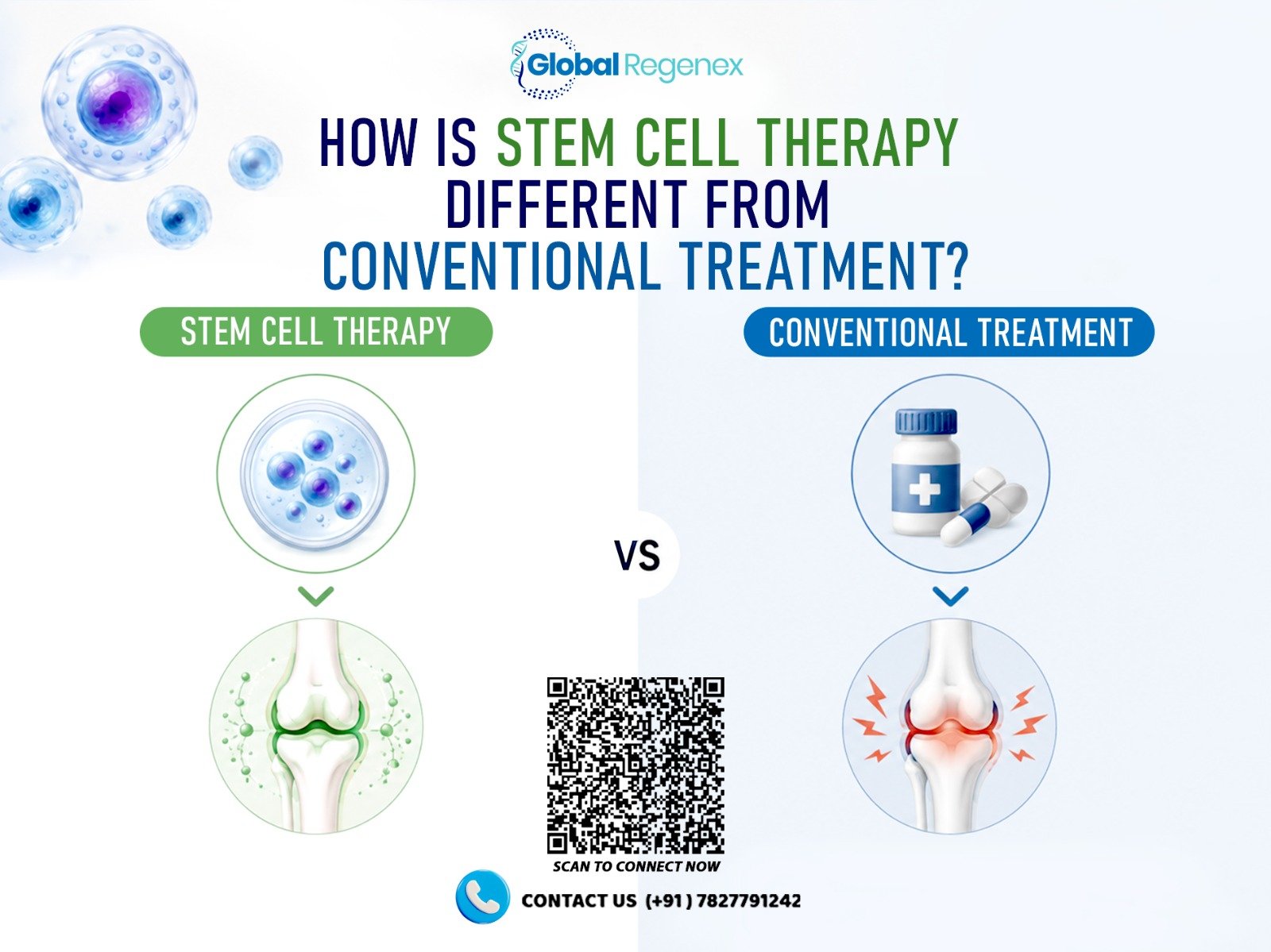
Stem cell therapy uses unique cellular approaches, while conventional treatment may involve medicines, surgery, procedures, rehabilitation, or other established forms of medical care. The main differences are based on how treatment is delivered, the level of evidence available, and its clinical role for a particular condition. Some stem cell applications are established, while others remain investigational.
Key Takeaways
- Stem cell therapy and conventional treatment use different approaches to manage specific medical conditions.
- Conventional treatments may include medicines, surgery, procedures, rehabilitation, and supportive care.
- Stem cell therapy includes different cellular approaches, so its evidence varies by treatment and condition.
- Some stem cell applications have established clinical uses, while others remain investigational.
- The risks, expected outcomes, and clinical evidence should be assessed for the specific treatment being considered.
- Stem cell therapy is not automatically a replacement for conventional treatment.
How Is Stem Cell Therapy Different from Conventional Treatment?
Patients comparing stem cell therapy with conventional treatment may find that the two approaches differ in how they are developed, evaluated, delivered, and used in clinical care. Conventional treatment can include medicines, surgery, rehabilitation, procedures, or supportive care, while stem cell therapy refers to a broad group of cellular interventions.
The term “stem cell therapy” does not describe one standard treatment. Different cell types, sources, preparation methods, protocols, and medical indications can have very different levels of evidence and clinical status.
This can make comparisons difficult, particularly when information about newer cellular approaches is presented without explaining their evidence, risks, or current place in clinical care.
What Is Stem Cell Therapy?
Stem cell therapy refers to medical approaches that use stem cells as part of the approach. Some stem cell-based applications have established clinical uses, while many other applications remain investigational. Different approaches may involve different cell types, cell sources, preparation methods, administration routes, and treatment protocols depending on the condition and clinical purpose.
In recent years, some stem cell applications have established clinical uses, while others remain the subject of ongoing clinical research. This difference matters when comparing stem cell therapy with conventional treatment, as the available evidence, treatment process, and clinical role may vary considerably between different cellular interventions.
How Is Stem Cell Therapy Different From Conventional Treatment?
The main difference is the type of intervention, how it is developed and evaluated, and its established clinical role. Conventional treatment, although, covers a wide range of established medical approaches, while stem cell therapy includes different cellular interventions with varying levels of clinical evidence.
| Features | Conventional Treatment | Stem Cell Therapy |
| Treatment Approach | It may involve medicine, surgery, rehabilitation, or supportive care. | It uses specific cells or cellular interventions, depending on the condition and treatment. |
| Clinical Evidence | Many conventional treatments have established evidence for specific medical indications, although the strength of evidence varies by treatment and condition. | Evidence varies considerably between cell types, conditions, and treatment protocols. |
| Treatment Protocol | Established treatments often have defined doses, procedures, schedules, and monitoring requirements. | Protocols may differ in cell source, preparation, dose, administration route, and timing. |
| Clinical Status | Generally used as standard care for conditions where its use is established. | It can range from established applications, such as certain hematopoietic stem cell transplants, to investigational approaches. |
| Treatment Goals | May focus on controlling disease, managing symptoms, removing affected tissue, restoring function, or preventing complications. | The intended goal depends on the specific cellular intervention and condition and may include modifying disease activity, supporting tissue function, or addressing a specific clinical problem. |
| Follow-up | Monitoring depends on the condition and treatment, including response, side effects, and disease progression. | Follow-up may assess treatment response, durability, and potential complications associated with the specific cellular approach. |
What Is the Clinical Evidence for Stem Cell Therapy?
The level of evidence for stem cell therapy depends heavily on the condition, cell type, and treatment being studied. Some applications have established clinical uses, while other regenerative medicine applications are still being evaluated in clinical research for further evidence.
Patients should assess the evidence for the specific cell type, condition, treatment protocol, and clinical indication rather than treating “stem cell therapy” as one standard intervention.
Some factors that help put the evidence into context include:
- Specific Disease: Findings must bear relevance to the specific disease or medical condition under consideration.
- Type of Cell: Evidence for one stem cell type or cellular product cannot automatically be applied to another.
- Research Studies: Randomised controlled trials, observational studies, systematic reviews, and other research designs provide different levels of evidence.
- Safety Information: Evidence should consider both potential benefits and treatment-related risks.
- Durability: Longer-term follow-up can help determine whether observed clinical outcomes are sustained over time.
Therefore, the scientific evidence must be considered alongside the individual treatment protocol and patient situation. A positive scientific study does not in and of itself mean that the treatment is appropriate for everyone.
How Is Stem Cell Therapy Delivered?
The way stem cell therapy is delivered to patients usually depends on the cell type, medical condition, and treatment protocol. Unlike many conventional medicines that may have established dosing and administration schedules, cellular interventions can involve additional steps related to cell collection, processing, administration, and monitoring.
Some factors may include:
- Cell Sources: Cells can be obtained from sources like bone marrow, peripheral blood, or other tissues.
- Cell Preparation: Depending on the intervention, cells may need to be collected, processed, characterised, tested, and prepared according to the treatment protocol.
- Delivery Method: The administration route depends on the specific cell product, condition, treatment objective, and clinical protocol.
- Monitoring: Patients may require monitoring during and after administration to assess treatment response and potential complications.
- Follow-up: More tests may be required in order to assess the clinical outcome.
The procedure is different for each intervention, so the therapy protocol should always be taken into account while assessing a certain stem cell therapy.
What Are the Risks and Limitations of Stem Cell Therapy?
Stem cell therapy should be considered alongside its potential risks and the limitations of the available evidence. These considerations vary according to the cell type, treatment protocol, administration method, and medical condition.
Some factors to consider include:
- Treatment-Specific Risks: Possible complications vary according to the type of cell-based treatment and the manner in which it is delivered.
- Limited Evidence: There are some techniques that have only been tested in small or preliminary clinical trials.
- Variable Outcomes: The results will vary according to the individual, the disease, and the procedure used.
- Long-Term Uncertainty: Some procedures need longer observation to determine their possible complications.
- Clinical Status: Patients should understand whether the specific intervention has an established clinical use or remains investigational.
These limitations do not mean that all stem cell-based approaches carry the same level of uncertainty. The evidence and risks need to be assessed for the specific intervention and condition, rather than the term stem cell therapy as a whole.
How Do Doctors Determine if Stem Cell Therapy Is Appropriate?
A doctor does not determine treatment suitability based solely on the name of a disease. They consider your diagnosis, disease severity, previous treatment response, overall health, and the level of evidence available for the specific stem cell treatment.
Assessment may consist of:
- Diagnosis: Confirmation of the diagnosis and assessment of how the condition has progressed.
- Disease State: Evaluation of disease severity, affected organs, symptoms, and functional status.
- Treatment History: Review of previous treatments, responses, and any relevant treatment-related complications.
- Overall Health: Considering other medical conditions and factors that could affect treatment safety.
- Treatment Evidence: Assessment of the available clinical evidence for the specific intervention and condition.
- Risks and Benefits: Balance between the possible clinical benefit and the risks of the procedure.
This means that being only diagnosed with a condition for which stem cell therapy is currently being investigated does not automatically make the patient suitable for the treatment. Determining suitability is always based on a personalised medical assessment and the evidence available for that specific intervention.
Looking Ahead
Stem cell therapy differs from conventional treatment in its cellular approach, clinical evidence, treatment process, and potential risks. While some applications have established clinical uses, others remain under investigation. The most appropriate treatment depends on the specific condition, available evidence, and individual patient factors.
Patients should discuss these considerations with a qualified healthcare professional before choosing a stem cell-based approach or changing an established treatment plan.
Frequently Asked Questions
Q1. Is stem cell therapy better than conventional treatment?
Neither approach is universally suitable. The appropriate option usually depends on the condition, available evidence, treatment goals, and individual patient factors.
Q2. Can stem cell therapy replace conventional treatment?
Not always. Some stem cell applications remain investigational, so patients should not replace established treatment without discussing the decision with a qualified healthcare professional.
Q3. Why does the evidence for stem cell therapy vary?
The level of evidence varies because different stem cell types, medical conditions, treatment protocols, and study designs can produce different outcomes.
Q4. Are all stem cell treatments considered experimental?
No. Some stem cell applications have established clinical uses, while others are still being evaluated through clinical research.
Q5. How do I know if a stem cell treatment is appropriate for my condition?
A qualified healthcare professional can assess your diagnosis, medical history, treatment options, and the evidence available for the specific stem cell intervention.
Reference Links
(1) International Society for Stem Cell Research (ISSCR). (2025). Guidelines for Stem Cell Research and Clinical Translation. Retrieved from
https://www.isscr.org/guidelines
(2) International Society for Stem Cell Research (ISSCR). (2024). The ISSCR Guide to Stem Cell Treatments. Retrieved from
https://www.isscr.org/s/ISSCR_PatientHandbook_v12_Feb2024_Redesign_v4b.pdf
(3) FDA. (2021). Important Patient and Consumer Information About Regenerative Medicine Therapies. Retrieved from
(4) Cao, J., Hao, J., Wang, L., et al. (2021). Developing standards to support the clinical translation of stem cells. Stem Cells Translational Medicine, 10(Suppl 2), S85–S95. DOI: 10.1002/sct3.13035.
https://pubmed.ncbi.nlm.nih.gov/34724717/
(5) Main, H., Munsie, M., & O’Connor, M. D. (2014). Managing the potential and pitfalls during clinical translation of emerging stem cell therapies. Clinical and Translational Medicine, 3, 10. DOI: 10.1186/2001-1326-3-10.
https://pubmed.ncbi.nlm.nih.gov/24949190/
Medical Disclaimer
This blog is intended for educational and informational purposes only and should not be considered medical advice, diagnosis, or treatment recommendation. Stem cell-based approaches may differ in their clinical evidence, potential risks, regulatory status, and suitability for individual patients. Some applications remain investigational and may only be appropriate within regulated clinical research or specialised clinical settings. Patients should consult a qualified healthcare professional to discuss established treatment options, individual risks, eligibility criteria, and whether a particular stem cell-based approach may be appropriate for their medical condition.
Categories
- Alpastic Anemia
- Amyotrophic Lateral Sclerosis
- Articles
- Autoimmune Disease
- Autoimmune Disorders
- Autologous
- Autologous Stem Cell Transplant
- Blog
- blogs
- Bone Marrow
- Bone Marrow Transplants
- Brain Injury
- Cancer Immunotherapy
- Diabetes
- Diabetic
- Exosome Therapy
- Exosomes
- Eye Damage
- Glaucoma
- Hearing Loss
- Immunotherapy
- Joint Replacement
- Kidney
- Knee Injuries
- Lung Cancer
- Lymphoma
- Orthopedic
- Osteoarthritis
- Pancreatic
- Parkinson’s Disease
- PRP
- PRP Treatment
- Regenerate
- Regenerative Medicine
- Spinal Cord
- Stem Cell Therapy
- Stem Cell Therapy for Eye
- Stem Cell Transplants
- Stem cell treatment
- Stem Cell Treatment Patient Stories
- Stroke
- Supplements
- Tourism