
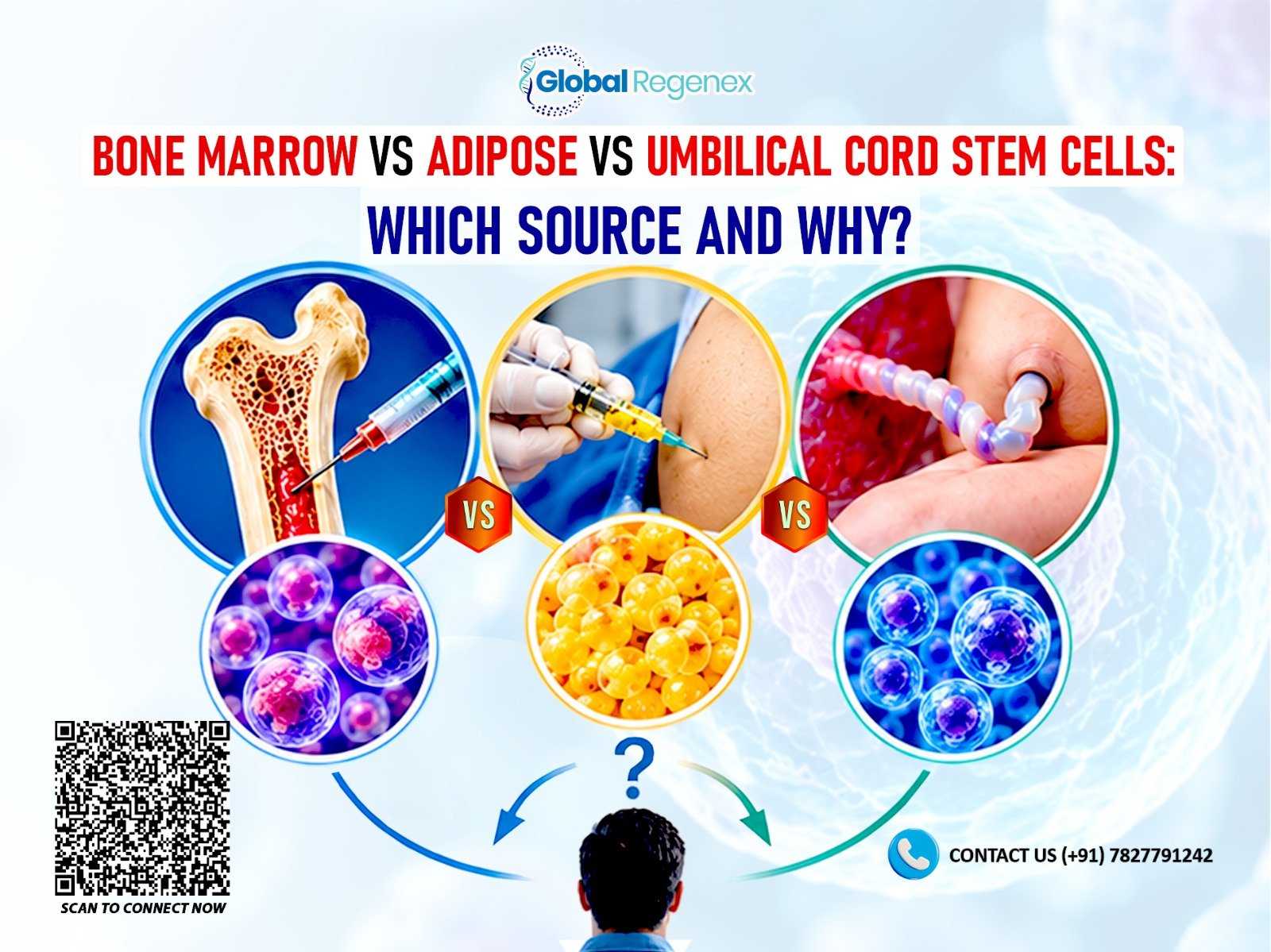
Stem cells are obtained from different sources such as bone marrow, adipose tissue and umbilical cord. Bone marrow and adipose tissue are being investigated as sources of mesenchymal stem cells (MSCs), while umbilical cord blood contains some blood-forming stem cells in specific transplant settings. Cells derived from cord tissues are different and remain an area of research. The appropriate source often depends on the cell type, intended use, clinical evidence and potential risks.
Key Takeaways
- Bone marrow, adipose tissue and umbilical cord provide different sources of stem or stromal cells, but these sources are not interchangeable.
- Bone marrow and adipose tissue are commonly studied as sources of mesenchymal stromal cells (MSCs).
- Umbilical cord blood contains blood-forming stem cells used in established transplantation settings for certain blood-related disorders.
- The suitability of a stem cell source depends on the specific cell type, medical condition, intended use and supporting clinical evidence.
- Patients should verify the safety, evidence and regulatory status of a proposed treatment before making a decision.
Bone Marrow vs Adipose vs Umbilical Cord Stem Cells: Which Source and Why?
When patients explore stem cell-based approaches, they often come across options for stem cells that are obtained from bone marrow, fat tissue or umbilical cord. It becomes natural to wonder whether one source is better than another or has fewer risks.
However, the source alone does not decide whether a certain approach is suitable. The type of cells used, the condition being considered, and the clinical evidence supporting their use also play an equally important role.
Understanding these factors can help patients assess treatment claims, recognise potential risks and ask more informed questions before considering a stem cell-based approach.
What Is the Difference Between Bone Marrow, Adipose and Umbilical Cord Stem Cells?
The main difference lies in where the cells come from and the types of cells each source provides.
Bone Marrow: Bone marrow stem cells are commonly found inside the bones. They contain blood-forming stem cells and a small portion of mesenchymal stem cells (MSCs). These cells are used in established blood-forming stem cell transplants and are also being investigated for regenerative applications.
Adipose Tissue: Body fat tissue contains cells that can be derived for research into mesenchymal stem cells and other cell populations. Many potential therapeutic approaches using adipose-derived cells remain under investigation.
Umbilical Cord: This source requires a key distinction to be made. Cord blood consists of blood progenitor cells that can be utilised in certain transplants, while the cord tissue, which includes the Wharton’s Jelly, is used for MSC isolation studies. There are different uses for both of them.
Therefore, these sources should not be considered interchangeable. The cell type and the level of evidence available for its intended use matter more than the source name alone.
How Do the Three Stem Cell Sources Compare Side by Side?
Each source of stem cells offers a different population, and their established medical uses and research applications may not be the same.
| Comparison | Bone Marrow | Adipose Tissue | Umbilical Cord |
| Cell Source | Blood-forming stem cells and mesenchymal stem cells (MSCs) | Adipose-derived stem cells, including MSC-like populations | Cord blood contains blood-forming stem cells. Cord tissue can provide MSCs |
| Collection | Collected from inside the bone | Usually collected from a fat-collection procedure | Cord blood or tissue is collected after birth. |
| Established Use | Blood-forming stem cell transplantation is used for selected blood cancers and other disorders | Broad therapeutic applications remain investigational | Cord blood stem cell transplantation is established for selected blood-forming disorders |
| Key Consideration | Collection method and the intended cell type matter | Processing methods influence the final cell product | Cord blood and cord tissue provide different cell populations |
Although all three sources are being studied, their evidence to support blood-forming stem cell transplantation should not be assumed to establish the safety or effectiveness of MSC-based approaches.
Which Stem Cell Source Is Studied for Which Conditions?
Currently, the level of evidence available differs significantly between established blood-forming stem cell transplants and other regenerative medicine applications
- Established Transplantation: Some blood-forming stem cells collected from bone marrow, peripheral blood or umbilical cord blood are used in evidence-backed transplant processes for specific blood cancers and blood, immune or inherited disorders.
- Regenerative Medicine Research: Mesenchymal stem cells (MSCs) collected from bone marrow, adipose tissue or umbilical cord tissue are still being investigated for certain conditions. However, many proposed applications remain investigational, and the level of evidence varies by cell product and condition.
These categories must not be confused. Proof for a particular stem cell transplantation does not mean that all therapies based on that same category are safe and effective.
How Do Doctors Decide Which Source Is Right for a Patient?
How doctors decide which source to choose starts with the patient’s medical need, not with which source sounds most promising. Doctors consider several factors before recommending any approach.
- Medical Purpose: The proposed cell types should be relevant to the condition being considered for, with the level of evidence available supporting its intended use.
- Collection and Processing: The collection procedure, cell preparation and testing requirements vary by source and may influence suitability.
- Product Quality and Safety: The Cell types, quality standards, and potential risks have to be evaluated before considering the product in routine clinical practice.
- Clinical Evidence and Regulatory Situation: Doctors are required to distinguish between well-established transplants and investigational stem cell-based approaches and verify the regulatory needs.
The patient must be aware of the evidence, risks, and other alternatives before opting for such an intervention from an expert.
What Are the Risks of Each Source, and How Is Each Regulated?
Potential risks may vary depending on the collection procedure, cell product and intended use.
- Bone Marrow: Some collection may cause acute pain, bleeding or infection.
- Adipose Tissue: These fat-derived stem cells may cause bruising, bleeding or infection.
- Umbilical Cord: Blood-forming stem cell transplants can involve infections and immune complications. Many cord tissue-derived cell applications remain investigational.
Stem cell studies in India adhere to the ICMR-DBT guidelines, while products and trials that are relevant to this topic are guided by CDSCO regulations. It is important for patients to ascertain whether their treatment is regulated and clinically proven.
To Bring It All Together
If you’re exploring the stem cell-based approach, understanding the source of stem cells is only the beginning. The evidence for your condition, potential risks, and regulatory status are equally important when evaluating your options.
Global Regenex can help you understand the information to review and the questions to ask before making an informed decision. Discuss your options with a qualified healthcare professional before proceeding.
Frequently Asked Questions
Q1. Are bone marrow and adipose-derived stem cells interchangeable?
No. Cells from these sources may differ in their biological characteristics and processing needs. Evidence supporting a particular cell product does not mean the same for another.
Q2. Are umbilical cord blood and cord tissue stem cells the same?
No. Cord blood usually contains blood-forming stem cells that are used in certain transplants, while cord tissue is investigated as a source of other cell populations, including mesenchymal stem cells (MSCs)
Q3. Can stored umbilical cord blood be used to treat any illness in the future?
No. Cord blood is useful only for certain medical indications, and its suitability depends on factors such as the condition, cell characteristics and transplant requirements. Banking cord blood does not guarantee future treatment options.
Q4. Does using stem cells from fat or bone marrow mean the treatment is proven?
No. The source alone does not establish safety or effectiveness. Patients must look for clinical evidence supporting the specific cell product for the condition being considered.
Q5. Can a stem cell treatment approved for one condition be used for another?
Not automatically. Approval and supporting evidence apply to specific products and intended uses. Patients should verify the relevant regulatory status in their country before proceeding.
Q6. How can I check the credibility of a stem cell treatment offered by a clinic?
Ask for evidence supporting the specific treatment, its regulatory status, known risks and available alternatives. Verify claims through official regulatory sources and discuss the proposed approach with a qualified healthcare professional.
Reference Links
(1) Naji A, Eitoku M, Favier B, Deschaseaux F, Rouas-Freiss N, Suganuma N. (2019). Biological Functions of Mesenchymal Stem Cells and Clinical Implications. Cellular and Molecular Life Sciences, 76(17), 3323–3348. https://doi.org/10.1007/s00018-019-03125-1
(2) National Cancer Institute. (n.d.). Stem Cell Transplants in Cancer Treatment. https://www.cancer.gov/about-cancer/treatment/types/stem-cell-transplant
(3) Indian Council of Medical Research. (2021). National Guidelines for Hematopoietic Cell Transplantation. https://www.icmr.gov.in/icmrobject/custom_data/pdf/resource-guidelines/Nat_Guide_HCT.pdf
(4) Indian Council of Medical Research. (2023). Guidelines for Umbilical Cord Blood Banking: Collection, Processing, Testing, Storage, Banking and Release for Clinical Application. https://www.icmr.gov.in/icmrobject/custom_data/pdf/resource-guidelines/GUCBB_F.pdf
(5) Indian Council of Medical Research. (2021). Evidence-Based Status of Stem Cell Therapy for Human Diseases. https://www.icmr.gov.in/icmrobject/uploads/Guidelines/1745229591_evidence_based_status_of_stem_cell_therapy_for_human_diseases_v1.pdf
Medical Disclaimer
This blog is for educational purposes only and does not constitute medical advice, diagnosis or treatment recommendations. The safety and suitability of stem cell-based therapies depend on the specific medical condition, intended use and available clinical evidence. Consult a qualified healthcare professional before making treatment decisions, and verify the regulatory status of any proposed therapy.
Categories
- Alpastic Anemia
- Amyotrophic Lateral Sclerosis
- Articles
- Autoimmune Disease
- Autoimmune Disorders
- Autologous
- Autologous Stem Cell Transplant
- Blog
- blogs
- Bone Marrow
- Bone Marrow Transplants
- Brain Injury
- Cancer Immunotherapy
- Diabetes
- Diabetic
- Exosome Therapy
- Exosomes
- Eye Damage
- Glaucoma
- Hearing Loss
- Immunotherapy
- Joint Replacement
- Kidney
- Knee Injuries
- Lung Cancer
- Lymphoma
- Orthopedic
- Osteoarthritis
- Pancreatic
- Parkinson’s Disease
- PRP
- PRP Treatment
- Regenerate
- Regenerative Medicine
- Spinal Cord
- Stem Cell Therapy
- Stem Cell Therapy for Eye
- Stem Cell Transplants
- Stem cell treatment
- Stem Cell Treatment Patient Stories
- Stroke
- Supplements
- Tourism