
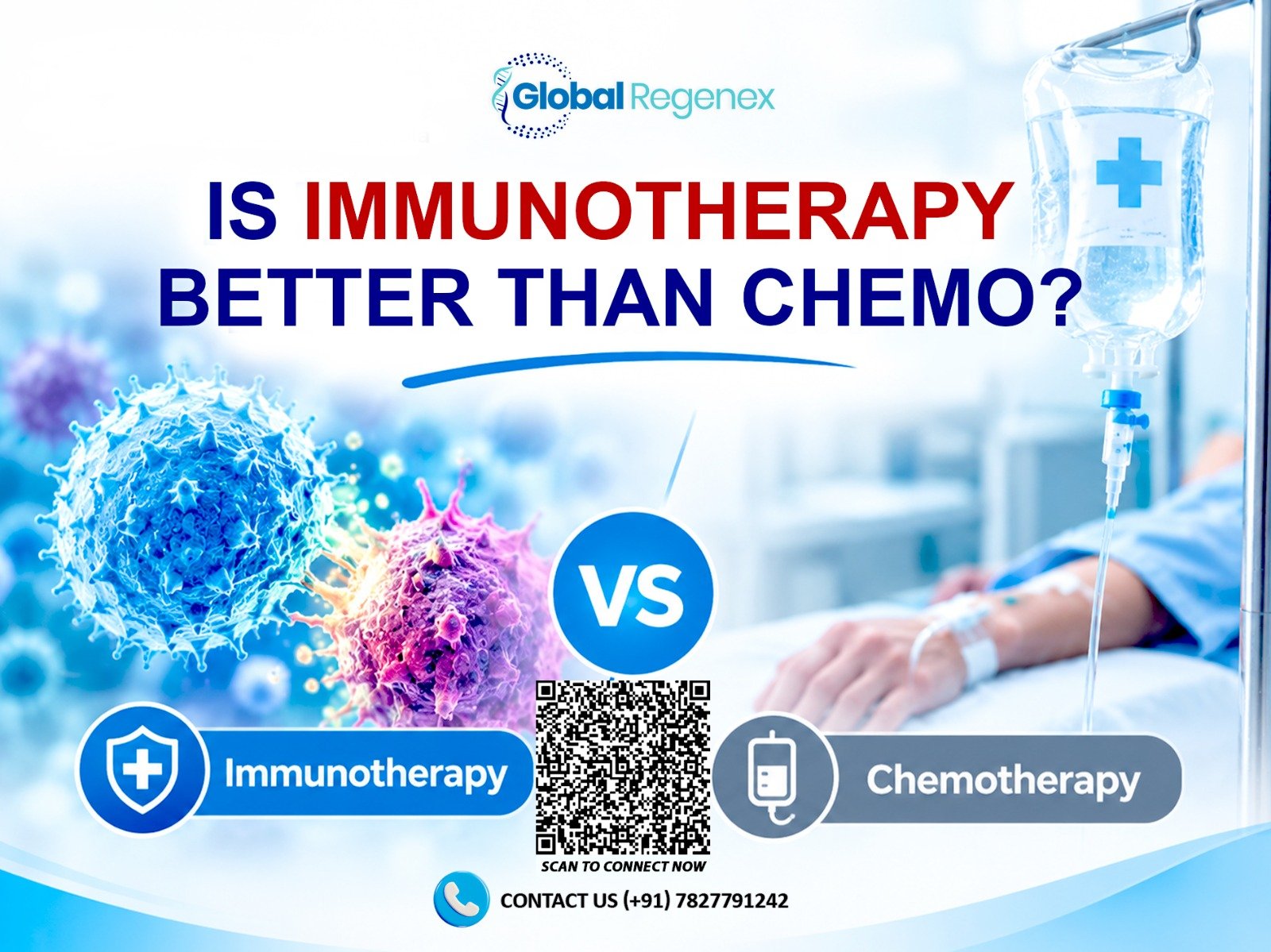
Neither immunotherapy nor chemotherapy is universally better for cancer. The right treatment depends on the cancer type, stage, tumour characteristics, biomarkers and the patient’s overall health. Chemotherapy directly kills or slows the growth of cancer cells, while immunotherapy helps the immune system recognise and attack cancer. In some cases, doctors recommend one treatment; in others, combining both may be appropriate.
Key Takeaways
- Neither immunotherapy nor chemotherapy is universally better. The right choice depends on the cancer type, stage and individual circumstances.
- Chemotherapy directly attacks cancer cells, while immunotherapy helps the immune system recognise and fight cancer.
- Both treatments can cause side effects, but their types and severity differ.
- Some cancers respond well to immunotherapy, while others may require chemotherapy or a combination of treatments.
- Doctors may use biomarkers and other clinical findings to help determine whether immunotherapy is appropriate.
- An oncologist can recommend the most suitable approach based on the patient’s diagnosis, treatment goals and overall health.
Is Immunotherapy Better Than Chemo?
When a patient is diagnosed with cancer, choosing between immunotherapy and chemotherapy may raise important questions. Patients often get confused about which treatment may work better for their type of cancer.
Although both approaches work to control cancer, how they do that is what makes the difference. Chemotherapy uses medicines to eliminate cancer cells or slow their growth in the body, while immunotherapy helps the immune system find and fight the cancer cells. Their effectiveness varies based on the type of cancer, stage, tumour characteristics and individual response.
Understanding these differences can help patients make informed decisions with their oncology team. This blog compares immunotherapy and chemotherapy, explains their potential side effects and effectiveness, and explores when doctors may recommend either treatment or a combination of both.
What Is Chemotherapy?
Chemotherapy is one of the main approaches to cancer treatment that uses medication to kill cancer cells in the body. Cancer cells often develop quickly. In that case, Chemotherapy targets their rapid division to reduce the tumour and prevent them from spreading anymore.
Key features of chemotherapy:
- Circulates in the blood to target cancer cells in the body.
- Given through injections, intravenous drip therapy, or orally in tablet form.
- Given in cycles, with treatments followed by recovery time.
- Effective against various forms of cancer at different stages, used alone or in conjunction with other treatments.
Doctors usually recommend chemotherapy based on the patient’s cancer type, stage and treatment goals. It may help shrink a growing tumour, reduce the possibility of recurrence or control cancer that has spread.
What Is Immunotherapy?
Immunotherapy, on the other hand, takes a different approach to eliminate cancer cells. It helps the immune system to recognise the unhealthy mesothelioma cells and kill them. Usually, the immune system already works to protect the body from foreign substances. But cancer cells may sometimes distinguish themselves to escape detection, allowing them to grow despite the natural defence.
Common types of cancer immunotherapy include:
- Immune Checkpoint Inhibitors: Inhibit protein inhibitors for the immune cells in order to target and destroy cancerous cells with the help of the immune system.
- CAR-T Cell Therapy: T cells are manipulated in the laboratory in order to destroy the targeted cancer cells.
- Cancer Treatment Vaccines: Teach the immune system to recognise certain cancer-associated antigens and respond accordingly.
- Monoclonal Antibodies: Man-made antibodies capable of binding to specific cancer cell targets and immune cell targets, aiding in fighting cancer in various ways.
While chemotherapy directly targets cells, immunotherapy operates by altering or enhancing immune function. The efficacy of immunotherapy depends upon the type of cancer and the patient’s reaction to it, and it may induce inflammation due to immune activity on normal tissue.
What Is the Difference Between Immunotherapy and Chemotherapy?
Although the two modes of treatment seek to treat cancer, there is a great difference between them in how they are achieved.
| Comparison | Chemotherapy | Immunotherapy |
| How it works | Kills cancer cells or slows their growth. | Helps the immune system recognise and attack cancer cells. |
| Effect on Healthy Cells | May affect healthy cells that divide rapidly | It can trigger an immune reaction that affects healthy organs |
| Common side effect | Nausea, hair loss, fatigue and low blood cell counts. | Fatigue, skin reactions and immune-related inflammation. |
| Treatment Response | Depends on the cancer type, medicines and individual response. | Depends on the cancer type, immune response and relevant biomarkers. |
| Use in cancer care | Used alone or with other treatments, depending on the diagnosis. | Used alone or alongside other treatments when clinically appropriate. |
However, neither can be regarded as automatically being better or even safer than the other, with the decision depending entirely on the patient’s condition.
Is Immunotherapy More Effective Than Chemotherapy?
Immunotherapy may produce long-lasting responses in certain cancers, but it’s not effective for every patient. Chemotherapy remains an important treatment for many cancers, especially when evidence supports its use.
A doctor considers the type of cancer, its stage, the results of biomarkers and the scientific evidence when evaluating different treatments. The best method might be either the use of immunotherapy, chemotherapy or both.
What Are the Side Effects of Immunotherapy and Chemotherapy?
The main difference usually lies in how these treatments affect the body. Chemotherapy can damage healthy cells that divide quickly, while immunotherapy can cause the immune system to attack healthy tissue.
Certain immune-mediated reactions might impact certain organs, including the lungs, liver and intestine. Such immune-mediated reactions might be severe and might manifest even after therapy.
Any patient should immediately report any new or increasing symptoms to their oncologist, particularly breathing problems, severe diarrhoea, or abdominal pain. This will enable the doctor to assess any possible complications and treat them appropriately.
Who Is Eligible for Immunotherapy or Chemotherapy?
The main factors that doctors often assess to decide patient eligibility are both health and type of cancer. Both approaches may not be suitable for everyone.
Immunotherapy: Could be considered for certain types of cancer. Based on the medication, your doctor could advise that you undergo biomarker tests to determine if you are responsive.
Chemotherapy: May be recommended for many types of cancer, depending on your diagnosis, previous treatments and health.
Other Health Conditions: Medical conditions like autoimmune disorders could influence the appropriateness and safety of some immunotherapies.
Previous Treatments and Health: The doctor will evaluate your response to past treatments, your present health condition, and your treatment objectives.
Your oncologist can explain which options are appropriate for your situation, along with their potential risks and expected outcomes.
Looking Ahead
Immunotherapy or chemotherapy cannot be said to be superior in the treatment of cancer. This is determined by the type of cancer, its stage, the nature of the tumour, among others. It is important that the patient discusses what results he or she can expect from the treatment.
For information about regenerative medicine research, contact Global Regenex through its official website. Stem cell therapy should not replace established cancer treatment without appropriate medical guidance.
Frequently Asked Questions
Q1. Can immunotherapy and chemotherapy be given together?
Yes. Doctors may use both approaches for certain types of cancers when clinical evidence supports the approach. The decision depends on the diagnosis, treatment plan and the patient’s overall health.
Q2. How do doctors know if cancer treatment is working?
Doctors may assess treatment response through imaging scans, physical examinations, laboratory tests, and symptom changes. The monitoring schedule depends on the type of cancer and the approach being used.
Q3. Can a patient switch from chemotherapy to immunotherapy?
Sometimes. A switch may be considered based on the cancer’s response, previous treatment, biomarker results and available options. An oncologist must determine whether immunotherapy is appropriate.
Q4. How long does immunotherapy or chemotherapy last?
Treatment duration varies by cancer type, medicine, response and side effects. Some plans involve a defined number of cycles, while others continue until a planned endpoint or a reason to stop.
Q5. What happens if cancer stops responding to treatment?
The oncology team reviews the latest test results and may consider another treatment, a different combination or a suitable clinical trial. The options depend on the cancer and the patient’s condition.
Q6. Can patients continue daily activities during cancer treatment?
Many patients can continue some regular activities, but this varies with side effects, treatment schedules and overall health. Patients should ask their care team about work, exercise and other activities during treatment.
Reference Links
- National Cancer Institute. (2025). Chemotherapy to Treat Cancer. https://www.cancer.gov/about-cancer/treatment/types/chemotherapy
- National Cancer Institute. (2019). Immunotherapy to Treat Cancer. https://www.cancer.gov/about-cancer/treatment/types/immunotherapy
- National Cancer Institute. (2023). Immunotherapy Side Effects. https://www.cancer.gov/about-cancer/treatment/types/immunotherapy/side-effects
- National Cancer Institute. (2021). Biomarker Testing for Cancer Treatment. https://www.cancer.gov/about-cancer/treatment/types/biomarker-testing-cancer-treatment
- CRI Staff. (2025, April 6). Immunotherapy vs. Chemotherapy: What’s the Difference? Cancer Research Institute. https://www.cancerresearch.org/blog/difference-cancer-immunotherapy-and-chemotherapy
Medical Disclaimer
This blog is for educational purposes only and does not replace professional medical advice, diagnosis or treatment. Cancer treatment decisions depend on individual medical circumstances and should be made in consultation with a qualified oncologist. Do not start, stop or change any cancer treatment without consulting your treating healthcare professional.
Categories
- Alpastic Anemia
- Amyotrophic Lateral Sclerosis
- Articles
- Autoimmune Disease
- Autoimmune Disorders
- Autologous
- Autologous Stem Cell Transplant
- Blog
- blogs
- Bone Marrow
- Bone Marrow Transplants
- Brain Injury
- Cancer Immunotherapy
- Diabetes
- Diabetic
- Exosome Therapy
- Exosomes
- Eye Damage
- Glaucoma
- Hearing Loss
- Immunotherapy
- Joint Replacement
- Kidney
- Knee Injuries
- Lung Cancer
- Lymphoma
- Orthopedic
- Osteoarthritis
- Pancreatic
- Parkinson’s Disease
- PRP
- PRP Treatment
- Regenerate
- Regenerative Medicine
- Spinal Cord
- Stem Cell Therapy
- Stem Cell Therapy for Eye
- Stem Cell Transplants
- Stem cell treatment
- Stem Cell Treatment Patient Stories
- Stroke
- Supplements
- Tourism