
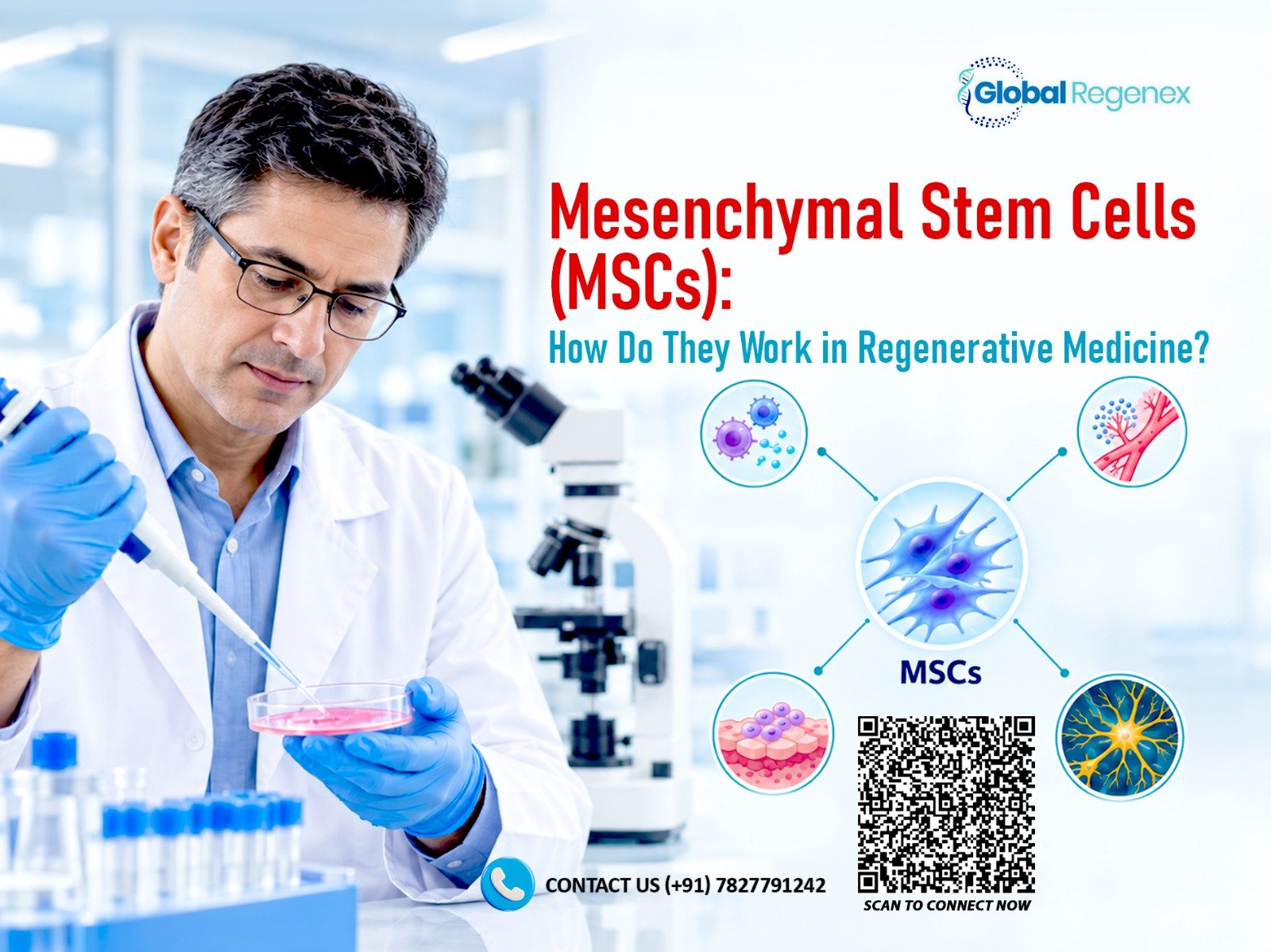
Mesenchymal stem cells (MSCs) are being studied in regenerative medicine because they can interact with surrounding cells and release biological signals that may influence inflammation, tissue repair, and the local tissue environment. Their effects may involve paracrine signalling and cell-to-cell interactions rather than simply replacing damaged cells. However, their clinical effects vary by cell source, condition, and treatment approach, and many MSC-based applications remain under investigation.
Key Takeaways
- Mesenchymal stem cells (MSCs) are multipotent cells under investigation because of their possible involvement in regenerative medicine.
- MSCs can be derived from various sources including bone marrow, fat tissues, and umbilical cord tissues.
- The effects of MSCs may include paracrine signalling, cell-cell interaction, and control of inflammatory reactions.
- Scientists are investigating MSCs for their possible ability to help in tissue regeneration in various medical fields.
- Preparations of MSCs may vary according to their origin, processing, and features.
- Despite the fact that research shows promising results, MSC-based therapies are not yet proven treatments for all diseases and require further clinical evidence.
Mesenchymal Stem Cells (MSCs): How Do They Work in Regenerative Medicine?
Regenerative medicine researchers are interested in mesenchymal stem cells because of the way these cells interact with their surrounding environment. Rather than focusing only on whether MSCs can become new tissue cells, researchers are also studying how they communicate with nearby cells and influence biological processes.
So, how do MSCs work, where do they come from, and what does current research actually show about their potential? Understanding their sources, properties, and biological activity provides a clearer picture of what MSC research has established so far and where questions remain.
What Are Mesenchymal Stem Cells (MSCs)?
Mesenchymal stem cells (MSCs) are a population of stromal cells found in several tissues and widely studied in regenerative medicine. They are commonly described as multipotent because, under appropriate conditions, they can differentiate into certain cell types. However, their regenerative potential goes further than simply becoming new tissue cells.
Researchers are particularly interested in MSCs because they can interact with nearby cells and release signalling molecules that may influence the surrounding tissue.
Key characteristics commonly associated with MSCs include:
- Multipotency: They have the ability to differentiate into certain cell types, especially when grown in laboratories.
- Cell Signalling: They produce factors that affect other cells around them.
- Immunomodulation: They have an effect on immune and inflammatory responses.
- Interaction with Tissues: They can respond to environmental signals and interact with other cells.
MSC is a term for cells with diverse origins and properties, so research results must be evaluated based on the cells studied.
Where Do Mesenchymal Stem Cells Come From?
Mesenchymal stem cells (MSCs) can be derived from several tissues in the human body. Their characteristics may vary depending on their tissue source and how the cells are collected and prepared.
- Bone Marrow: One of the conventional sources employed in the study of MSCs. Bone marrow MSCs have been extensively studied to establish their function in tissue repair.
- Adipose Tissue: Adipose tissue is a relatively available source that can provide MSC-like cells. The adipose-derived cells are being researched in different aspects of regenerative medicine.
- Umbilical Cord Tissue: Cells isolated from umbilical cord tissue, such as Wharton’s Jelly, are being studied because they provide MSCs without the need to harvest from the adult individual.
- Other Tissue Source: MSC-like populations have also been identified in tissues such as dental pulp and connective tissue, although their properties may differ.
The source is important because different MSC sources could present different biological properties, growth behaviour, and signalling activity. For that reason, findings based on one MSC source cannot be generalised for all MSC therapies.
How Do MSCs Support Tissue Repair?
MSCs may support tissue repair mainly by influencing the cells and signals that are already present in damaged tissue. Researchers are investigating several pathways through which these interactions may support regeneration.
- Cell Signalling: MSCs can release signalling molecules that interact with nearby cells and may influence processes involved in tissue repair.
- Repairing Signals: This type of substance may be playing a role in processes like cell survival, blood vessel formation, and creating a favourable environment for repair.
- Inflammation Control: MSCs may influence local immune and inflammatory responses.
- Extracellular Vesicles: MSC-derived extracellular vesicles contain biological molecules involved in cell-to-cell communication and are being studied for their potential role in tissue repair.
This list of mechanisms is still under investigation, and their outcomes may differ according to the type of tissue, cells used, and conditions of therapy.
Where Are MSCs Being Studied in Regenerative Medicine?
Researchers are studying MSC-based approaches across several fields of regenerative medicine, including:
- Repair of Musculoskeletal Injury: The use of MSCs for cartilage, bone, and tendon injuries is currently under investigation.
- Wound Healing: Researchers are investigating whether MSC-based approaches may influence tissue repair and inflammatory processes in difficult-to-heal wounds.
- Cardiovascular Research: Their use for injured heart and blood vessel tissue is under investigation.
- Neurological Conditions: The use of MSCs for conditions with nerve and nervous system damage is currently under investigation.
- Immune and Inflammatory Diseases: Another area where the use of MSCs is being researched is their role in affecting immune response.
This application is still in various stages of development, and although some have reached the human trial phase, the results are inconsistent, and there is much room for research.
How Do MSCs Compare With Other Stem Cells?
Mesenchymal stem cells (MSCs) are one type of stem cell that is being investigated in medicine. Other stem cell types also differ in their origin, developmental potential, and areas of research.
| Stem Cell Type | Main Characteristics | Common Research Focus |
| Mesenchymal stem cells (MSCs) | Can differentiate into certain cell types under appropriate conditions | Tissue repair, inflammation, and regenerative medicine |
| Hematopoietic stem cells (HSCs) | Produce blood and immune system cells | Blood disorders and bone marrow transplantation |
| Embryonic stem cells (ESCs) | Pluripotent, with the potential to form many cell types | Developmental biology and regenerative research |
| Induced pluripotent stem cells (iPSCs) | Mature cells reprogrammed to a pluripotent state | Disease modelling, drug research, and regenerative medicine |
Despite being considered together quite frequently, these stem cells are not all the same. The features, applications, and evidence about each may vary greatly.
What Are the Limitations of MSC-Based Therapies?
Despite extensive research and promising outcomes, several questions remain about how MSC-based therapies should be developed and used in clinical practice.
- Variability of Results: The results vary depending on the origin of the cells, their preparation, dosage, and treatment methods.
- Lack of Standardisation: MSC sources, processing methods, doses, delivery approaches, and study protocols can differ substantially between studies.
- Clinical Studies: Some approaches have already been tested on people. However, the results are different for each condition.
- Safety: The long-term safety of MSC-based treatments is being studied by researchers.
- Manufacturing Matters: How cells are harvested, grown, banked, and delivered might affect the behaviour of those cells.
Given these considerations, positive research results in the lab should not be taken as definitive proof that an MSC-based treatment will work for a specific disease. Additional well-controlled research is required to demonstrate when such therapies could be proven to have a medical benefit.
The Bottom Line
If you are exploring an MSC-based therapy, focus on the evidence for the specific condition and treatment being considered. Ask about the cell source, preparation process, clinical evidence, potential risks, and regulatory or clinical trial status.
Global Regenex can help you understand current research on mesenchymal stem cells, evaluate the available evidence, and identify important questions to discuss with your healthcare team before making a treatment decision.
Frequently Asked Questions
Q1. What are mesenchymal stem cells used for?
Mesenchymal stem cells are being studied for their potential role in tissue repair, inflammation regulation, and regenerative medicine across several medical conditions.
Q2. Are MSCs the same as other stem cells?
No. MSCs differ from hematopoietic, embryonic, and induced pluripotent stem cells in their characteristics, developmental potential, sources, and research applications.
Q3. Where are mesenchymal stem cells obtained from?
MSCs have been studied from sources including bone marrow, adipose tissue, and umbilical cord-related tissues. Their properties can vary depending on the source and preparation.
Q4. How do mesenchymal stem cells support tissue repair?
MSCs may influence tissue repair by releasing signalling molecules and extracellular vesicles that interact with nearby cells and affect the local tissue environment.
Q5. Are mesenchymal stem cell therapies proven treatments?
Not for every condition. Some MSC-based approaches have been studied in clinical trials, but their effectiveness and safety vary by treatment and medical condition.
Q6. Are MSC-based treatments safe?
Safety depends on the specific cell product, manufacturing process, dose, delivery method, and medical condition. Long-term safety remains an area of ongoing research for some approaches.
Reference Links
(1) Dominici, M., et al. (2006). Minimal criteria for defining multipotent mesenchymal stromal cells. The International Society for Cellular Therapy position statement. Cytotherapy. Retrieved from:
https://pubmed.ncbi.nlm.nih.gov/16923606/
(2) Gnecchi, M., Danieli, P., Malpasso, G., & Ciuffreda, M. C. (2016). Paracrine Mechanisms of Mesenchymal Stem Cells in Tissue Repair. Methods in Molecular Biology. Retrieved from:
https://pubmed.ncbi.nlm.nih.gov/27236669/
(3) Caplan, H., Olson, S. D., Kumar, A., et al. (2019). Mesenchymal Stromal Cell Therapeutic Delivery: Translational Challenges to Clinical Application. Frontiers in Immunology. Retrieved from:
https://pubmed.ncbi.nlm.nih.gov/31417542/
(4) Mastrolia, I., Foppiani, E. M., Murgia, A., et al. (2019). Challenges in Clinical Development of Mesenchymal Stromal/Stem Cells: Concise Review. Stem Cells Translational Medicine. Retrieved from:
https://pubmed.ncbi.nlm.nih.gov/31313507/
(5) Regulski, M. J., et al. (2021). The Cross-Talk between Mesenchymal Stem Cells and Immune Cells in Tissue Repair and Regeneration. Cells. Retrieved from:
https://pubmed.ncbi.nlm.nih.gov/33804369/
(6) Caplan, A. I., et al. (2019). Challenges for mesenchymal stromal cell therapies. Science Translational Medicine. Retrieved from:
https://pubmed.ncbi.nlm.nih.gov/30787168/
(7) Etzenberger, A., & Hernandez, D. (2026). Limitations in the clinical translation of mesenchymal stromal cells: standardisation, heterogeneity and the recipient. Frontiers in Cell and Developmental Biology. Retrieved from:
https://pubmed.ncbi.nlm.nih.gov/42148296/
Categories
- Alpastic Anemia
- Amyotrophic Lateral Sclerosis
- Articles
- Autoimmune Disease
- Autoimmune Disorders
- Autologous
- Autologous Stem Cell Transplant
- Blog
- blogs
- Bone Marrow
- Bone Marrow Transplants
- Brain Injury
- Cancer Immunotherapy
- Diabetes
- Diabetic
- Exosome Therapy
- Exosomes
- Eye Damage
- Glaucoma
- Hearing Loss
- Immunotherapy
- Joint Replacement
- Kidney
- Knee Injuries
- Lung Cancer
- Lymphoma
- Orthopedic
- Osteoarthritis
- Pancreatic
- Parkinson’s Disease
- PRP
- PRP Treatment
- Regenerate
- Regenerative Medicine
- Spinal Cord
- Stem Cell Therapy
- Stem Cell Therapy for Eye
- Stem Cell Transplants
- Stem cell treatment
- Stem Cell Treatment Patient Stories
- Stroke
- Supplements
- Tourism