
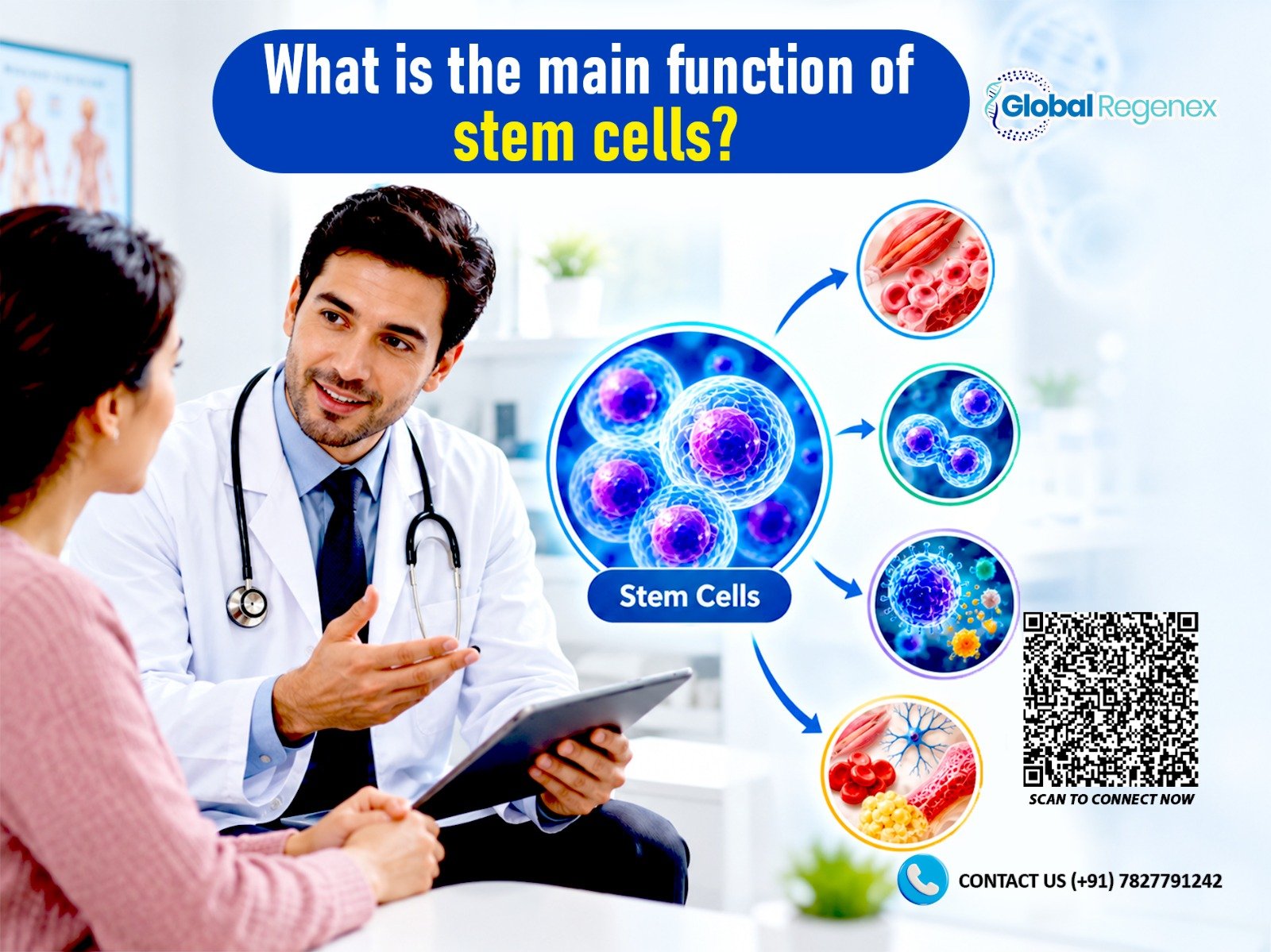
Stem cells have two distinctive properties one is that they can easily make more copies of themselves and develop into specialised cell types. These abilities help maintain certain tissues, replace cells that are lost or damaged, and support normal biological functions. Their roles depend on the type of stem cell and the tissues where it functions.
Key Takeaways
- Stem cells can renew themselves and develop into specialised cells with specific functions.
- Tissue-specific stem cells help maintain and replenish cells in particular organs and tissues.
- Stem cells differ in their developmental potential, meaning they cannot all become the same range of cell types.
- Scientists study stem cells to understand development, tissue repair, disease processes and potential medical applications.
- Some stem cell treatments are established for specific conditions, while many proposed regenerative applications remain investigational.
What Is the Main Function of Stem Cells?
Your skin renews, blood cells are replaced, and the lining of your intestine in the body is continually maintained day by day. These processes often depend on specialised cell populations, including stem cells that help certain tissues maintain their normal function.
Understanding how stem cells support these functions provides the basis for exploring their role in tissue repair, regeneration and medical research. It also helps differentiate their natural function in the body from the possible stem cell-based approaches, many of which still need further clinical evidence.
Introduction to Stem Cells: Definition and Types
Stem cells are unique cells in your body that can develop into different cell types such as blood, bone, and muscle cells. They frequently make copies into different cells that are lost or damaged due to injury. Their potential depends on the type of stem cell and its biological characteristics.
The main types of stem cells include:
- Embryonic Stem Cells: They are pluripotent cells that may develop into almost any cell type in the body.
- Adult or Somatic Stem Cells: These cells are found in certain tissues, such as bone marrow and the intestine, where they help maintain or replenish specific cell populations.
- Induced Pluripotent Stem Cells (iPSCs): Created by reprogramming mature cells in a laboratory so they regain pluripotent characteristics. Researchers use them to study diseases, test medicines and investigate potential therapies.
Stem cells may also be classified by their developmental potential, such as pluripotent or multipotent. These classifications help scientists understand what different stem cells may and may not become.
What Are the Main Functions of Stem Cells?
The human body routinely replaces certain types of cells to keep tissue functioning properly. Stem cells help support this process in three main ways.
- Self-Renewal: Stem cells can divide to make more copies of stem cells, helping maintain their optimal supply
- Cell Differentiation: They may grow into specialised cells, such as blood cells or muscle cells, depending on their type.
- Cell Replacement: Some stem cells replace cells that are damaged or ageing. Blood-forming stem cells, for instance, make the required cells for the blood and immune systems.
Functions differ between stem cell types. Some stem cells do not have the capability to transform into all possible cell types, and the natural function of the stem cell in the body does not guarantee that it will regenerate every tissue.
Stem Cell Function in Tissue Repair and Regeneration
When a patient sustains an injury that damages tissue, the body activates several repair processes and functions. Based on the tissue, resident stem cells may help by producing replacement cells, while inflammation and other biological responses also influence recovery.
However, the process of regenerating tissue may vary across the body. Some tissues may replace lost cells more effectively than others, while damage to structures such as the heart and spinal cord may be difficult to reverse.
Researchers are studying whether stem cell-based approaches could support repair in certain conditions. However, natural stem cell activity does not mean that stem cell therapy can reliably regenerate damaged tissues, and many proposed applications remain investigational.
Therapeutic Uses of Stem Cells in Medicine
There are some established medical uses of stem cells that involve blood-forming stem cell-based approaches for certain cancers and blood, immune or inherited disorders. Other applications still remain under investigation.
- Blood Cancers and Bone Marrow Disorders: Stem cell transplantation is used in specific cases such as leukaemia, lymphoma, and other disorders that affect blood cell production.
- Certain Inherited and Immune Disorders: Other stem cell-based approaches may also be an option for certain conditions, including sickle cell disease, aplastic anaemia, and certain immune system disorders. However, patient suitability depends on the diagnosis and specialist assessment.
Scientists continue to investigate other stem cell-based approaches, including mesenchymal stem cell (MSC) therapies. However, evidence varies by condition and product, and many proposed uses remain investigational.
Future Research Directions in Stem Cell Therapy
Scientists are investigating different ways to make stem cell-based therapies more useful, consistent and suitable for specific medical conditions. Key areas of research include:
- Personalised Cell Therapies: Induced pluripotent stem cells (iPSCs) enable researchers to investigate disease processes using cells derived from individual patients and study potential treatment approaches.
- Lab-Grown Tissue Models: Organoids, which are small tissue-like structures grown in laboratories, help researchers investigate disease and test potential medicines.
- Enhanced Safety and Quality: Scientists are devising more advanced ways of controlling cell differentiation and evaluating their quality, as well as detecting possible risks prior to moving on to clinical applications.
These approaches may seem promising in research, but progress in the laboratory does not necessarily translate into effective treatment in clinical practice. Further clinical studies and regulatory review always remain essential.
The Bottom Line
Stem cells may help maintain certain tissues, produce specialised cells and support normal biological function in the body. However, their natural function does not mean that every stem cell-based approach is effective for every damaged tissue or medical condition
For guidance on understanding stem cell research and evaluating treatment information, contact Global Regenex through its official website. Consult a qualified healthcare professional before making treatment decisions.
Commonly Asked Questions
Q1. Can you increase stem cells naturally?
There is no proven diet, supplement or lifestyle change that reliably increases stem cell count throughout the body. Healthy habits support overall health, but claims about stem cell boosters should be evaluated carefully.
Q2. Can stem cells treat every disease?
No. Stem cell treatments in India are established for certain conditions, including some blood-related cancers and blood disorders. Many other proposed approaches remain under investigation and require further clinical evidence.
Q3. Are all stem cell treatments approved for medical use?
No. Medical approval depends on the specific approach, intended use and regulatory requirements. Patients should verify the sources, clarify the regulatory status and discuss the evidence and risks with a qualified healthcare professional.
Q4. Can stem cells from my own body be used in treatment?
Yes. Certain established approaches use a patient’s own blood-forming stem cells, such as the autologous stem cell approach for certain conditions. Their suitability depends on the diagnosis and treatment plan.
Q5. Do stem cell treatments guarantee tissue regeneration?
No. Treatment outcomes vary by condition, cell type and procedure. The body’s natural use of stem cells does not mean that a stem cell-based treatment can reliably repair every damaged tissue.
Reference Links
(1) Fuchs E, Chen T. (2013). A Matter of Life and Death: Self-Renewal in Stem Cells. EMBO Reports, 14(1), 39–48. https://doi.org/10.1038/embor.2012.197
(2) Xia H, Li X, Gao W, et al. (2018). Tissue Repair and Regeneration with Endogenous Stem Cells. Nature Reviews Materials, 3, 174–193. https://doi.org/10.1038/s41578-018-0027-6
(3) Takahashi K, Tanabe K, Ohnuki M, et al. (2007). Induction of Pluripotent Stem Cells from Adult Human Fibroblasts by Defined Factors. Cell, 131(5), 861–872. https://doi.org/10.1016/j.cell.2007.11.019
(4) Cleveland Clinic. (2025, September 8). Stem Cells. https://my.clevelandclinic.org/health/articles/24892-stem-cells
(5) National Cancer Institute. (2023, October 5). Stem Cell and Bone Marrow Transplants for Cancer. https://www.cancer.gov/about-cancer/treatment/types/stem-cell-transplant
(6) Indian Council of Medical Research. (2021). Evidence-Based Status of Stem Cell Therapy for Human Diseases. https://www.icmr.gov.in/icmrobject/uploads/Guidelines/1745229591_evidence_based_status_of_stem_cell_therapy_for_human_diseases_v1.pdf
Medical Disclaimer
This blog is for educational purposes only and does not constitute medical advice, diagnosis or treatment recommendations. Stem cell functions and potential medical applications vary depending on the cell type and condition. Consult a qualified healthcare professional before making treatment decisions, and verify the clinical evidence and regulatory status of any proposed stem cell therapy.
Categories
- Alpastic Anemia
- Amyotrophic Lateral Sclerosis
- Articles
- Autoimmune Disease
- Autoimmune Disorders
- Autologous
- Autologous Stem Cell Transplant
- Blog
- blogs
- Bone Marrow
- Bone Marrow Transplants
- Brain Injury
- Cancer Immunotherapy
- Diabetes
- Diabetic
- Exosome Therapy
- Exosomes
- Eye Damage
- Glaucoma
- Hearing Loss
- Immunotherapy
- Joint Replacement
- Kidney
- Knee Injuries
- Lung Cancer
- Lymphoma
- Orthopedic
- Osteoarthritis
- Pancreatic
- Parkinson’s Disease
- PRP
- PRP Treatment
- Regenerate
- Regenerative Medicine
- Spinal Cord
- Stem Cell Therapy
- Stem Cell Therapy for Eye
- Stem Cell Transplants
- Stem cell treatment
- Stem Cell Treatment Patient Stories
- Stroke
- Supplements
- Tourism