
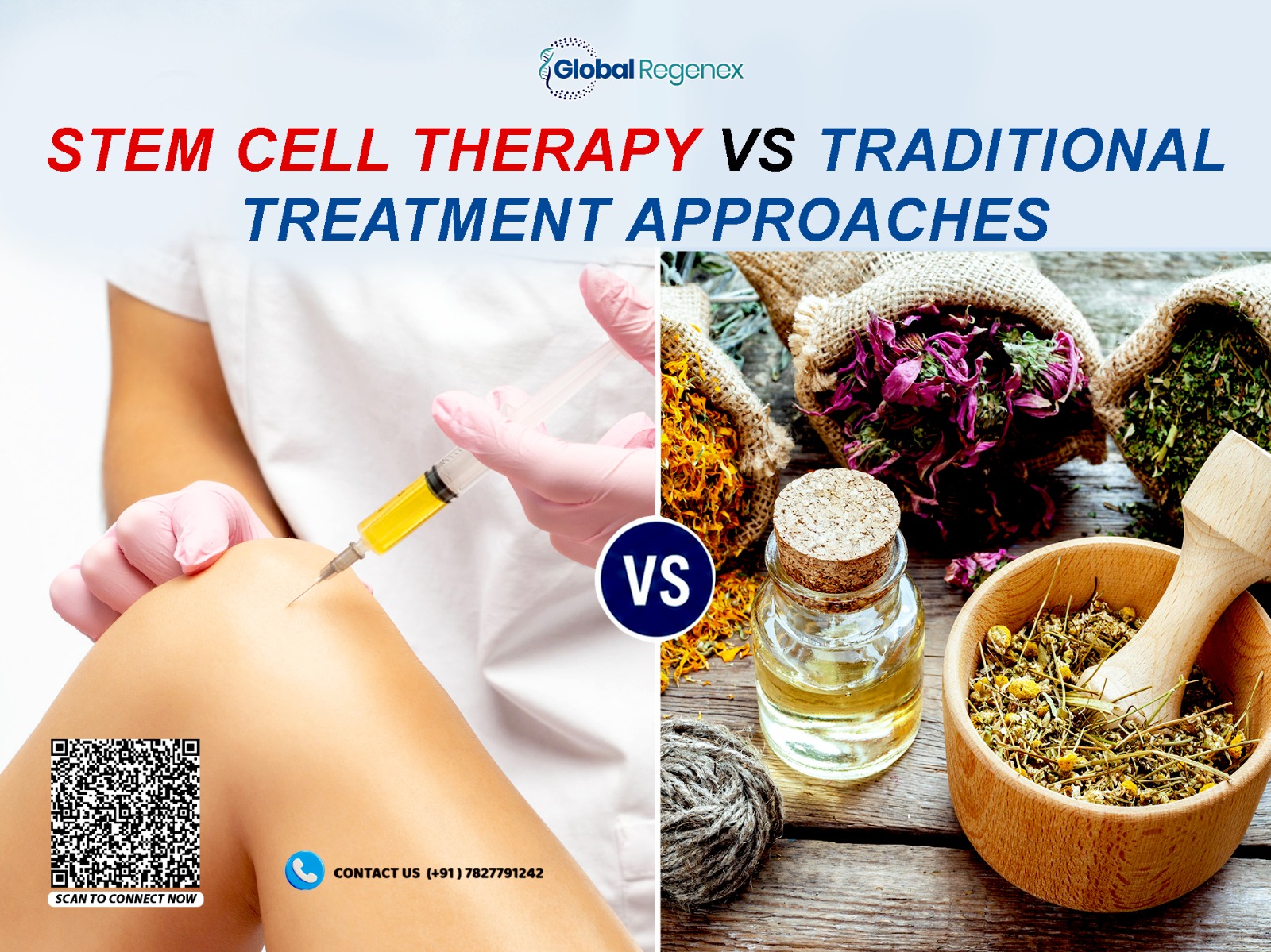
In simple terms, stem cell therapy and traditional treatment approaches can be different in their objective, approach, and the level of evidence supporting their use. Although traditional medical approaches are widely supported by long-term evidence and used to diagnose, manage, and treat many health conditions based on established clinical guidelines. On the other hand, stem cell therapy is still being studied in regenerative medicine, with some applications still undergoing scientific and clinical evaluation. Understanding these differences may help patients have an informed discussion with a qualified healthcare professional before considering available healthcare options.
Key Takeaways
- Stem cell therapy and traditional treatment approaches differ in their goals, methods, and current clinical use.
- Many traditional treatments are supported by established clinical guidelines for specific health conditions.
- Stem cell therapy continues to be investigated across multiple areas of regenerative medicine research.
- The level of scientific evidence varies depending on the treatment approach and the condition being studied.
- Treatment decisions should be based on individual health needs, available evidence, and professional medical advice.
- Patients are encouraged to discuss potential benefits, risks, and available options with qualified healthcare professionals.
Medically Reviewed By
Written By – Nishat Arfin
Scientific Review By Tabish Iqbal
Medically Approved By – Global Regenex Medical Team
Last Reviewed: June 2026
Stem Cell Therapy vs Traditional Treatment Approaches
The healthcare system, nowadays, offers a variety of treatment options, each medical growth to address different medical conditions and patient circumstances. Alongside well-established traditional medical treatments, regenerative medicine has come forward as a growing field attracting scientific interest across the world, leading many patients to seek information about approaches such as stem cell therapy and how it compares with conventional approaches.
Despite both approaches aiming to support patient care, they vary greatly in the way that they are researched, used, and evaluated. Traditional medical treatments may depend largely on proven techniques and long-established evidence for particular diseases, while most stem cell therapy procedures are still being investigated in the process of scientific and clinical research.
This blog compares stem cell therapy with traditional treatment approaches, describes differences between them, analyzes the current scientific evidence, and presents the main aspects that patients need to consider.
What Is Stem Cell Therapy?
One of the most actively researched areas of regenerative medicine is stem cell therapy, which involves the study and use of stem cells in healthcare and scientific research. Stem cells are small and unique cell types—as they can develop into different cell types under specific biological conditions, making them an important focus of regenerative medicine.
While medical understanding continues to advance, stem cell-based approaches have been studied for different areas of healthcare. Researchers continue to examine stem cells’ potential applications, safety, and long-term outcomes through laboratory investigation and clinical studies.
Some stem cell-based applications have established clinical uses for specific medical conditions, while many others continue to be investigated. It is necessary to be aware of existing scientific evidence because it helps to compare stem cell therapies with traditional approaches to treatment.
What Are Traditional Treatment Approaches?
Traditional treatment approaches, on the other hand, often refer to well-established medical approaches that are supported by long-term evidence and used to prevent, diagnose, manage, or treat health conditions. Depending on the patient’s diagnosis and needs, these approaches may include medication, surgery, physical rehabilitation, lifestyle modification, or be suggested by a qualified healthcare professional.
While many of the treatments are backed by clinical guidelines that have been created after years of research and experience in practice, the best treatment option changes from one condition and the level of the disease to another, based on the health condition of the patient and their treatment objectives.
In the process of the evolution of medicine, traditional treatment approaches continue to play an important role in healthcare, while regenerative medicine continues to evolve through scientific research.
Key Differences Between Stem Cell Therapy and Traditional Treatment Approaches
| Feature | Stem Cell Therapy | Traditional Treatment Approaches |
| Primary Focus | Studied within regenerative medicine to better understand cell function and tissue repair. | Focuses on preventing, diagnosing, managing, or treating medical conditions using well-established clinical approaches. |
| Scientific Evidence | Evidence varies depending on the condition and treatment approaches. Several approaches continue to be investigated. | Many approaches are supported by clinical guidelines and long-term evidence for specific conditions. |
| Current Clinical Use | Some stem cell-based treatments have established clinical uses, while many regenerative applications remain under investigation. | It is widely used across healthcare settings for a variety of conditions. |
| Treatment Planning | It often depends on individual eligibility, the condition being addressed, and evidence available. | It is based on diagnosis, clinical guidelines, medical history, and treatment goals. |
| Healthcare Settings | It may be offered in specialized clinical and research settings, depending on the treatment. | It is commonly available in hospitals, clinics, and healthcare facilities. |
| Patient Consideration | The patient should discuss current evidence, potential benefits, risks, and suitability with a qualified professional. | Patients should review expected outcomes, possible risks, side effects, and available alternatives with their healthcare providers. |
How Do Healthcare Professionals Determine the Most Appropriate Treatment Approach?
Suggesting the appropriate treatment to a patient is a personalized process that depends on several medical and individual factors. Instead of relying on a single approach for every patient, healthcare professionals evaluate each patient’s condition, medical history, treatment goals, and the available scientific evidence before making any recommendations.
Some of the elements that can come into consideration include:
- Medical Condition: Diagnosis, severity of the condition, and general state of health of a person can affect the suitability of various treatment options.
- Available Scientific Evidence: The existing literature in healthcare, treatment guidelines, and scientific findings regarding the condition of a particular patient will be taken into account.
- Benefits and Limitations: Each treatment option has benefits, limits, and potential risks that need to be considered prior to making a decision.
- Patient Preferences: Patients’ own preferences and goals for treatment can be another significant element to take into account when selecting a suitable treatment plan.
- Clinical Evaluation: A comprehensive evaluation of the condition of a person can allow healthcare specialists to understand whether a certain treatment option is suitable for a patient.
Since each patient is different, it is necessary to make decisions regarding the treatment in consultations with experienced healthcare providers.
What Does Current Research Suggest?
For decades, research on stem cell therapy has continued to evolve and expand across multiple areas of regenerative medicine. While some stem cell-based applications have established clinical uses for specific conditions, many others continue to be further investigated through laboratory research, clinical trials, and long-term follow-up studies.
Several important points are suggested by currently available scientific evidence:
Evidence Varies by Conditions: There is a difference in the amount and quality of scientific evidence available according to health problem, stem cells used, and approach to treatment.
Development in Clinical Trials: Clinical research is still conducted to gain additional information regarding the safety, effectiveness, and results of stem cell therapy in different fields of health care.
Long-Term Data Remains Important: Long-term follow-up studies allow scientists to examine outcomes and determine which issues still need further research.
Regulatory Oversight Plays a Key Role: Stem cell-based therapies should be developed, investigated, and provided in accordance with necessary regulations and standards.
As research continues to evolve, patients may come across varying claims about stem cell therapy. Reviewing evidence from reliable scientific sources can help distinguish established knowledge from emerging research.
Looking Ahead
Understanding the differences between stem cell therapy and traditional treatment approaches can help patients have informed discussions with qualified healthcare professionals. As scientific knowledge continues to evolve, treatment decisions should always be guided by individual health needs, available evidence, and professional medical advice.
Frequently Asked Questions
Q1. Can stem cell therapy be used alongside traditional treatments?
Yes. Depending on the medical condition and treatment plan, healthcare professionals may consider different approaches as part of patient care. Treatment should always be based on individual assessment and current clinical evidence.
Q2. Is stem cell therapy approved for every medical condition?
No. The use and applicability of stem cell therapy depend on the disease, treatment method, and regulations. Many therapies related to regenerative medicine are still under investigation.
Q3. Why do stem cell therapy and conventional treatments have different levels of evidence?
Conventional treatments have undergone long-term research. In contrast, stem cell therapy is a relatively new field where the level of scientific evidence depends on the particular disease or treatment.
Q4. What should patients consider before opting for stem cell therapy?
Patients should discuss the level of scientific evidence, potential benefits, possible risks, available scientific evidence, and whether the treatment is appropriate for their condition.
Q5. How can patients get information about stem cell therapy?
Information can be obtained from healthcare professionals, scientific publications, healthcare organizations, and credible medical institutions that produce evidence-based guidelines.
Reference Links
National Institutes of Health (NIH). Stem Cell Basics. Available at:
https://stemcells.nih.gov/info/basics
U.S. Food and Drug Administration (FDA). Important Patient and Consumer Information About Regenerative Medicine Therapies. Available at:
Harvard Stem Cell Institute. What Stem Cell-Based Therapies Are Currently Available? Available at:
https://www.hsci.harvard.edu/faq/stem-cell-therapies
Mao AS, Mooney DJ. Regenerative medicine: Current therapies and future directions. Proceedings of the National Academy of Sciences (PNAS). Available at:
https://www.pnas.org/doi/10.1073/pnas.1508520112
Trounson A, McDonald C. Stem Cell Therapies in Clinical Trials: Progress and Challenges. Cell Stem Cell. Available at:
https://www.cell.com/cell-stem-cell/fulltext/S1934-5909(15)00171-0
Bauer SR, et al. Stem Cell-based Products in Medicine: FDA Regulatory Considerations. Available at:
https://pmc.ncbi.nlm.nih.gov/articles/PMC7149600/
Medical Disclaimer
This blog is intended for educational purposes only and should not be considered medical advice. The suitability of stem cell therapy or traditional treatment approaches varies based on the individual’s medical condition, available scientific evidence, and clinical evaluation. Patients should consult qualified healthcare professionals before making treatment decisions.
Categories
- Alpastic Anemia
- Amyotrophic Lateral Sclerosis
- Articles
- Autoimmune Disease
- Autoimmune Disorders
- Autologous
- Autologous Stem Cell Transplant
- Blog
- blogs
- Bone Marrow
- Bone Marrow Transplants
- Brain Injury
- Cancer Immunotherapy
- Diabetes
- Diabetic
- Exosome Therapy
- Exosomes
- Eye Damage
- Glaucoma
- Hearing Loss
- Immunotherapy
- Joint Replacement
- Kidney
- Knee Injuries
- Lung Cancer
- Lymphoma
- Orthopedic
- Osteoarthritis
- Pancreatic
- Parkinson’s Disease
- PRP
- PRP Treatment
- Regenerate
- Regenerative Medicine
- Spinal Cord
- Stem Cell Therapy
- Stem Cell Therapy for Eye
- Stem Cell Transplants
- Stem cell treatment
- Stem Cell Treatment Patient Stories
- Stroke
- Supplements
- Tourism